Best Through the Wall Dehumidifier Options for Tight Spaces and Small Rooms
Looking for a through-the-wall dehumidifier that saves space while delivering steady moisture control? This guide highlights five top options, including dedicated crawl-space units and true through-the-wall models. Ideal buyers include apartment dwellers needing space-saving cooling and dehumidification, homeowners with crawl spaces, basements, or small rooms, and facility managers seeking commercial-grade performance. Each product is evaluated for best-use scenarios, ease of installation, and practical limitations. Below, a quick summary table helps compare who each unit fits best, followed by detailed sections for each product and a practical buying guide.
| Product | Best For |
|---|---|
| Keystone 10,000 BTU Through the Wall AC Dehumidifier (115V) | Small-to-medium rooms up to 450 sq ft; through-the-wall installation |
| Keystone 10,000 BTU Through the Wall AC Dehumidifier (115V) | Quiet cooling with integrated dehumidification for compact spaces |
| Keystone 8,000 BTU Wall Mounted AC Dehumidifier (115V) | Smaller rooms up to 350 sq ft; wall-mounted efficiency |
| Moiswell 155 Pint Crawl Space Dehumidifier | Constrained crawl spaces and tight basements; large daily moisture removal |
| Waykar 158 Pints Crawl Space Dehumidifier | Whole-house or large spaces up to 6,500 sq ft; remote control |
Keystone 10,000 BTU Through the Wall Dehumidifier (115V)
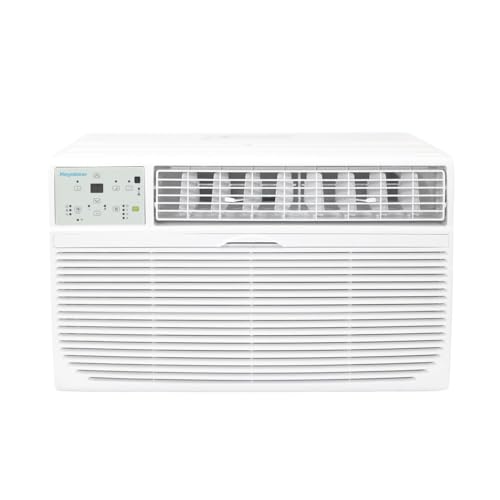
Best for compact living spaces, this Keystone unit combines through-the-wall AC cooling with dehumidification for rooms up to 450 sq ft. It supports 3 cooling modes, 3 fan speeds, and 4-way air direction. The dehumidification system removes about 2.3 pints of moisture per hour, contributing to steady comfort. An important limitation is that it is designed for smaller rooms; larger spaces may benefit from higher-capacity units.
Keystone 10,000 BTU Through the Wall AC Dehumidifier (115V) – 2nd Option
Another through-the-wall model from Keystone focuses on quiet operation and consistent moisture removal in rooms up to about 450 sq ft. It features a similar 10,000 BTU cooling capacity paired with dehumidification. Choose this if you want an option with familiar Keystone controls and a compact footprint. For best results, install in a room that matches or slightly exceeds the recommended area to maximize efficiency.
Keystone 8,000 BTU Wall Mounted Dehumidifier (115V)
Best for smaller spaces up to 350 sq ft, this Keystone model prioritizes space savings with a wall-mounted form. It removes about 2.1 pints of moisture per hour and offers programmable timing. It’s a practical pick when you need dehumidification without sacrificing floor or window area. If your space occasionally exceeds 350 sq ft, consider a higher-capacity alternative.
Moiswell 155 Pint Crawl Space Dehumidifier
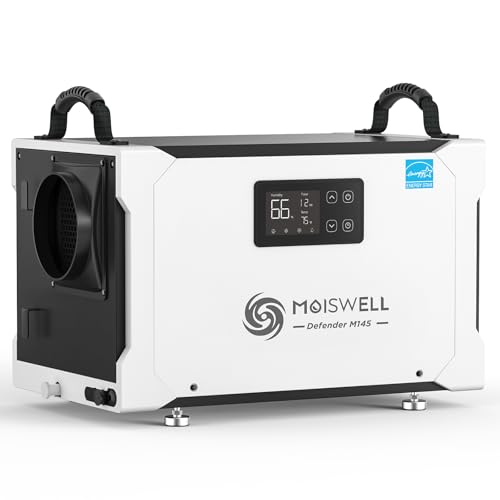
Best for crawl spaces and tight basements, this unit is compact (22.5 x 14 x 14.7 in) and Energy Star certified. It removes up to 155 pints per day and offers auto defrost, 24-hour timer, auto drain, and auto restart after power loss. Suited for large damp areas up to 6,000 sq ft, it excels where high moisture loads exist. A potential limitation is its size; extremely small gaps may still constrain airflow if not properly positioned.
Waykar 158 Pints Crawl Space Dehumidifier

Best for large spaces with a need for remote control, this Waykar model handles up to 158 pints per day and covers up to 6,500 sq ft. It includes a remote control (up to about 32.8 feet away) and a dual duct design for more balanced airflow. It’s well-suited for commercial or industrial basements, crawl spaces, or warehouses. A notable limitation is that setup may be more complex due to its dual-duct system in some configurations.
Buying Guide
What space will you dehumidify? For through-the-wall units, ensure the wall thickness and interior trim support proper installation. If moisture loads are high or you have a large space, lean toward higher-capacity models such as 10,000 BTU equivalents or crawl-space dehumidifiers with 150+ pints per day.
How will you vent and drain? Look for auto drain, built-in pumps, or gravity drainage options. A built-in pump helps when a floor drain isn’t nearby, while gravity drainage requires a lower exit path for condensate.
What features matter most? Auto defrost helps in cold environments; remote control improves convenience in hard-to-reach installations; energy efficiency (Energy Star) reduces running costs over time. Consider noise levels for bedrooms or nurseries.
What is compatibility with existing space constraints? Through-the-wall units save floor space but require proper opening and interior trim. Crawl-space units prioritize airflow and compact footprints but may require more robust power and space planning.
How do you compare total cost of ownership? Energy usage, maintenance needs, and the frequency of emptying or draining matter more than upfront price. Choose models with efficient pumps and automatic shut-off features to avoid over-watering or overflow risks.
FAQ
What is “through the wall” in a dehumidifier?
A through-the-wall dehumidifier is designed to be installed in a wall cavity, saving floor space and enabling closer placement to damp zones such as bedrooms or basements.
What size room is best for a 10,000 BTU through-the-wall unit?
Typically suitable for up to about 450 square feet, depending on insulation and humidity levels.
Do crawl-space dehumidifiers need a pump?
Not always, but many models include a pump option to discharge water upward or into a drain when gravity drainage isn’t convenient.
Is Energy Star important for dehumidifiers?
Yes. Energy Star-rated units generally consume less power for the same moisture-removal performance, lowering operating costs.
Can I install these units myself?
Through-the-wall installations typically require some carpentry for wall openings and electrical connection. Follow manufacturer instructions or hire a qualified technician for safety and proper sealing.