Best 15mm Thermostatic Mixing Valves for Precise Shower Temperature
Thermostatic mixing valves (TMVs) help maintain a consistent shower or faucet temperature by blending hot and cold water automatically. For 15mm plumbing setups, choosing a reliable TMV matters for safety and comfort, especially in busy homes. This guide highlights five solid 15mm options, reviewing their features, temperature ranges, and how they fit typical American plumbing standards.
| Brand | ||
|---|---|---|
| TreMax | Thermostatic Mixing Valve, 15mm, US 1/2″ NPT | Fahrenheit scale markings; solid brass |
| Fyeer | 3-Way Thermostatic Mixing Valve, DN15 | Three-way design; temperature range with C/H markings |
| FUGO | 1/2 NPT Thermostatic Mixing Valve | Solid brass; chrome finish |
| HHOOMMEE | 3 Way Thermostatic Water Mixing Valve DN15 | Three-way brass body; hot/cold and mixer outlets |
| Atmama | Thermostatic Mixing Valve 1/2 NPT | Lead-free brass; Fahrenheit markings |
The following sections detail five prominent 15mm TMVs, their specifications, and practical considerations for installation and use in residential settings.
TreMax Thermostatic Mixing Valve

TreMax offers a thermostatic mixing valve with a US-standard 1/2″ NPT thread, eliminating the need for adapters in many American installations. It uses solid brass construction for durability and provides Fahrenheit temperature markings to guide adjustments. The valve balances cold and hot water flow to maintain a comfortable outlet temperature within 68°F to 122°F, with inlet ranges of cold water 39°F–84°F and hot water 122°F–203°F. This model emphasizes straightforward temperature control and reliable performance, suitable for showers and bathroom faucets that require steady temperatures.
Fyeer 3-Way Thermostatic Mixing Valve
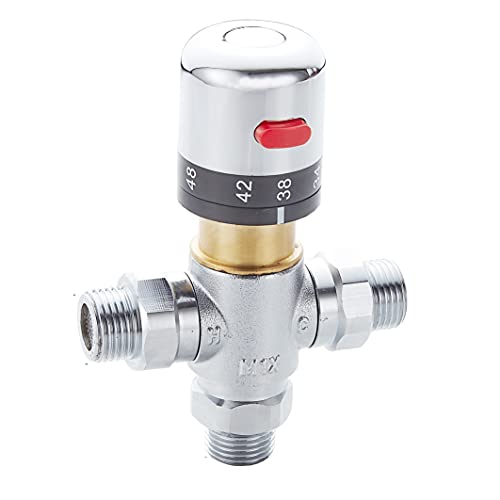
Fyeer provides a 3-way thermostatic valve designed for DN15 G1/2″ male connections. The unit is built from brass and includes a plastic knob for temperature adjustment. The cold inlet is marked in Celsius (4–29°C) and the hot inlet in Celsius (55–85°C), with safety stops at 38°C. This configuration supports reliable temperature control across a range of common domestic water supplies, with a balanced approach suitable for faucets and showers that require precise but flexible mixing.
FUGO 1/2 NPT Thermostatic Mixing Valve

FUGO’s valve features a solid brass body with 1/2 NPT male connections and chrome finish. It is suitable for a variety of applications, including bathroom showers, solar systems, and kitchen faucets. A practical note: for temperatures above 100°F, a red button can help access higher heat, providing a quick way to adjust when needed. The valve is designed for reliable temperature control while preserving safe operation under a range of hot water supply conditions.
3 Way Thermostatic Water Mixing Valve DN15

HHOOMMEE’s 3-way thermostatic valve supports DN15 with G1/2″ male threads and a brass body. It uses a safety feature with a red button to access hotter water, and includes a 3-way design to manage hot, cold, and mixed flows. The valve is lead-free and designed to reduce the risk of scalding by maintaining a controlled outlet temperature, making it suitable for showers, under-sink installations, and bidet setups where stable temperatures are important.
Atmama Thermostatic Mixing Valve
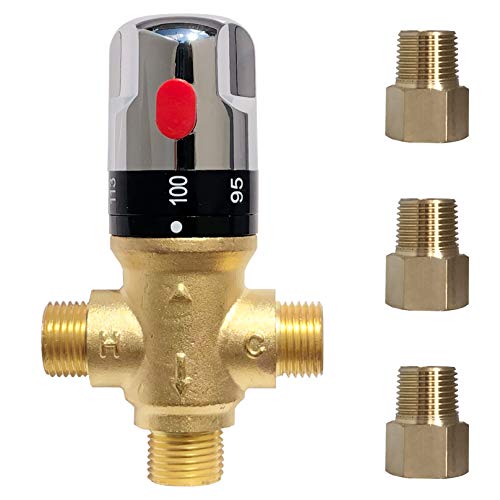
Atmama’s TMV is designed for 1/2″ NPT connections and uses a solid brass body. It provides Fahrenheit markings and an outlet temperature range of 68°F to 122°F. The unit emphasizes durability and longevity with a one-piece brass construction, ensuring resistance to wear from frequent temperature adjustments in daily use. It is well-suited for shower installations and under-counter installations where consistent mixing is essential.
Buying Guide: Key Purchase Considerations
- Temperature range and control: Look for a valve with a defined outlet range (commonly 68°F to 122°F). Fahrenheit markings help quick adjustments, while Celsius markings can be helpful in some installations.
- Connections and compatibility: Confirm the valve’s thread standard (DN15, 1/2″ NPT, or G1/2″). Verify that the inlet and outlet connections align with your existing plumbing, and consider adapters if needed.
- Materials and durability: Solid brass bodies offer longevity and resistance to corrosion. Avoid plastic-dominated designs for long-term reliability in hot-water environments.
- Safety features: Temperature limit stops and a red button or similar mechanism to override temperature in emergencies can prevent scalding, especially for households with children or elderly users.
- Three-way vs. two-way configurations: Three-way valves provide more control for mixed and separate outlets (e.g., shower plus faucet), but may be more complex to install. Evaluate your plumbing layout to decide which design suits your needs.
- Maintenance and replacement: Favor valves with straightforward disassembly for cleaning or replacement of internal components. Check for availability of spare parts and service support from the manufacturer.
- Code compliance and installation: Ensure the valve meets local plumbing codes and is suitable for residential use. In some jurisdictions, certified installations and proper testing are required.
- Installation scenario: Consider whether you’re upgrading a shower, under-sink faucet, kitchen, or solar heating setup. Some valves are optimized for shower use, while others are better for mixed-use thermostatic applications.