Best Thermostat With Password Lock: Secure Climate Control for Your Home
Answering the search for a thermostat with password lock, this guide highlights reliable options that add tamper-proof protection for occupied homes, offices, and spaces with shared access. Ideal buyers include households needing parental controls, rental properties, schools, or small offices wanting to prevent unauthorized temperature changes. The list below prioritizes devices and enclosures that combine secure access with convenient operation, smart features, and energy-saving potential.
| Product | Lock Type | Best For |
|---|---|---|
| Honeywell Home RTH9585WF1004 | Password/Smart Locking Features via App | Smart homes seeking color touch controls |
| Universal Thermostat Lock Box with Key (JGWPA) | Keyed Lock | Public spaces or facilities needing physical tamper protection |
| Emerson Sensi ST55 | Software privacy features; not a physical lock | Budget-conscious homes prioritizing easy DIY install |
| Google Nest Thermostat | Digital controls; no built-in physical lock | Energy-aware homes with strong compatibility needs |
| Pihode Thermostat Lock Box | Combination lock | Large spaces needing flexible, keyless access |
Honeywell Home RTH9585WF1004 Wi-Fi Thermostat
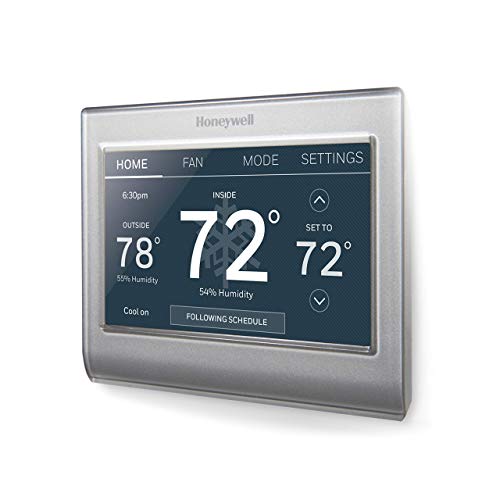
The Honeywell RTH9585WF1004 offers a 7-day programmable schedule with a color touchscreen and Wi‑Fi connectivity. It works with energy programs and can be integrated with Alexa-enabled ecosystems. Best for buyers who want a visually rich interface and energy-rebate potential. This model supports flexible programming aligned with utility demand response programs in some areas, helping optimize comfort and cost savings. Potential limitation: rely on Wi‑Fi for full features and remote control.
Universal Thermostat Lock Box with Key (JGWPA)

This lock box provides physical protection for thermostats, using a keyed lock to prevent unauthorized adjustments. Best for environments where tampering risk is high—offices, schools, churches, and rental properties. It accommodates most thermostats with inner dimensions around 7″ x 4.5″ x 2″, and outer dimensions of 7.3″ x 4.7″ x 2.2″. A practical choice when a visible, physical barrier is preferred over digital controls. Limitation: requires a key or possession of the lock to adjust settings.
Emerson Sensi Wi-Fi Smart Thermostat ST55
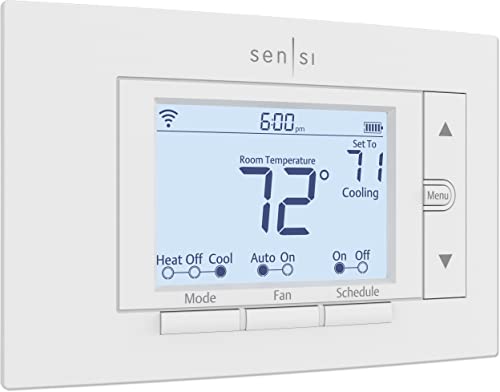
The Sensi ST55 emphasizes privacy and energy savings, with an ENERGY STAR certification and remote access. It is best for buyers needing straightforward DIY installation and compatibility with a wide range of HVAC equipment without requiring a C-wire in many setups. If a physical lock is essential, this option lacks a built-in lock, so consider pairing with a lock box for added security. Benefit: detailed energy usage insights and simple setup.
Google Nest Thermostat
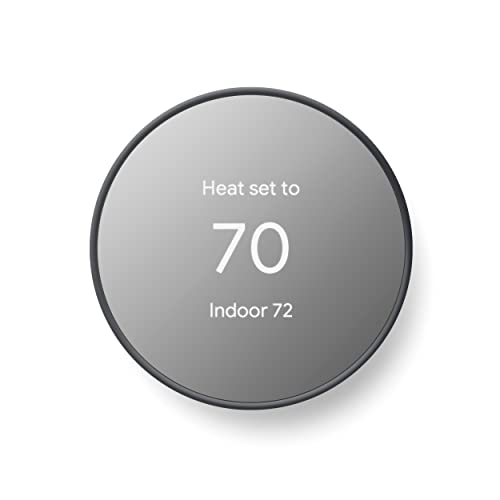
The Nest Thermostat emphasizes energy savings and ease of use with smart features and compatibility checks. Best for homeowners seeking a robust ecosystem with strong compatibility and potential energy monitoring. Caution: no built-in physical lock means you may need a separate lock box if tamper protection is a priority. Nest supports installations in many homes without a C-wire, though some configurations may require one.
Pihode Thermostat Lock Box with Combination Lock

The Pihode lock box offers a combination lock for keyless access to thermostats and sprinkler controllers. Best for large spaces that require flexible, shared access without keys. Outer dimensions roughly 9.7″ x 5.9″ x 2.5″ and inner space around 7.1″ x 4.5″ x 2.2″. Includes non-pressurized dual-use protection for devices beyond thermostats. Limitation: requires code management; forget the code and access could be delayed.
Buying Guide
What should you consider when choosing a thermostat with password or lock protection?
- Lock type: Decide between physical locks (keys or combo/password) and digital access (app-based). Physical locks offer tamper resistance; digital controls provide convenience.
- Compatibility: Ensure the thermostat works with your HVAC system and supports the wiring present in your home. Some models don’t require a C-wire.
- Energy savings: Look for ENERGY STAR certifications or energy-management features that help reduce consumption and may qualify for rebates or utility programs.
- Installation: Consider DIY installation ease and whether you need professional setup for complex wiring or smart features.
- Security and privacy: Review data handling policies for smart thermostats that collect usage data and connect via cloud services.
- Lock box considerations: If choosing a lock box, verify inner dimensions fit your thermostat model and consider glare resistance, durability, and ease of access for authorized users.
FAQ
- Do all smart thermostats support a lock or password feature?
- Can I install a physical lock box on any thermostat?
- Is it necessary to have a C-wire for a smart thermostat?
- What is the best option for a rental property seeking tamper protection?
- Can I pair a lock box with a non-locking thermostat for extra security?
- Do these thermostats work with voice assistants?