Best Thermal Fuse for Fan: Top Picks for Reliable Overheat Protection
Fans rely on dependable thermal protection to prevent overheating and extend motor life. The right thermal fuse can shut a circuit when temperatures climb, safeguarding components without interrupting normal cooling. This guide highlights five high-quality options, explains how to choose the right temperature, and compares features to help American readers pick a fuse that matches a fan’s operating conditions and safety standards.
Summary of chosen products
| Product | Brand | Operating Temperature | Voltage | Current |
|---|---|---|---|---|
| uxcell 10Pcs New RH 130C Double Lead Thermal Fuse | uxcell | 130°C | 250V | 2A |
| uxcell 10 Pcs Axial Leads 125°C Thermal Fuses | uxcell | 125°C | 250V AC | 2A |
| BOJACK SF96E 133°C Thermal Fuses | BOJACK | 133°C | 250V | 10A |
| BOJACK SF139E 142°C Thermal Fuses | BOJACK | 142°C | 250V | 10A |
| MECCANIXITY 152°C Metal Thermal Fuse | MECCANIXITY | 152°C | 250V | 15A |
Note: Temperature ratings indicate the cutoff point at which the fuse interrupts current. For fan applications, select a rating slightly above the motor’s normal operating temperature to avoid nuisance trips while ensuring protection during fault conditions.
uxcell RH130C Double Lead Thermal Fuse

The uxcell RH130C fuse model is designed for compact applications with a small body size, suitable for tight spaces inside fan housings. It is rated for 250V and 2A, with a 130°C function temperature. The dual lead construction makes installation straightforward in circuits where space is at a premium. This option helps prevent overheats in motor windings and control boards when ambient conditions rise.
Key considerations include the package size (5.5 x 5.3 x 2.4 mm) and lead length, which influence compatibility with existing wiring harnesses. Suitable for applications where a rapid temperature response is needed without sacrificing reliability, the RH130C provides a balanced safety margin for typical small to mid-size American fans.
uxcell 125°C Axial Leads Thermal Fuse
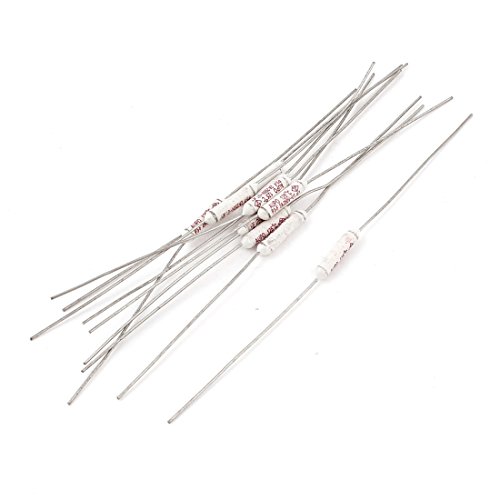
This axial-lead thermal fuse from uxcell operates at 125°C with a 250V AC rating and 2A current capacity. It features a compact body (13 x 3 mm) and a total length of 85 mm, making it useful for fan assemblies with longer lead requirements or where space allows a longer fuse profile. The 0.5 mm diameter pins offer simple insertion into standard fuse sockets or inline wiring with minimal clearance needs.
Pros include straightforward installation and compatibility with many small and mid-sized fans used in HVAC and consumer electronics. When selecting this part, ensure the operating environment does not exceed its 125°C threshold during normal use; otherwise, a nuisance trip could occur, affecting airflow and motor performance.
BOJACK SF96E 133°C Thermal Fuse

The SF96E model from BOJACK indicates a robust 133°C operation temperature suitable for motors and small machinery where higher ambient heat is anticipated. With a 250V rating and 10A current capacity, this fuse provides a strong safety margin against motor overheating and insulation damage. Pack solutions often come in multiples, offering replacement readiness for service intervals in HVAC fans or gear-driven units.
Potential considerations include the higher current rating that may be more than what a tiny fan circuit requires. For larger or more powerful fans, this fuse can be a dependable safeguard, but for compact devices, ensure the current draw remains within spec to prevent unintended disconnections during normal operation.
BOJACK SF139E 142°C Thermal Fuse

The SF139E variant from BOJACK is designed for higher temperature protection at 142°C with the same 250V rating and 10A current capacity. This makes it suitable for fans operating in warmer environments or with motors that generate substantial heat during extended use. The device is part of a family of high-temperature cutoffs, aiming to protect both wiring insulation and motor windings from thermal damage.
Users should verify the fan’s expected operating temperatures during peak loads. If ambient conditions routinely approach 140°C or more, this part provides a practical safety cap. However, ensure lead lengths and enclosure clearance accommodate the fuse’s dimensions and prevent accidental contact with hot surfaces.
MECCANIXITY 152°C Metal Thermal Fuse

The MECCANIXITY set includes six metal-encased fuses with a 152°C cutoff, rated at 250V and capable of 15A. The metal-body design offers durability in harsher environments and makes it well-suited for motor protection in fans that operate in warm spaces or require a higher actuation temperature to prevent nuisance trips. The compact body size (4×11 mm) keeps it usable in compact motor housings.
Key considerations include the relatively high actuation temperature and higher current rating. For standard residential fans, a lower temperature fuse may be sufficient, but for industrial or high-heat conditions, the 152°C MECCANIXITY option can provide robust protection while avoiding unnecessary shutdowns during normal operation.
Buying Guide: How to Choose the Right Thermal Fuse for Your Fan
When selecting a thermal fuse for a fan, consider three core factors: operating temperature, electrical ratings, and physical fit.
- Operating temperature: Choose a cutoff slightly above the fan’s normal running temperature but below any insulation or motor damage threshold. Common fan applications use fuses in the 125–142°C range, depending on circuit design and ambient heat.
- Voltage and current ratings: Ensure the fuse voltage matches the supply (often 120V AC in the US) and that the current rating accommodates the fan’s startup and running current without tripping prematurely.
- Physical form and lead type: Axial leads, double-lead designs, and metal encasements offer different mounting options. Check body dimensions and lead lengths to fit inside enclosures or harnesses, and confirm lead spacing aligns with your wiring.
Additional considerations include environmental exposure (dust, humidity, vibration), replacement accessibility, and supplier availability. For high-heat or motor-driven fans, select higher current ratings and higher temperature cutoffs to balance protection and uninterrupted operation. Always replace fuses with the same model or an equivalent rating to preserve safety standards and performance.
In practice, a combination approach often works well: choose a baseline fuse around 125–133°C for standard fans, then reserve higher-temperature options (139–152°C) for hot environments or applications with larger motors. If space is limited, prioritize compact axial or double-lead designs that integrate smoothly into existing wiring harnesses.