Best Thermal Conductivity Testing Machines for Gem Identification
Need a reliable device to differentiate diamonds from moissanites and other gemstones by thermal conductivity? This guide highlights five effective options suited for jewelers, students, and lab Techs. Each model is chosen for clarity, portability, and practical use in real-world settings. If you work with loose gems, wholesale lots, or on-site appraisals, you’ll find a strong match here. The table below helps compare core strengths at a glance.
| Product | Best For | Key Feature |
|---|---|---|
| WEIZIIA Gemstone Differentiation Tester | Portable on-the-go testing | Retractable probe; detects diamonds as small as 0.02 carats |
| Presidium Gem Tester II (PGT II) with ATC | Accurate lab-like testing in the field | Assisted Thermal Calibration; thinnest retractable probe tip |
| KVTNCB Multi Gemstone Differentiation Tester | 16-gem identification with compact form | Retractable probe; accurate data with buzzer |
| Hqdz-td High Accuracy Diamond Tester Pen | Simple, quick checks for real vs simulants | 9+ LED/readout; easy two-hand operation |
| Apera EC60 Waterproof Conductivity Pocket Tester | Precision EC/TDS/Salinity measurements | Replaceable probe; auto calibration and temp compensation |
Presidium Gem Tester II with ATC
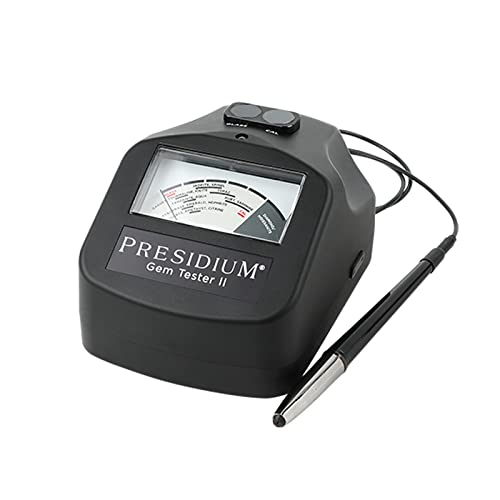
Best for professionals needing stable, in-field calibration. This model includes Assisted Thermal Calibration, helping to self-calibrate for varying testing environments, and features the industry’s thinnest retractable probe tip for delicate samples. It is well suited for labs and shops seeking compact, portable duty with trusted performance. Limitations may include a steeper learning curve for first-time users due to calibration steps.
WEIZIIA Gemstone Differentiation Tester

This portable thermal conductivity pen is designed to identify diamonds and moissanites, differentiating 16 gemstone types. It features a retractable probe to maintain consistent contact and a metal alarm buzzer to indicate contact is maintained during testing. Best for field gemologists and jewelers needing quick results, with a caution that results are indicative and should be used alongside other methods for final determination.
KVTNCB Multi Gemstone Differentiation Tester

This tester uses thermal conductivity to distinguish diamonds and moissanites and can identify 16 types of gemstones. The retractable probe ensures constant pressure, and a buzzer confirms contact for consistent results. It’s best for mid-size shops and hobbyists who need reliable, quick screening with clear visual indications. Caution: results should be corroborated with additional gem properties for definitive conclusions.
Apera EC60 Waterproof Conductivity Pocket Tester Kit

Best for labs and field use needing robust EC/TDS/Salinity measurements with high accuracy. The EC60 features a replaceable probe, auto calibration with buffer recognition, auto temperature compensation, and a dual display for temperature and EC readings. Choose this if you require durable, water-resistant testing with easy maintenance. Limitation: primarily a conductivity meter, not a dedicated gemstone tester; use with gem testing methods for best results.
High Accuracy Diamond Tester Pen

This professional diamond tester pen provides an LCD display and LED indicators for quick, straightforward readings. It’s designed for ease of use by both newcomers and experienced testers. Best for quick screening of real versus simulants, with a caution that results should be cross-verified for high-value stones or ambiguous readings.
KVTNCB Multi Gemstone Differentiation Tester
Note: This entry repeats to emphasize its relevance for differentiating diamonds and moissanites. It offers clear, analog-dial readability and a buzzer for active contact confirmation. Best for enthusiasts and professionals who value a tangible test readout and steady performance in variable lighting conditions. Caution: ensure hands-on handling is clean to avoid contact noise affecting readings.
Buying Guide: Key Purchase Considerations
- What will you test most often? If your work focuses on diamonds and moissanites, prioritize devices with clear thermal conductivity differentiation and small-diameter probes.
- Portability vs. lab-grade stability: For on-site use, choose compact, rechargeable units with reliable calibration options; for shop or classroom use, a steadier bench unit may be preferable.
- Probe design and precision: Retractable probes help maintain consistent contact pressure. Look for a 0.6 mm tip or similar for accommodating small samples.
- Calibration and stability: Models with Assisted Thermal Calibration or auto-calibration simplify setup and reduce drift across testing sessions.
- Indication methods: Visual (LED, LCD) indicators should be easy to read in typical work environments. A buzzer or alarm can help confirm contact remains stable during testing.
- Durability and environmental resistance: Waterproof or ruggedized options are beneficial for fieldwork and workshop environments.
- Complementary testing: Thermal conductivity devices are most effective when used alongside refractive index, hardness, and visual inspection for definitive identification.
Common buyer questions
- Are these testers sufficient to confirm a gem’s identity? They provide rapid screening and differentiation guidance but are best used with additional gemological methods for final confirmation.
- What is the difference between a dedicated diamond tester and a general gemstone tester? Dedicated diamond testers often emphasize conductivity differentiations between diamond and simulants, while general testers may cover more gemstone types.
- How important is probe size? Smaller probes improve contact for tiny stones, enabling more accurate readings on small carats.
- Do all testers require calibration before use? Many modern models include auto or assisted calibration to minimize drift; some require minimal setup.
- Can testers be used for educational purposes? Yes, several models are designed for classroom demonstrations with clear, visual readouts.
Frequently Asked Questions
- What is thermal conductivity testing? It measures how heat passes through a gemstone to help distinguish diamonds from moissanites and other stones.
- Which tester is best for field appraisals? A compact, battery-powered unit with a retractable probe and easy calibration is typically ideal for field use.
- Can these devices detect all gemstone types? They identify many common stones and provide comparative readings; use alongside other tests for complete accuracy.
- Do testers require special training? Basic familiarity with the device and its indicators is enough for most users; some models include guided calibration tips.
- Are waterproof testers necessary? For field work or handling damp samples, waterproof or rugged units can reduce maintenance concerns.
- How should I store and maintain these devices? Keep probes clean, store with batteries in good condition, and perform regular calibration checks per manufacturer guidance.