Best Tankless Water Heater Models for Quick, On‑Demand Hot Water
When selecting a tankless water heater, most buyers want fast hot water, space efficiency, and a reliable energy profile. This guide highlights five models suitable for different living situations and hot-water needs. The top picks include indoor/outdoor gas options, compact electric point‑of‑use units, and RV‑friendly solutions. Each entry notes who it’s best for and why it was chosen, plus practical cautions to consider before buying.
Summary table of chosen products:
- Rinnai RX199iN Condensing Tankless Water Heater — Best for whole-home, indoor/outdoor gas versatility
- AIYEZIDT 110V Electric Tankless Water Heater — Best for apartments, kitchens, and small spaces
- ORBEK RV Tankless Water Heater — Best for RV families and campers
- Rheem RTEX-24 24kW Electric Tankless Water Heater — Best for larger homes with 240V service
- ORBEK 14kW Tankless Electric Heater — Best for small homes needing 1–2 fixtures
Rinnai RX199iN Condensing Tankless Water Heater

Best for: Homeowners needing high flow across multiple fixtures with indoor or outdoor installation. This unit supports up to 11.1 GPM and works with either propane or natural gas, thanks to a Smart Sense gas control system and versa venting. It’s compact enough to be installed in tight spaces.
Why chosen: It combines a compact footprint with high efficiency (UEF up to .98) and flexible placement. Quick Flush makes maintenance easier, and a WiFi control option exists through the Controlr module (not included).
Caution: Outdoor installs require the RX-OVC vent cap, and indoor or outdoor configurations may demand professional venting compliance and gas line sizing.
AIYEZIDT 110V Electric Tankless Water Heater
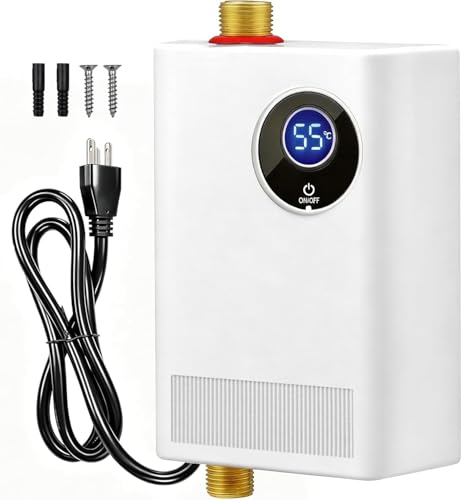
Best for: Small spaces, apartments, and point‑of‑use hot water at sinks or showers where 110V power is readily available.
Why chosen: Provides instant hot water in 3–5 seconds with no preheat, and a compact, wall‑mount design suitable for kitchens, bathrooms, RVs, or campers. Safe operation features include IPX4 waterproofing and automatic power-off in non-working conditions.
Caution: Maximum output is limited compared to gas or higher‑power electric models, so it’s best for low to moderate hot-water demand and limited fixtures.
ORBEK RV Tankless Water Heater
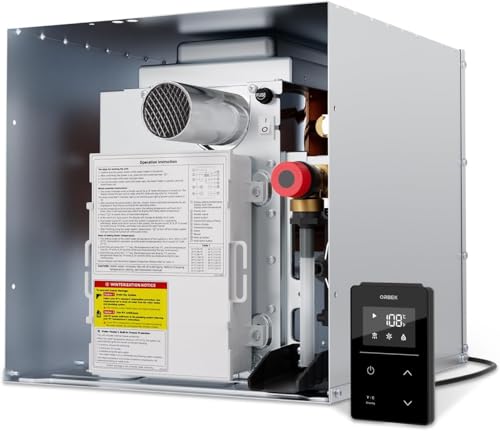
Best for: RV families and campers needing reliable on‑demand hot water off‑grid or on the road.
Why chosen: Delivers 60,000 BTU heat output with a burner that activates only when hot water is needed, conserving propane. High-altitude performance and compact retrofit options make it adaptable for various RV configurations.
Caution: RV installation requires proper clearance and ventilation; check compatibility with your RV’s electrical and gas setup and ensure remote control use aligns with your vehicle’s wiring requirements.
Rheem RTEX-24 24kW Electric Tankless Water Heater
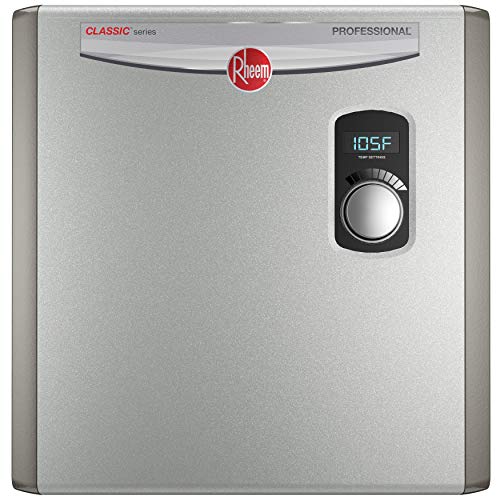
Best for: Homes with adequate 240V service and space for a higher‑output electric unit to supply multiple fixtures.
Why chosen: Provides continuous hot water with adjustable temperature and a straightforward ON/OFF dial control. It’s a robust option for whole‑home use when electrical capacity supports 24kW output.
Caution: Requires substantial electrical capacity (three 40‑amp double pole breakers or higher) and adequate panel space; improper sizing can affect performance and safety.
ORBEK 14kW Tankless Electric Water Heater

Best for: Small homes or apartments needing hot water for 1–2 fixtures with 240V service.
Why chosen: Delivers up to 3.38 GPM and uses efficient 240V power, with guidance to ensure the breaker panel can handle a 150‑amp total service. It’s a compact option for spaces where every watt counts.
Caution: Must have appropriate electrical capacity and correct wiring; exceeding circuit limits can cause tripping or electrical hazards.
Buying Guide: How To Choose The Right Tankless Model
- List all fixtures that may run simultaneously and estimate needed gallons per minute (GPM). Gas units typically support higher GPM than small electric units.
- gas vs. electric. Gas models offer higher flow for whole‑home use; electric units excel in locations with reliable electricity and limited space.
- installation environment. Indoor vs outdoor placement, venting requirements, and space constraints affect model choice and professional installation needs.
- electrical and gas requirements. For electric units, verify panel capacity and breaker availability. For gas units, confirm gas type (natural gas or propane) and venting compatibility.
- maintenance considerations. Look for features like easy‑to‑flush ports and access to cleaning routines. Periodic flushing extends life and efficiency.
- control and smart features. Some models offer WiFi or app control for monitoring temperature, usage, and maintenance reminders.
- space and footprint. Compact wall‑mounted designs save space but may have lower output; larger units offer higher flow but require more space and dedicated utilities.
FAQs
- What is a tankless water heater? A device that heats water on demand without storing hot water in a tank, typically delivering hot water as soon as a tap is opened.
- Do I need professional installation? Yes, for gas models venting, gas line sizing, and electrical hookups. Electric units also require correct circuit sizing and breaker protection.
- Can tankless heaters run multiple fixtures at once? Yes, depending on fuel type and unit capacity; gas models generally handle higher GPM than small electric units.
- What maintenance is required? Periodic flushing to remove mineral buildup enhances efficiency and longevity; follow manufacturer guidelines for dissolved minerals and cleaning intervals.
- How do I choose between gas and electric? Consider your available utilities, climate, and hot-water demand. Gas units deliver higher flow; electric units work well in smaller spaces with robust electrical service.
- Is venting necessary for all tankless models? Gas models require venting; electric models do not, but some installations may still require specific clearances and heat management.