Best Tankless Hot Water Heaters for Instant Comfort and Space Savings
Need instant hot water without a bulky tank? This guide highlights five reliable tankless electric water heaters that fit a range of homes and usage patterns. Each option is analyzed for best-fit scenarios, so you can pick the right unit for your household size, space, and electrical setup. The top picks cover compact point-of-use models, mid-range flow rates for multiple fixtures, and self-modulating technologies that optimize energy use.
Buyer’s Quick Reference Table:
| Product | Best For | Key Benefit |
|---|---|---|
| Rheem 18kW 240V | Medium households with higher hot water demand | Advanced self-modulation and durable elements |
| Orbek 14kW | 2-3 fixtures, strong heat for bigger sinks | High flow for multiple outlets |
| EcoSmart ECO 11 | Space-saving and energy efficiency | Patented self-modulating tech, compact size |
| AIYEZIDT 3000W | Under-sink or compact spaces | Very quick hot water, portable and versatile |
| Rheem 11kW | Simple, compact installation | Easy temperature control |
Rheem 18kW 240V Tankless Electric Water Heater, Gray

Best for households with higher hot water demand, this Rheem model features external digital thermostat control with an LED display, accurate to ±1 degree. It employs advanced self-modulation to adjust power as needed and includes durable copper immersion heating elements that are field serviceable. It can deliver up to 4.4 GPM, making it suitable for kitchens, baths, and multiple fixtures in moderate-sized homes. The product is ideal for buyers who want precise temperature control and a reliable, install-anywhere unit.
Who it’s best for: homes that run multiple outlets simultaneously and want straightforward digital controls with robust build quality. Why chosen: high flow capacity and flexible maintenance options support steady hot water for busy households.
Caution: Ensure your electrical panel supports a high-demand 18 kW installation; improper sizing could impact performance.
Orbek 14kW Tankless Water Heater Electric, 240V

Best for 2-3 fixtures with strong performance, this Orbek unit requires a 240V/60A two-pole breaker and proper wiring. It delivers up to 3.38 GPM and is ETL certified for indoor installation. Orbek emphasizes energy efficiency and cost savings by delivering instant hot water with reduced electricity usage compared to traditional tanks. It’s a solid choice for homes where electrical capacity is confirmed and you want reliable hot water on demand.
Who it’s best for: households with two to three hot-water outlets and a compatible 240V electrical setup. Why chosen: high flow for its size and clear emphasis on energy savings.
Caution: Requires appropriate electrical panel capacity (at least 150 amps total available in the home’s panel) and proper installation wiring.
EcoSmart ECO 11 Electric Tankless Water Heater

Best for compact spaces with a focus on energy efficiency, this 13 kW unit at 240 volts uses patented self-modulating technology to adjust power in real time based on demand. It’s 90% smaller than traditional tank heaters and can be mounted on a wall or at the point of use. It’s designed to heat water efficiently, with claims of high energy savings and minimal energy waste due to on-demand operation. Ideal for small apartments or secondary bathrooms where space is at a premium.
Who it’s best for: buyers seeking a space-saving, energy-efficient option that delivers reliable hot water for single or small multi-point setups. Why chosen: best balance of size, efficiency, and simple integration.
Caution: The ECO 11 is a lower-flow model; verify that 13 kW is sufficient for your hot-water needs at the outlets you intend to serve.
AIYEZIDT Tankless Electric Water Heater, 110V
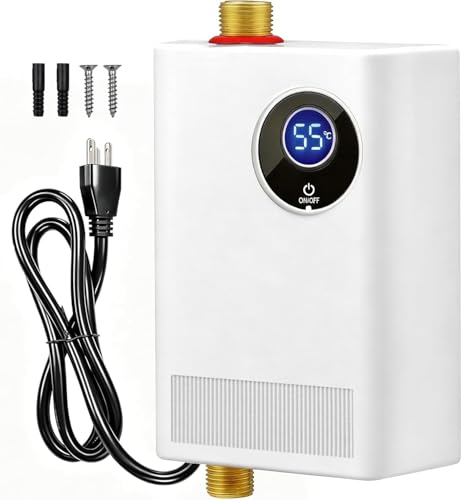
Best for under-sink or portable hot-water needs, this 110V mini unit delivers instant hot water in about 3-5 seconds. It has a compact, wall-mounted design ideal for kitchens, bathrooms, RVs, or camping. With IPX4 waterproofing and automatic power-off in non-working conditions, safety features accompany smart performance indicators via a digital display. It’s well-suited for point-of-use installations where space or flexibility matters.
Who it’s best for: renters, small apartments, or campers needing quick, localized hot water. Why chosen: compact size with fast heat-up and robust safety features.
Caution: 0.3–0.5 GPM ranges limit simultaneous use; not ideal for higher flow requirements or multiple outlets.
Rheem 11kW 240V Tankless Electric Water Heater
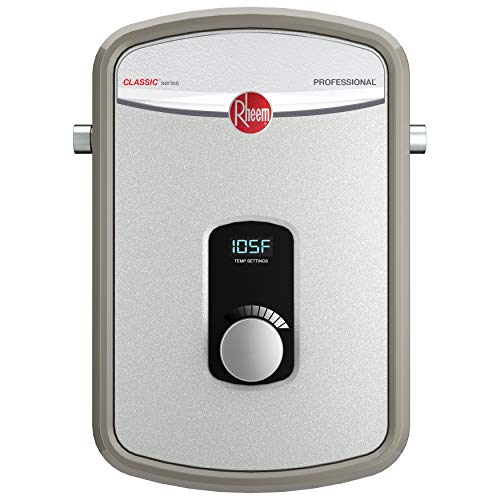
This model offers straightforward control with an ON/OFF dial and adjustable digital temperature display. Its self-modulating power control helps optimize energy use, delivering up to 2.68 GPM. It suits small to mid-sized households where a simple, reliable hot-water solution is desirable and electrical capacity is moderate.
Who it’s best for: households needing a compact, easy-to-use unit for limited hot-water demand. Why chosen: practical, simple operation with reliable Rheem engineering.
Caution: Lower flow than higher-kW models; consider whether 2.68 GPM meets peak simultaneous demand.
CAMPLUX ENJOY OUTDOOR LIFE Tankless Water Heater, 6kW

Best for space-constrained scenarios, this 6 kW unit is a point-of-use solution designed for under-sink or small installations. It uses self-modulating technology to adjust energy use and claims significant energy savings compared to traditional systems. The compact footprint and wall-mount design suit apartments, tiny homes, or office setups needing dependable hot water at a single point of use.
Who it’s best for: buyers prioritizing minimal space and lower electrical demand for a single fixture. Why chosen: smallest footprint among the selections with reliable on-demand performance.
Caution: Lower maximum flow; not suitable for multiple fixtures simultaneously or high-demand scenarios.
Buying Guide: Key Considerations For Choosing A Tankless Electric Water Heater
- Flow rate requirements: Determine GPM needs based on the number of fixtures that may run simultaneously. Higher kW units support more outlets, but may require upgraded electrical capacity.
- Electrical compatibility: Check voltage, amperage, and circuit capacity. Some models demand 240V and 60A or higher; confirm panel space and wiring before purchase.
- Self-modulating technology: Models with self-modulation adjust power to match demand, improving energy efficiency and stabilizing water temperature.
- Installation space: Consider point-of-use versus whole-home installation. Compact units fit under sinks or in tight alcoves, while larger units may serve multiple fixtures.
- Temperature control: Look for digital displays and precise adjustable ranges. Accurate temperature control reduces water waste and improves comfort.
- Durability and maintenance: Copper heating elements and field-serviceable parts can extend life. Accessibility for service can reduce downtime and costs.
- Safety features: IP ratings, dry-run protection, and overheating safeguards protect home systems and users.
Frequently Asked Questions
- What size tankless water heater do I need? – Choose based on peak GPM needs and available electrical capacity. For fewer simultaneous outlets, smaller kW units may suffice; larger households may require higher kW models and potential panel upgrades.
- Do tankless heaters waste more energy on standby? – No. Tankless systems heat water on demand, avoiding standby energy losses associated with traditional tanks.
- Can a tankless water heater fit under my sink? – Many point-of-use models are designed for under-sink installation and small spaces, but verify dimensions and mounting options before purchase.
- Is self-modulating technology worth it? – Yes, it helps optimize energy use by adjusting power to match hot-water demand, potentially lowering electricity costs over time.
- What maintenance do these require? – Regular inspection of connections, mineral deposit management, and occasional element servicing are common; refer to manufacturer guidelines.
- Are these units suitable for apartments? – Yes, especially compact or point-of-use models designed for limited spaces and lower electrical loads.