Best Tankless Gas Water Heaters for Instant Hot Water
Tankless gas water heaters provide on-demand hot water, reducing energy waste and delivering warmth exactly when you need it. This article highlights five top-rated models, exploring capacity, efficiency, and smart features to help American homeowners choose the right unit for bathrooms, kitchens, and more. Each product section includes a concise overview, key features, and installation considerations to support an informed purchase.
| Model | Brand | Flow (GPM) | BTU | Install Type |
|---|---|---|---|---|
| Ranein 100,000 BTU | Ranein | 4.3 | 100,000 | Indoor |
| Rinnai RX199iN | Rinnai | Up to 11.1 | 199,000 | Indoor/Outdoor |
| FOGATTI 170S Indoor | FOGATTI | 7.5 | 170,000 | Indoor |
| APUS 140,000 BTU | APUS | 6.8 | 140,000 | Indoor |
| ThermoMate CZ422NG | thermomate | 4.7 | 102,000 | Indoor |
Ranein 100,000 BTU Tankless Gas Water Heater

The Ranein model delivers 100,000 BTU heating capacity with a continuous hot water flow of 4.3 GPM. This unit supports multiple daily needs—bathroom, kitchen, and bar—without the typical waiting period associated with storage heaters. It includes a Four Seasons Function to adjust output across seasonal temperature changes, a default 100°F kitchen setting, and a bathtub mode with adjustable output. Its on-demand design eliminates the long preheat time, helping households conserve energy while maintaining comfort.
Key considerations: suitable for 2–3 fixtures at once, indoor installation, and functional modes that tailor output. Installation should account for venting requirements and local code compliance for gas-powered units.
Rinnai RX199iN Condensing Tankless Water Heater

The Rinnai RX199iN is a versatile, high-capacity option that can be installed indoors or outdoors using Versa Vent and supports propane or natural gas. It provides up to 11.1 GPM, handling multiple fixtures simultaneously, making it suitable for larger homes or households with high hot-water demands. The unit focuses on energy efficiency (UEF and advanced control) and offers a smart interface with a Quick Flush feature for maintenance. WiFi control is available via the ControlR module (not included).
Key considerations: indoor/outdoor flexibility, high hot-water delivery, and energy-conscious operation. Outdoor installation may require the RX-OVC vent cap and careful attention to climate and venting compliance.
FOGATTI 170,000 BTU Indoor Tankless Water Heater

FOGATTI’s Instagas Comfort 170S Series delivers 170,000 BTU and 7.5 GPM, providing reliable hot water for 3–5 outlets. The unit is designed for indoor installation with rapid heating and a four-stage combustion system that maintains temperature within ±1°F. It emphasizes compact design and high output, making it suitable for busy households that demand simultaneous hot water use across multiple tasks like showers, laundry, and appliance use.
Key considerations: ensure adequate venting and combustion air, and consider the installation footprint for indoor placement. The system also includes features to maintain stable performance across seasons.
APUS Tankless Water Heater Propane, 140,000 BTU
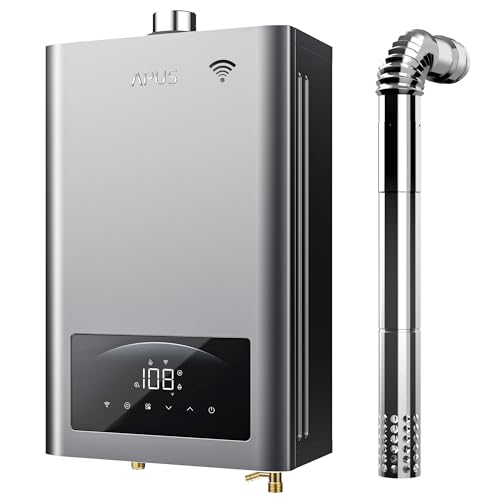
APUS offers a propane-powered tankless heater with 140,000 BTU and up to 6.8 GPM. A core benefit is instant hot water, supported by exclusive single-circulation technology that minimizes cold-water waiting. The built-in booster pump increases flow by up to 130%, enabling simultaneous use across two showers and two sinks with limited temperature fluctuation. Smart Wi-Fi app control (module may be required) rounds out the feature set for modern households.
Key considerations: evaluate household hot-water demand, ensure a reliable gas supply, and plan for wireless control integration. Energy efficiency and flow stability are central to consistent comfort across multiple fixtures.
ThermoMate CZ422NG Indoor Tankless Water Heater

The ThermoMate CZ422NG delivers 102,000 BTU and 4.7 GPM, aiming to serve households with 3–4 fixtures. Advanced flow sensing and rapid power adjustments maintain water within ±1°F, reducing temperature shocks. Safety features include boil-dry protection, freeze protection, and over-temp safeguards, while copper heat exchangers contribute to thermal efficiency and durability. The unit emphasizes reliable, on-demand hot water with a focus on comfort and safety.
Key considerations: match with your water usage pattern and ensure proper venting. Copper exchangers support longevity and efficiency, which can translate into ongoing operating savings over time.
Buying Guide: Key Purchase Considerations
- Hot-water demand: Estimate daily needs by number of bathrooms, showers, and major appliances. Size your unit to deliver steady flow (GPM) without dramatic temperature drops during peak use.
- Gas type and venting: Determine whether the home uses natural gas or propane. Outdoor installations require proper venting and weatherproofing; indoor units must have appropriate venting infrastructure.
- Efficiency and energy use: Look for high UEF ratings and advanced controls. Condensing models generally use less fuel for the same hot-water output, delivering lower operating costs.
- Installation considerations: Check clearance, mounting options, and service access. Some units are designed for indoor wall mounting, others for outdoor placement with weather protection.
- Smart features and control: WiFi or app-based controls can help monitor usage and optimize performance. Quick flush and maintenance features simplify upkeep and extend life.
- Maintenance and serviceability: Consider the availability of spare parts and local service technicians. Regular descaling and vent inspection are important in gas units.
- Budget and warranty: Compare initial cost with long-term savings from energy efficiency. Review warranty terms for heat exchangers and burners to understand coverage over time.
- Climate and installation site: Colder climates may benefit from units with freeze protection and robust performance in low incoming water temperatures.
Overall, choosing a tankless gas water heater involves balancing flow needs, efficiency, and installation constraints. The models listed above represent a range of capacities and configurations to match typical American homes—from compact indoor units to high-capacity systems designed for multi-fixture demand. When selecting, confirm venting requirements, compatibility with your gas type, and the availability of local installation expertise to ensure optimal performance and safety.