Best Surge Tester for Motors: Top Tools for Accurate Winding and Electrical Diagnostics
Motor maintenance and winding testing demand precise, reliable surge testers. This guide highlights five of the most relevant devices for evaluating surges, windings, and electrical health in motors and related systems. Each selection balances measurement range, usability, and safety features to help technicians choose the right tool for diagnostics, troubleshooting, and benchmarking in HVAC, automotive, and industrial settings. The following sections present concise product overviews, practical testing notes, and a buyer’s guide to help compare options side by side.
| Product | Primary Use | Notable Feature |
|---|---|---|
| U9845 4-Channel Impulse Winding Tester | Impulse winding testing and surge evaluation | Four high-voltage channels with multiple waveform comparison methods |
| HPUY ECMPro Universal ECM Motor Tester | Go/No-Go testing for ECM motors | 24-inch leads, battery-free operation, short circuit protection |
| UNI-T UT216B UT216C Clamp Meter | Surge current and motor switch testing | True RMS, inrush measurement, non-contact voltage detection |
| DROK DC 4.5-100V Voltmeter Ammeter | Voltage and current monitoring for DC systems | Wide DC range with easy LED display |
| GODIAG Power Circuit Probe Tester | Electrical system testing across DC vehicle circuits | Multi-function tester with circuit protection and relay checks |
Impulse Winding Tester For Surges

The U9845 Impulse Winding Tester from M&A INSTRUMENTS supports a pulse voltage range from 100V to 5000V in 10V steps, with a 5% tolerance plus or minus 10V. The device uses switching components controlled by high-stability power and thyristor modules, which enhances stability, reliability, and measurement precision during testing. Operating across four high-voltage channels, it offers four waveform comparison methods: area, differential area, corona, and differential phase. A robust 32-bit CPU and a memory depth of 6500 bytes power its accurate measurements, while a 65k-color 7-inch TFT display provides clear viewing. The device supports both English and Chinese interfaces.
For motor and transformer winding diagnostics, this tester enables comprehensive insulation and impulse testing, helping technicians identify winding flaws and potential failure points before they cause outages. Its multi-channel capability supports complex winding configurations, and the variety of waveform comparison methods allows tailored analysis depending on the winding type and test objective. The combination of high-voltage capability and large display makes it suitable for labs and field service where reliability is critical.
ECM Motor Tester For ECM Motors

The HPUY ECMPro ECM motor tester provides quick Go/No-Go testing for virtually all electronically commutated motors, making it a practical diagnostic tool for HVAC technicians. It features 24-inch leads to reach tight spaces and a battery-free design, contributing to speed and reliability in field work. Short circuit protection is built in to safeguard both the tool and surrounding equipment, reducing the risk of damage during testing. This device is designed to streamline ECM motor checks, allowing rapid verification of motor health, control electronics, and integration with HVAC systems.
Users can rely on the straightforward testing workflow to determine motor functionality without the need for lengthy disconnections or battery replacements. Combined with its sturdy build and accessible leads, it supports routine maintenance, installation checks, and quick troubleshooting of ECM motor assemblies, especially in cramped or hard-to-access installations.
Clamp Meter For Surge And Motor Testing

The UNI-T UT216B/UT216C 600A digital clamp meter measures AC and DC currents with True RMS response, suitable for surge current and motor switch testing. It includes inrush current measurement to evaluate startup surges and a V.F.C. function for variable-frequency signals, enabling more precise diagnostics in modern variable-speed motor systems. The device also features non-contact voltage detection with LED indicators for quick safety checks, and runs on three AAA batteries. This tool helps technicians monitor live circuits while limiting exposure to high voltages during testing of motors and controllers.
DC Voltmeter And Amp Meter Combo

The DROK DC 4.5-100V digital voltmeter and ammeter provides a compact, easy-to-read panel for monitoring voltage and current in DC systems. It covers a wide DC range from 4.5V to 100V and 0-50A, making it suitable for evaluating DC motors, battery banks, and charging circuits. The 0.39-inch LED display presents measurements clearly, helping technicians track power surges and load conditions in real time. This tool is particularly useful in settings where continuous monitoring is needed and where space is at a premium.
Multi-Function Probe Tester For Electrical Systems

The GODIAG Power Circuit Probe Tester is a versatile diagnostic tool for auto and industrial electrical systems within a 6-40V DC range. It supports a broad set of tests, including voltage, polarity, continuity, current, relay function, injector checks, and short-trace localization. It features a built-in 10-amp circuit breaker for immediate protection and automatic trip at higher currents, which helps prevent damage during testing. This tool enables quick investigations of circuits in motorcycles, trucks, buses, boats, and other DC-powered equipment, making it a practical addition to any motor diagnostics toolkit.
Battery And Motor Health Tester
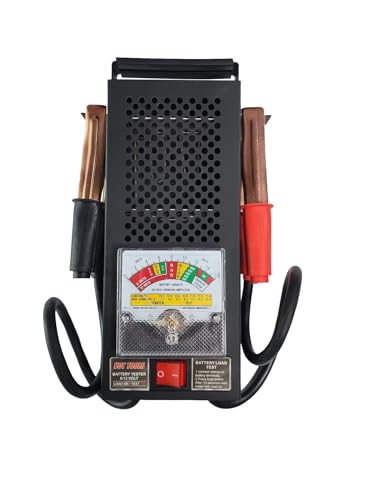
The VCT Battery Load Tester measures battery health by performing load tests on 12-volt and 6-volt systems, assessing starter motor draw and charging system output. It supports up to 1000 CCA on 12V batteries and provides results for battery condition, load performance, and alternator health. Although broadly framed as a battery tester, its load-testing capabilities offer insight into how a motor’s electrical supply may respond under surge conditions, helping technicians diagnose related motor performance issues and electrical system reliability. It is a robust option for garages and service bays that regularly evaluate vehicle electrical health in concert with motor performance checks.
Buying Guide: Key Purchase Considerations And Comparisons
When selecting a surge tester for motors, consider the following factors to ensure you choose a tool that fits your workload and environment:
- Voltage and current range: Match the tester to your typical motor ratings and the surges you need to evaluate. Impulse testers like the U9845 offer high-voltage capabilities, while clamp meters capture inrush and surge currents without disconnection.
- Measurement type and accuracy: Look for True RMS readings for AC measurements, high memory depth for waveform retention, and multiple waveform comparison methods for detailed winding analysis.
- Safety and protection: Devices with built-in overcurrent protection, short-circuit protection, and safe handling features reduce risks during high-voltage testing or battery diagnostics.
- Ease of use in field settings: Battery-free designs, long test leads, clear displays, and multilingual interfaces help technicians operate efficiently on-site or in tight spaces.
- Versatility vs. specialization: A multi-function tester can cover general electrical testing and motor diagnostics, while specialized impulse testers provide in-depth winding and insulation insights.
- Connectivity and documentation: Clear data display, memory, and export options can improve reporting and maintenance logs for motor health programs.
- Tool footprint and durability: Consider weight, build quality, and case protection for service fleets and field technicians who travel between sites.
For a balanced setup, technicians often pair a high-voltage impulse winding tester for winding diagnostics (such as the U9845) with a reliable clamp meter for ongoing current and surge analysis (like the UNI-T UT216B). A compact DC monitor (DROK) and a circuit-probe tester (GODIAG) round out a practical, all-purpose diagnostic kit, enabling quick checks of power delivery, safety conditions, and wiring integrity across motor installations. Prioritize devices with clear user interfaces, robust safety features, and compatibility with your typical motor types and electrical environments.