Best Surge Protectors for Breaker Boxes and Whole-Home Protection
Protecting your home’s electrical system starts at the breaker box. The following surge protectors are designed for whole-panel or main-load protection, helping guard appliances, electronics, and HVAC equipment from damaging voltage spikes. This guide highlights five top options, outlines key features, and explains what to look for when choosing a device that installs at or near the breaker box.
| Product | Brand | Type | Key Benefit |
|---|---|---|---|
| Eaton BRNSURGE Type BR | Eaton | Whole-Panel SPD | Uses 2 branch spaces; 18 kA surge per phase |
| Eaton CHSPT2SURGE SPD Type 2 | Eaton | Type 2 SPD | Universal load-center compatibility; quick-connect design |
| Furniqro FHSPD108S | Furniqro | Whole-House SPD | 108,000 Amps capacity; indoor/outdoor use |
| AQOVOR BR Whole-Panel SPD | AQOVOR | Type BR Whole-Panel SPD | 18 kA per phase; built-in status LED |
| Eaton BRPSURGE Breaker SPD | Eaton | Breaker-Integrated SPD | Protects entire downstream system; Type 2 Listed |
The following sections detail each product, including installation fit, performance characteristics, and practical considerations to help you choose the right solution for your electrical system. All options aim to mitigate surges from lightning, utility switching, and other power anomalies while remaining compatible with typical American panel configurations.
Eaton BRNSURGE Type BR Whole-Panel SPD
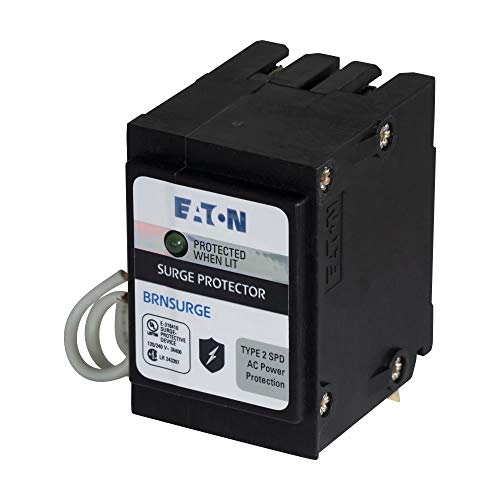
The BRNSURGE is designed for installation at BR load centers, using 2 branch circuit spaces with a surge current rating of 18 kA. It provides robust whole-panel protection suitable for modern homes with multiple high-draw appliances. Its compact form allows integration within standard BR-type panels, and the device is intended to intercept surges before they reach sensitive downstream circuits. This option is appropriate for homeowners seeking a straightforward, panel-based surge solution with strong per-phase performance.
Eaton CHSPT2SURGE SPD Type 2 Chsp Whole Home Protector

This Type 2 SPD model is built to connect universally to load centers from various manufacturers. It supports 120/240 V single-phase systems and features a quick-connect design for simple installation. It is suitable for main-panel protection where a centralized surge device is layered into the service equipment, helping to shield downstream circuits efficiently. The AC power protection focus makes it a versatile pick for many residential setups requiring reliable protection at the main distribution point.
AQOVOR Type BR Whole-Panel Surge Protector

AQOVOR’s 18 kA per-phase protection is designed for BR load centers, with dual-stage protection and a clear status LED to monitor protection status. The device clamps at safe levels to defend L-N and L-L circuits, aiding stability across 120/240 V systems. It emphasizes a balance of strong surge handling with straightforward diagnostics, making it a practical choice for homeowners who want ongoing visibility into the protector’s condition and readiness.
Eaton Electrical – BRPSURGE Breaker SPD

The BRPSURGE combines a Type 2 SPD with a plug-on-neutral design for BR, 2-pole, 1-phase installations. It provides whole-system protection and includes an LED indicator to communicate operational status. UL 1449 3rd Edition Listed protection levels help ensure compliance and safety, making it a robust option for homeowners who want a single, integrated device that safeguards the entire electrical system from severe surges.
Buying Guide
Key considerations when selecting a surge protector for a breaker box or main panel include surge capacity, compatibility, and installation style. Surge current ratings (kA per phase) indicate how much energy the device can safely absorb. Type 2 SPD devices are commonly used at the main service disconnect, while Type BR and plug-on configurations fit specific panel families. Compatibility with your panel’s brand and model is crucial to ensure proper mounting and electrical fit, and many units feature status indicators to help with maintenance and monitoring.
Other important factors include enclosure type and environmental suitability. Indoor vs. outdoor-rated enclosures affect where you can install the device. Look for UV- and weather-resistant housings if outdoor installation is anticipated. Consider whether a unit supports L-N and L-L protection to defend both single-phase and multi-wire branch circuits. If you have multiple high-energy appliances (HVAC systems, water heaters, large refrigerators), a higher surge capacity per phase can provide greater protection and longer device life.
Installation approach also matters. Some devices mount inside the panel, while others are designed to pig-tail or plug into existing spaces. Quick-connect or plug-on nec designs can simplify retrofits, but ensure you have the right tools and electrical knowledge to complete a safe installation. For ongoing monitoring, select products with a clear LED indicator or diagnostic features that signal when surge protection has degraded and needs replacement.
Durability, warranty, and compliance should not be overlooked. Look for UL 1449 listings and third-party certifications, as well as manufacturer warranties that cover surge events and device life. If you’re unsure about proper sizing or compatibility, consult a licensed electrician to verify panel fit, load center compatibility, and safe mounting practices for your home’s electrical system.