Best Split Phase Power Inverters for Reliable 120/240v Output
Split phase power inverters deliver 120V/240V output from a 48V or 24V DC source, making them ideal for homes, cabins, workshops, and RVs that require separate 120V circuits plus a 240V split-phase option. This guide highlights five top options, explaining who each is best for, and why they stand out for split-phase setups. It also provides a practical buying guide and common questions to help you compare features, efficiency, and expansion potential.
| Product | Best For | Output | Notes |
|---|---|---|---|
| WZRELB 4000W Split Phase | Small to mid-sized homes or RVs needing robust 240V/2x120V outputs | 120V and 240V split | Built-in LCD, two 120V outlets per circuit |
| Aninerel 12000W Solar Hybrid | Off-grid/off-grid-plus-grid systems with parallel expansion | 120V single-phase / 240V split-phase | Dual MPPT, up to 72kW with six units |
| POWLAND 12000W Hybrid Solar Inverter | Large homes or RVs seeking grid-ted energy with battery-free design | 120V/240V split-phase | Battery-free; grid import/export capability |
| EcoSolLi 12000W Hybrid Inverter | High-demand systems needing remote monitoring | Split-phase 120/240 | Two MPPTs, potential up to 72kW in parallel |
| VEVOR 6400W 48V Hybrid | Mid-range off-grid builds with no WiFi requirement | Split-phase 110–120/220–240 | Low-frequency design; robust power for heavy tools |
WZRELB 4000W Split Phase Pure Sine Wave Inverter

This 4000W continuous, 8000W peak split-phase inverter converts 24V DC to 120V/240V AC with two 120V circuits and a 240V hardwire option. It uses a high-frequency design with a built-in soft starter to handle surge loads like air conditioners and refrigerators. The LCD provides live battery status, temperature, and output readings for easy monitoring. Best for small to medium homes or RV setups that need reliable two-circuit 120V outputs plus 240V readiness.
Who it’s best for: y
Why selected: It combines solid surge capability with practical outputs and a clear display to monitor operation in real time. The dual 120V outlets per circuit simplify connections for typical household appliances.
Caution/limitation: The product description emphasizes an LCD display but does not specify advanced remote monitoring; ensure your installation matches the 240V L1-L2 configuration if you rely on a full 240V load.
Aninerel 12000W Solar Hybrid Inverter

This 12,000W continuous, 24,000W peak inverter converts 48V DC to 120V single-phase or 240V split-phase. It features dual MPPT controllers (up to 220A charging) and supports high-voltage PV arrays (up to 500VDC). The unit is designed for off-grid or grid-tied systems and supports parallel connection up to six units for a substantial power boost. Best for large off-grid homes, workshops, or cabins that require scalable solar-to-load power.
Who it’s best for: off-grid homeowners needing strong parallel expansion and flexible battery/solar charging.
Why selected: The dual MPPT and high charging current maximize solar harvesting, enabling fast, efficient charging and greater resilience in variable weather.
Caution/limitation: Parallel capability is powerful but adds system complexity; ensure proper grounding and balance in multi-unit setups.
POWLAND 12000W Hybrid Solar Inverter

This 12,000W hybrid inverter offers a battery-free design that can feed surplus solar energy back to the grid and optionally monitor with a CT sensor. It provides 120V/240V split-phase output and includes dual MPPT solar controllers with impressive PV input capacity (90-500VDC, up to 200A). The system is suited for large homes or RV parks seeking grid-tied operation and energy efficiency.
Who it’s best for: large homes or installations where grid interaction and high solar harvesting are priorities.
Why selected: The battery-free design reduces upfront battery costs while still offering significant solar-to-load capabilities and grid backfeed options.
Caution/limitation: Battery-free can complicate backup strategies if grid power is unavailable long-term; plan for essential loads and safety switching.
EcoSolLi 12000W Hybrid Inverter

EcoSolLi’s 12000W hybrid inverter supports 48V systems with 2 MPPT controllers and a 120V/240V split-phase output. It claims up to 99% efficiency and offers robust parallel expansion up to 72KW. The unit integrates WiFi/GPRS remote monitoring to oversee performance and energy usage, making it a strong choice for remote or multi-building setups with high power needs.
Who it’s best for: buyers who want high efficiency and remote monitoring for larger off-grid or hybrid systems.
Why selected: The dual MPPTs and scalable parallel capability provide flexible expansion as power needs grow, while WiFi monitoring helps optimize operation.
Caution/limitation: High parallel capacity requires careful system design to ensure balanced loading and safe interconnections.
VEVOR 6400W 48V Hybrid Inverter
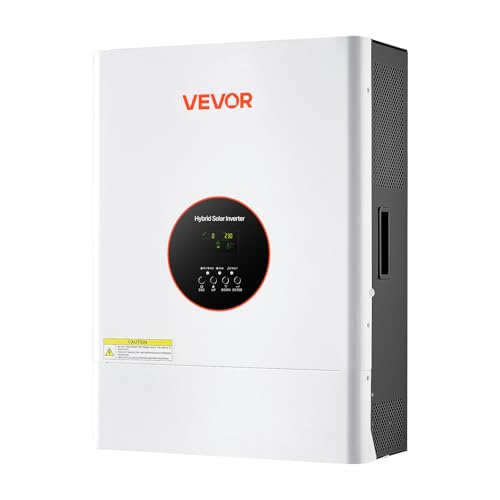
VEVOR offers a 6400W low-frequency inverter with split-phase output (110–120V / 220–240V) and a built-in 120A MPPT solar charge controller. It is designed for lead-acid and lithium batteries in off-grid setups and emphasizes stable pure sine wave output for sensitive electronics. Best for mid-range power needs without WiFi dependencies.
Who it’s best for: users seeking robust split-phase power at a mid-range price with straightforward operation.
Why selected: The low-frequency design can be favorable for motor loads and heavy tools, providing reliable performance for practical workloads.
Caution/limitation: Lacks integrated WiFi monitoring, so monitoring requires external hardware or manual checks.
Buying Guide: Split Phase Inverter Essentials
- Power requirements: Assess continuous versus peak load. Choose a unit with ample headroom for starting surges (air conditioners, pumps, compressors).
- Voltage and phase: Confirm 120/240V split-phase output and ensure your electrical panel supports L1/L2 configurations for proper distribution.
- DC input voltage: Common values include 24V and 48V. Higher DC voltages typically enable higher continuous power and better efficiency.
- MPPT charging: If you plan to use solar, dual MPPT controllers improve energy harvesting, especially with shading or varied panel angles.
- Parallel capability: For growing power needs, check how many units can be paralleled and the maximum combined output.
- Monitoring: Decide if you need built-in WiFi/GPRS monitoring or remote control to oversee performance from a smartphone or computer.
- Efficiency and heat: High-efficiency models reduce heat and running costs but may have stricter installation requirements for cooling.
- Safety and compatibility: Ensure the inverter supports your battery type (lead-acid, LiFePO4, etc.) and has proper protections (overload, short circuit, reverse polarity).
FAQ
- What is split-phase power inverters?
They output two 120V lines (L1 and L2) and a neutral, enabling 240V appliances to run while providing 120V outlets. - Do I need WiFi monitoring?
It’s useful for remote status checks, but not strictly necessary if you prefer manual monitoring or a dedicated display panel. - Can these inverters be paralleled?
Yes, several models support parallel operation to increase total output; follow manufacturer guidelines for safe wiring. - What batteries work with these inverters?
Most support lead-acid and Li-ion types; check the manual for compatible chemistries and charging parameters. - Is a battery-free design practical?
Battery-free designs reduce upfront costs and rely on grid or local storage strategies; plan backup loads accordingly. - What should I consider for installation?
Verify proper ventilation, correct gauge wiring, and adherence to electrical codes; use a qualified installer when in doubt.