Best Solid State Reduced Voltage Starter Guide for Industrial Motors
Looking for a solid state reduced voltage starter to protect motors during startup? This article highlights top options, explains how they work, and helps you choose the right model for your needs. Ideal buyers include plant managers, electrical technicians, and maintenance engineers seeking smoother starts, reduced electrical stress, and longer equipment life. Below, five solid-state reduced voltage starters are examined with practical buying advice and clear comparisons.
| Product | Brand | Best For | Notes |
|---|---|---|---|
| 110kw Motor Soft Starter Power 100kw 110V 3 Phase Intelligent 115kw | CUJWBQZEMN | High-power motors, industrial drives | Versatile starting method with adjustable parameters |
| Three-Phase Motor Soft Start Module Cabinet Stop Slow Online Step-Down Starter 30WA-R1 3KW | CUJWBQZEMN | Small to mid-size motors, cabinet mounting | Compact, flexible operation |
| SLMLSGB PSE300-600-70-480V – PSE Series | SLMLSGB | Medium voltage to low voltage range systems | Solid-state reduced voltage control |
| NXYHZ PSE300-600-70-480V – PSE Series | NXYHZ | Same PSE series variants for comparative use | Similar features, multiple vendors available |
| ZROPPFQSQ PSE300-600-70-480V – PSE Series | ZROPPFQSQ | Budget-conscious PSE options | Low voltage transformer considerations |
110kw Motor Soft Starter Power 100kw 110V 3 Phase Intelligent 115kw
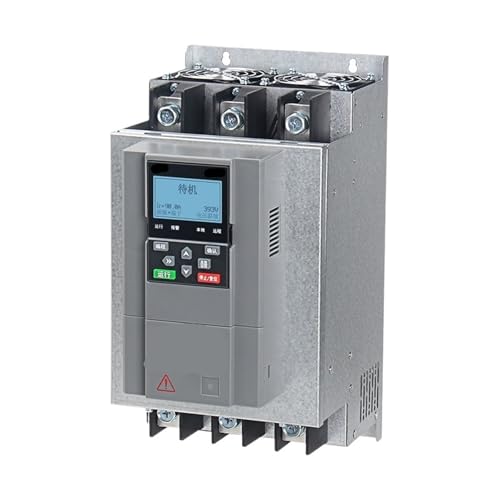
Best for high-capacity industrial motors requiring smooth, programmable starts. This unit supports large power ratings and adjustable start parameters to match motor load characteristics. Suitable for factories needing reduced electrical and mechanical stress during startup, extending equipment life. Caution: verify compatible voltage, current limits, and enclosure space before purchase. The product emphasizes flexible operation and voltage-based current limiting to minimize grid impact.
Three-Phase Motor Soft Start Module Cabinet Stop Slow Online Step-Down Starter 30WA-R1 3KW

Best for compact projects where cabinet mounting is practical and smaller motors are involved. The module is designed to ease startup strain with voltage reduction and current limiting. It suits mid-sized facilities or retrofit projects where space is a constraint, and quick parameter adjustments are needed. Limitation: lower power ratings mean it’s not ideal for large industrial drives; ensure motor power aligns with starter capacity.
SLMLSGB PSE300-600-70-480V – PSE Series Solid-State Reduced Voltage Soft Starter

Best for systems where generator replacement parts are a concern and remote or hard-to-reach installations may exist. The PSE series emphasizes solid-state control to limit inrush and provide smooth acceleration. This option is well-suited for mid-to-large installations requiring reliable startup with reduced voltage. Caution: verify compatibility with existing transformers and motor nameplate data to prevent mismatches.
NXYHZ PSE300-600-70-480V – PSE Series
Best for projects seeking interchangeable PSE series options from different vendors. It provides controlled start with voltage reduction and current limiting, minimizing mechanical stress. Choose this if you prefer vendor diversity and want a mid-range solution that can pair with a variety of motor sizes. Limitation: identical images and features across variants may require careful product differentiation during purchase decisions.
ZROPPFQSQ PSE300-600-70-480V – PSE Series
Best for budget-conscious buyers seeking solid-state control with robust protection features. The PSE series aims to provide reliable reduced-voltage starting with solid-state switching. This option is better for facilities evaluating cost-performance balance. Use with caution if transformer or voltage supply margins are tight, as undersized components may limit performance.
Buying Guide — Key Purchase Considerations
- Power rating and motor compatibility: Ensure the starter’s voltage and current limits align with motor nameplate data and startup torque requirements.
- Control flexibility: Look for adjustable starting parameters to tailor ramp rates and current limits to specific loads.
- Size and enclosure: Verify physical dimensions and enclosure type to fit available installation spaces and environmental conditions.
- Voltage range and transformers: Confirm compatible voltage ratings (480V, 480V-70 etc.) and transformer needs for your site.
- Ease of integration: Consider availability of spare parts, mounting options, and compatibility with existing protective devices.
- Maintenance and diagnostics: Seek features like fault logging, status indicators, and straightforward service procedures.
FAQ
- What is a solid-state reduced voltage starter?
A solid-state reduced voltage starter limits voltage and current during motor start to reduce inrush and mechanical shock, improving motor life and electrical network stability.
- What kinds of motors benefit most from these starters?
Three-phase induction motors, especially large-capacity or high-inertia loads, benefit most due to smoother acceleration and reduced wear on drive components.
- How do I choose the right starter rating?
Match the starter to the motor nameplate amperage, voltage, and expected inrush. Consider future load changes and ramp requirements for best results.
- Are these starters compatible with existing controllers?
In many cases, yes, but verify control voltage compatibility, wiring schemes, and any required interface modules with your system designer.
- What maintenance is needed for solid-state starters?
Routine inspection of wiring, connections, and enclosure integrity is advised. Check fault indicators and ensure cooling paths remain clear.
- Can they reduce energy usage?
Indirectly; smoother starts can reduce peak demand and electrical stress, potentially extending equipment life and lowering maintenance costs.