Best Soldering Kits for Kids: Safe, Educational Projects
Finding beginner-friendly soldering kits for kids requires safety, clear instructions, and hands-on learning. The following five kits offer engaging projects that help young makers build confidence with electronics while practicing essential techniques. Each option comes with kid- and beginner-friendly features, with progressive challenges to suit different ages and skill levels.
| Product | Brand |
|---|---|
| ISolderStore Soldering Practice Kit 3 Leaves LED Rotating Gyroscope DIY Kit | ISolderStore |
| DIY Ultrasonic Suspension Solder Project Kit by VIGURTIME | VIGURTIME |
| MiOYOOW Line Following Robot Car Kit | MiOYOOW |
| MiOYOOW LED Traffic Light Simulation Soldering Kit | MiOYOOW |
| PEMENOL Soldering Practice Project Kit: Globe Planetary Motion | PEMENOL |
ISolderStore Practice Soldering Kit

This kit focuses on hands-on practice with a visible result: a 3 Leaves LED Rotating Gyroscope. After assembly, the rotating gyroscope provides immediate feedback, helping kids understand basic circuit flow and motor action. It includes English installation instructions and a QR code link for the full guide. While it rewards careful assembly, beginners should expect some steps to require patience and close following of the guide. A good fit for family education and building soldering familiarity, with a caution to ensure foundational electronics knowledge.
DIY Ultrasonic Suspension Solder Project

This kit introduces a desk-sized ultrasonic levitation concept. It’s designed to be approachable for beginners, with pre-soldered ICs in place and a 12V adaptor plus a tweezer included for convenience. The project emphasizes assembly and troubleshooting while offering a visually impressive result. It’s well-suited for older kids or beginners with steady hands and a curiosity for acoustics and electronics, providing a practical, STEM-focused experience without overwhelming SMD complexities.
MiOYOOW Line Following Robot Car Kit

This beginner-friendly robot kit combines mechanical assembly with a sensor-based control concept. It teaches basic electronics, mechanical structure, and sensor-driven behavior as the car follows a line. The included guide discusses how photoresistors differentiate reflectivity and influence movement, offering a clear link between theory and practice. A flexible entry point for classrooms or home learning, promoting critical thinking and experimentation with routes and programming ideas.
MiOYOOW LED Traffic Light Simulation Kit

This traffic signal kit provides a practical project that mimics real-world electronics. It includes red, yellow, and green LEDs plus a light sensor for dusk-like behavior and a buzzer for signal changes. Four timing modes and a manual option encourage experimentation with sequencing, timing, and user interaction. It’s a strong fit for classrooms or home labs focusing on logic, timing, and safety in electronics.
Plusivo Soldering Iron Kit 5-in-1

This entry-level soldering kit offers a 60W adjustable-temperature iron with a complete starter set, including stand, sponge, solder, flux, and an ebook. It’s designed for beginners and hobbyists, delivering a safe, straightforward soldering experience with essential tools for small projects. The adjustable temperature helps kids learn heat management and technique progression as they gain confidence.
YIHUA 926 III Soldering Station Kit
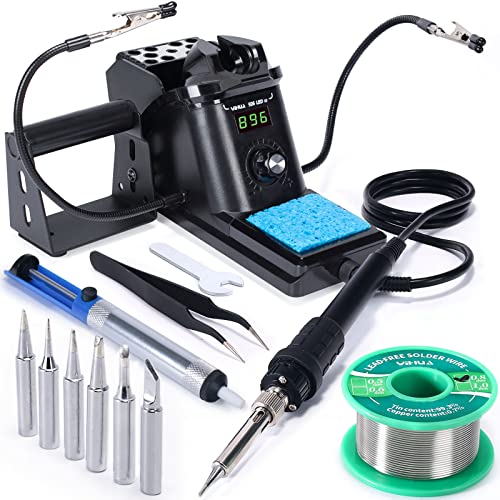
This station combines precise temperature control with a compact footprint. The digital display shows settings, and features like sleep mode help protect tips and extend tool life. While the kit targets more advanced users, older kids with supervision can benefit from the steadier soldering experience and flexibility of °C/°F settings. The included tips and reliability make it a solid long-term investment for steady practice and project variety.
PEMENOL Globe Planetary Motion Kit

This rotating-universe project combines aesthetics with electronics education. The elliptical PCB lights rotate to create a planetary-like display, and the brightness is adjustable via a potentiometer. The rotating base and adjustable speed give hands-on insight into motor control and circuit design. It’s a captivating end-to-end project that supports creative exploration while reinforcing practical soldering skills.
Buying Guide: Key Purchase Considerations
- Age and skill level: Choose kits that align with a child’s age, steady hands, and prior exposure to electronics. Start with simple projects and progress to more complex assemblies.
- Safety features: Look for low-voltage components, clear warnings, and kid-friendly instructions. Supervision is recommended for younger children.
- Instruction quality: Clear English guides, labeled parts, and QR codes for tutorials help reduce frustration and support independent learning.
- All-in-one sets vs. modular parts: All-in-one starter kits minimize extra purchases, while modular kits let kids expand gradually with new components.
- Learning outcomes: Seek kits that teach circuit concepts, sensor basics, and motor control alongside soldering technique.
- Project variety: A mix of mechanical builds, LED circuits, and sensor-driven activities keeps interest high and reinforces different skills.
- Safety training: Emphasize hot tool handling, proper work surface setup, and disposal of soldering waste to foster responsible habits.
- Future-proofing: Consider kits that offer room for advanced exploration or compatibility with additional components for longer-term engagement.
- Price and value: Compare included tools, accessories, and instructional materials to determine long-term value for learning.
- Support resources: Availability of customer support, online tutorials, and community forums can aid troubleshooting and skill growth.
Why these options work for kids
The selected kits emphasize visual feedback, safe practice environments, and structured learning paths. With clear instructions, engaging projects, and hands-on components, young learners can develop patience, problem-solving, and basic engineering literacy. Parental or instructor involvement remains important to ensure safety and maximize learning outcomes.