Best Solar Water Heater Elements for Immersion Heating: 12V to 48V Options
If you’re looking to heat water using solar or off-grid power sources, these immersion heater elements are designed to work with low-voltage systems and standard tanks. They’re best for DIY solar water setups, off-grid cabins, and remote water heating projects. The top picks below cover 12V to 48V configurations and provide options for direct tank connections with standard fittings. This guide helps buyers choose the right element for their voltage, tank size, and maintenance needs.
Summary of chosen products:
| Product | Why it’s a fit |
|---|---|
| DERNORD 12V 200W Immersion Heater | Compact 12V option for solar or battery setups; good for small tanks |
| CNTOPHEAT 12V/24V/36V/48V Heating Element | Versatile voltage range; DN25 1″ thread fits many tanks |
| DERNORD 12V 600W Immersion Heater | Higher wattage in 12V for faster heating in small-to-mid tanks |
| DERNORD 48V 1500W Submersible Element | High power for larger tanks or faster heating from 48V systems |
| Upgrade HE 90240 Heating Element | Broad compatibility with popular tankless and tank heaters; easy replacement |
DERNORD 12V 200W Immersion Heater

Best for compact solar projects and battery-backed systems. This 12V DC heater connects with batteries, solar panels, hydroelectric generators, and wind turbine dumps, offering a simple 1″ NPSM flange for standard tanks. It’s UL and cUL listed for safety. Best for small tanks and off-grid setups where low voltage is required.
Who it’s best for: DIYers building a compact solar or battery-powered water heating system. Why selected: low voltage, universal mounting, and safety certifications support simple integration.
Cautions: Ensure battery and solar controller are sized to handle continuous heating loads; verify tank compatibility with the 1″ NPSM flange.
CNTOPHEAT 12V/24V/36V/48V Heating Element
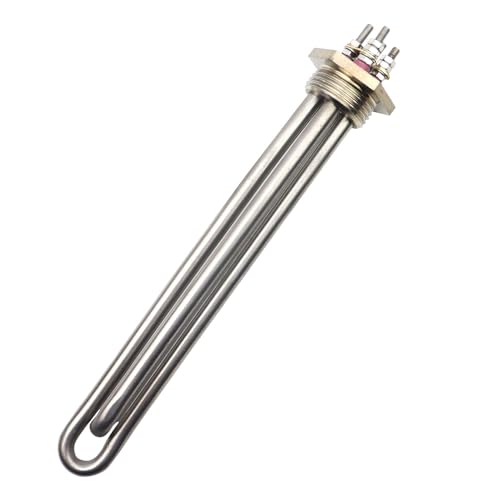
Versatile voltage range and a DN25/1″ BSP/32mm thread option make it adaptable to many tanks and configurations. This all-stainless-steel element is suitable for 12V, 24V, 36V, and 48V systems, enabling a flexible upgrade path from smaller to larger solar setups.
Who it’s best for: builders who need a single element for multiple voltages. Why selected: broad voltage compatibility reduces the need for multiple parts; durable stainless construction supports long-term use.
Cautions: Confirm thread compatibility with your tank’s inlet and ensure voltage selection matches your power source capacity.
DERNORD 12V 600W Immersion Heater

Mid-range power 12V option designed for higher heating loads in compact systems. It shares the same 1″ NPSM flange and is suitable for standard water tanks or custom heater tanks. UL and cUL listed to safety standards.
Who it’s best for: users needing faster heating than a 200W unit at 12V without jumping to higher voltage. Why selected: higher wattage at 12V delivers quicker water warming in small-to-mid tanks.
Cautions: Higher heat concentrates in smaller volumes; ensure tank and wiring are rated for increased wattage to avoid overheating.
DERNORD 48V 1500W Submersible Element

High-power 48V heater for larger tanks or rapid heating. The 1″ NPSM flange fits standard tanks or your own heater tank, and safety certifications are listed. This is designed for more robust off-grid or solar installations requiring quick heat, especially in cooler climates.
Who it’s best for: owners with 48V systems seeking fast heating for bigger water volumes. Why selected: high wattage at 48V translates to faster recovery and shorter wait times.
Cautions: Ensure the 48V supply and wiring are correctly rated; pursue appropriate overcurrent protection and thermal management for larger loads.
Upgrade HE 90240 Heating Element

Replacement element designed for Ecosmart ECO 18/24/36 and Rheem/Eemax and other tankless or electric heaters. Available in 240V variants with 2-pack options. Includes new O-Ring and screws for easy installation.
Who it’s best for: property owners or technicians performing element replacements in popular electric tankless systems. Why selected: broad compatibility reduces the need for multiple part numbers when upgrading or replacing failed elements.
Cautions: This is a high-voltage part; ensure compatibility with your specific heater model and follow safe installation practices.
Buying Guide
Voltage and Power Considerations
Choose voltage to match your power source. 12V elements are ideal for battery-backed or small solar setups, while 48V units suit larger off-grid systems or higher-demand loads. Wattage should align with tank size and desired heating speed.
Fitting and Tank Compatibility
Most elements use a 1″ NPSM flange; verify your tank opening and threads. If you are using a non-standard or custom tank, ensure the flange fits securely and allows safe immersion.
Material and Safety
Stainless steel elements resist corrosion and scale buildup, extending service life. Look for UL/cUL listings and follow electrical safety practices, including proper wiring, fusing, and temperature monitoring.
Replacement and Replacement-Parts Strategy
For tankless or popular heater brands, consider elements like the 90240 for broad compatibility. Having a compatible spare on hand can reduce downtime and repair costs.
Installation and Maintenance Considerations
Easy screw-in designs save installation time. Periodically inspect fittings and seals, check for mineral buildup, and ensure electrical connections remain tight and dry during operation.
FAQ
- Can I use a 12V water heater element with a solar panel system? Yes, if your system provides stable 12V and appropriate current for heating, with proper protection and controllers.
- Is a higher wattage always better? Not necessarily. Higher wattage heats faster but requires a capable power source and safe wiring; for small tanks, lower wattage may be sufficient.
- What is the advantage of a universal 1″ NPSM flange? It standardizes mounting across many tanks, simplifying compatibility and replacements.
- Should I replace multiple elements at once? If you operate large volumes or multiple tanks, replacing worn elements in parallel can reduce downtime and ensure balanced heating.
- Are these elements safe for outdoor use? Use weather-protected enclosures and follow electrical codes; many units are rated for indoor use with proper installation.
- What should I check before buying? Match voltage, wattage, and thread size to your tank and electrical setup; confirm compatibility with your heater model when choosing replacements.