Best Solar System Transfer Switches for Off-Grid Power and Grid Backup
Answering the common buyer question: which solar system transfer switch best protects batteries and keeps essential loads powered when solar or wind energy is inconsistent? This guide highlights five reliable options suitable for off-grid setups, grid-tied backups, and emergency power. Each pick targets different system voltages, current ratings, and installation preferences. Ideal buyers include homeowners with hybrid solar systems, small businesses needing rapid switchovers, and RV enthusiasts seeking seamless power continuity.
| Product | Brand | Key Power Range | Why It’s Notable |
|---|---|---|---|
| Moes Dual Power Controller 50A | MOES | DC 12V–48V / AC 100–120V 60Hz or 220–240V 50Hz | Compact, automatic battery protection and auto-distinguish for mixed systems. |
| JINDOUZI 100A Automatic Transfer Switch | JINDOUZI | AC 110–240V common with generator or PV back-up | Steel distribution box, fast 0.05ms switching, suited for critical loads. |
| IGEYAPA 100A 2P Transfer Switch | IGEYAPA | AC 110–220V, dual supply | PC-level auto/manual modes, clear indicator logic, versatile wiring. |
| MOES Smart 80A Automatic Transfer Switch | MOES | DC input to AC public grid; supports APP/Bluetooth | Energy saving and battery protection with remote control. |
| Briidea 50A Automatic Transfer Switch | briidea | AC 110V/220V, 50A | Auto-switching with fast transfer and unattended operation. |
MOES Dual Power Controller 50A Transfer Switch
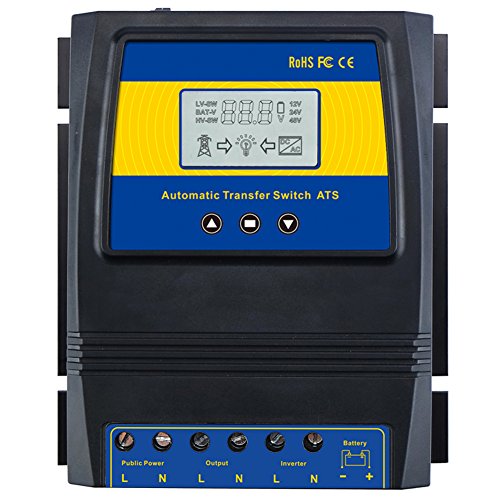
Best for small to mid-size off-grid solar or wind systems that need automatic switching and battery protection. The MOES unit automatically shifts between battery power and grid power when battery voltage falls below or recovers above preset cut-off and recovery voltages. It supports DC 12V/24V/48V and AC mains, with auto-detection of system voltage. This makes it suitable for sealed, gel, lead-acid, and lithium batteries, as long as voltages stay within the supported ranges. A practical pick for cabin or tiny home setups where battery care matters most. One limitation: user-settable voltages require careful configuration to avoid unwanted cycling in marginal conditions.
Best for: Off-grid cabins, tiny homes, and hybrid solar systems needing seamless battery protection without manual intervention. Why selected: compact design, broad voltage compatibility, and automatic protection logic help extend battery life while maintaining essential loads.
Caution: verify that your battery voltage range aligns with the device’s supported ranges to prevent mis-triggering during fluctuating input voltages.
JINDOUZI 100A Automatic Transfer Switch

Best for homes and small facilities needing rapid backup power from a generator or PV source. This unit comes with a steel distribution box shell and a transparent cover, enabling safe operation and straightforward inspection. It switches within 0.05 ms to maintain continuous power to critical loads when the main supply fails. The product is designed for dual power resilience in healthcare, data centers, or cold storage environments. Caution: installation requires proper wiring and adherence to electrical codes; the included guard features help but do not substitute for professional installation.
Best for: Small data centers, medical stations, or any area where uninterrupted power is essential and fast switchover is a priority. Why selected: fast, near-instant switching, and robust enclosure enhance safety and reliability.
IGEYAPA 100Amp AC110V Automatic/Manual Transfer Switch

Best for users who want clear auto and manual control with straightforward indicators. This 100A dual-power switch supports four wiring configurations and allows automatic switching when the primary source fails, with an almost immediate transfer to the backup. The manual mode offers precise selection if you want to test or direct load transfer. Limitations include potential complexity for first-time installers due to the multi-mode operation and wiring options.
Best for: Homes or workshops needing reliable auto/manual transfer with explicit LED cues. Why selected: detailed operation modes and flexible wiring support diverse power sources.
MOES Smart Automatic Transfer Switch for Off Grid Solar Wind

Best for tech-savvy users who want app-based control and remote monitoring. This 80A switch handles automatic switching between solar/wind inverter input and the public grid, with battery protection and energy-saving features. It supports app Bluetooth control (requires MOES hub) for remote scene linkage and scheduling. A practical choice for smart homes or remote locations where on-site adjustments are less convenient. Caution: cloud or hub setup is required for full remote control, which adds a setup step.
Best for: Smart homes, remote installations, and users who value remote operation. Why selected: combines fast auto-switching with modern app control for integrated energy management.
Briidea 50A Automatic Transfer Switch

Best for mid-range off-grid setups requiring fast, automatic switching with easy installation. The Briidea unit features a 50A capability suitable for modest solar/wind systems and ensures a near-instant transition to backup power with minimal downtime. It supports unattended operation for long-term use and is designed to protect circuits during switchover. Limitation: performance may vary with highly inductive loads; verify your loads align with the 50A rating.
Best for: Small cabins, tiny homes, or light commercial installations needing dependable automatic switching. Why selected: solid auto-switching performance with straightforward installation and practical protection features.
Buying Guide
What should you consider when choosing a solar system transfer switch? Key factors include amperage rating, voltage range, AC versus DC compatibility, installation method, and response time. For off-grid systems, ensure the switch supports your battery chemistry and voltage (12V, 24V, or 48V) and can handle the inverter or charger in use. If you rely on grid power as a backup, confirm the unit can switch to grid within milliseconds to keep critical loads online. Consider whether you want manual override and app control for remote management.
Compatibility matters: match the switch’s voltage and current to your solar array, battery bank, and loads. A robust enclosure and safety features (arc suppression, anti-tamper, clear wiring terminals) reduce risk in outdoor installations. If you need remote operation, ensure the model supports Bluetooth or Wi-Fi hub integration for scheduling and monitoring. Finally, remember installation complexity: some units require professional wiring, while others offer more plug-and-play setups.
FAQ
- What is a solar system transfer switch? It automatically switches between power sources (solar/wind, battery, grid) to keep loads powered and protect batteries when generation is insufficient.
- What amperage should I choose? Choose based on your total load. Homes with higher loads need 60–100A ranges; smaller setups can use 50A or 100A switches depending on system design.
- Do I need professional installation? For most inline wiring and safety compliance, yes, especially for high-voltage AC connections or outdoor installations.
- Can I control switches remotely? Some models offer app or hub control for remote management; others are manual or rely on built-in automatic logic.
- Will a transfer switch protect my battery? Yes, most models monitor battery voltage and switch to the proper source to prevent deep discharge.
- What is switching time? Typical fast-switching transfers occur in under 100 milliseconds, with some models near 0.05–0.25 seconds depending on configuration.