Best Solar System Lithium Batteries for Home Backup and Off-Grid Power
Answering the top questions buyers have when building or upgrading a solar storage setup: which lithium battery options deliver reliable, long-lasting energy for home backup and off-grid living? The following selections emphasize high capacity, safety features, and easy expansion. They’re ideal for homeowners, off-grid enthusiasts, RVers, and anyone seeking durable LiFePO4 storage. The table below compares five strong choices to help you decide which fits your system size and energy goals.
| Product | Batteries (Approx. Capacity) | Key Benefit | Best For |
|---|---|---|---|
| 16.07 kWh | Built-in 200A BMS, parallel expansion up to 241 kWh | Whole-home backup, solar storage, off-grid | |
| 16.07 kWh (per unit) | Active balancing, 10-year warranty, aerosol fire protection | Reliable daily use, expandable systems | |
| 20 kWh | Grade A cells, 200A BMS, strong cycle life | Medium to large off-grid or backup arrays | |
| 3.2 kWh | Bluetooth monitoring, 4P4S expandable | RV, off-grid, small solar builds | |
| 10.2 kWh | Server rack compatibility, can parallel up to 32 units | Space-efficient, modular home or small business storage |
AOUSK 48V 314Ah Lifepo4 Battery
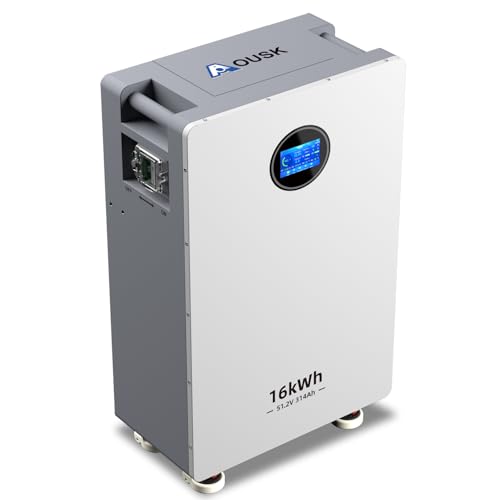
Best for: Home backup and large off-grid systems that require robust capacity in a compact form. This unit provides 16.07 kWh of storage with a heavy-duty 200A BMS and dual breakers for added safety. It supports parallel connections up to 15 units, enabling up to about 241 kWh of storage for full-home resilience. The LCD display and RS485/CAN/RS232 provide real-time monitoring and professional-grade data access.
Why selected: The high cycle life (up to 8,000 cycles at 80% DoD) and space-efficient footprint make this a strong backbone for solar storage networks. The built-in breakers reduce external hardware needs, and remote monitoring supports proactive maintenance. A caution: parallel expansion requires proper sizing to ensure balanced charging among units.
ECO-WORTHY Powermega 48V 314Ah (2 Pack)

Best for: Home backup systems requiring strong parallel expansion with advanced safety features. Each unit offers 16.07 kWh of capacity, and the two-pack arrangement supports larger setups with active balancing, which helps maintain uniform charging and longer life. The versatile CAN/RS485/RS232 interfaces enable smooth integration with modern solar inverters.
Why selected: Active balancing improves energy efficiency and longevity, while the 10-year warranty adds long-term value. A caution: ensure proper space for the larger footprint when choosing a two-pack configuration in tight installations.
Dawnice 20kWh Solar Battery
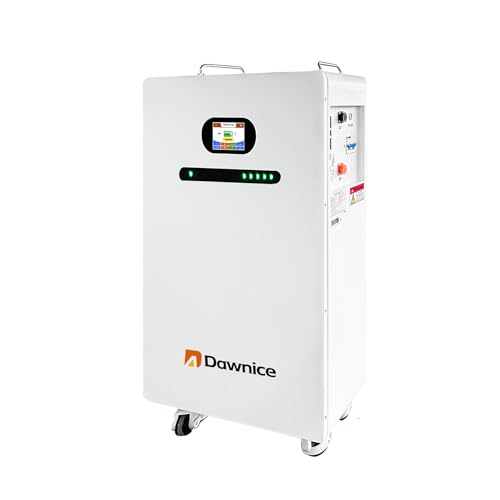
Best for: Mid-to-large solar arrays needing significant storage with strong safety features. The 51.2V, 410Ah configuration yields 20 kWh and a maximum discharge of 200A, suitable for powering essential loads during outages. It includes a built-in 200A BMS to guard against overcharging and over-discharging.
Why selected: Grade A cells and a robust BMS provide reliable daily performance and long cycle life. A caution: system sizing must account for the higher voltage and configuration when pairing with inverters and charge controllers.
GOKWH 12V 320Ah LiFePO4 Battery
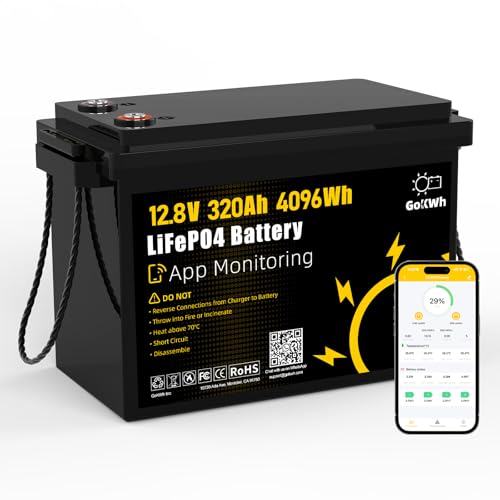
Best for: RVs, boats, or small off-grid setups where a compact 12V solution is preferred. The 320Ah rating provides around 3.2 kWh per unit, with Bluetooth monitoring to track status remotely. It supports 4P4S expansion for higher system voltage and capacity.
Why selected: Real-time Bluetooth monitoring is a practical feature for mobile or space-constrained installations. A caution: 12V systems may require additional components to achieve higher AC loads; plan inverter sizing accordingly.
ECO-WORTHY Cubix100 48V 200Ah
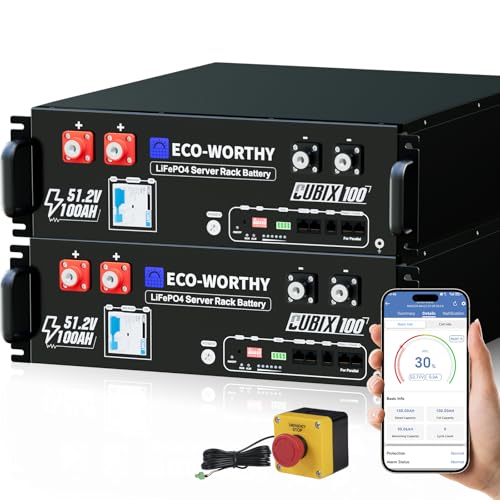
Best for: Compact, space-saving solar storage with easy expansion in server rack-style deployments. Each unit provides 10.2 kWh and is designed for vertical mounting, with parallel expansion up to 32 units to reach about 163.8 kWh. It includes integrated CAN/RS485 and wireless monitoring options.
Why selected: Strong modularity for growing systems and efficient use of rack space are key advantages in small homes or businesses. A caution: ensure your installation area can accommodate the rack-friendly form factor and clearance needs for cooling.
Buying Guide
How to pick the right lithium battery for solar storage
- Capacity vs. space: Determine your daily energy use and desired autonomy. Higher kWh stores more energy but may require more space or modular units for expansion.
- Voltage and system compatibility: Most home solar systems use 48V for efficiency, while some smaller setups use 12V. Align battery voltage with your inverter and charge controller.
- BMS and safety features: Look for a robust BMS (level of protection, current rating, thermal management) and additional protections like aerosol fire shielding when available.
- Expansion and interoperability: If future growth is likely, choose batteries that support parallel expansion and standard communication interfaces (CAN/RS485/RS232).
- Monitoring and accessibility: Real-time displays or remote apps help track health, state of charge, temperature, and voltage. Bluetooth, WiFi, or RS232 connections improve usability.
- Installation footprint: Consider weight, dimensions, and mounting options (floor, wall, rack). Space and ventilation impact performance and safety.
- Warranty and lifecycle: Longer cycle life and warranties can offset higher upfront costs over time.
FAQ
- What is LiFePO4 and why choose it for solar storage?
LiFePO4 offers high safety, long cycle life, and stable performance across temperature ranges, making it well-suited for home backup and off-grid solar systems.
- How many batteries should I connect in parallel?
Parallel connections increase total capacity while maintaining nominal voltage. Follow manufacturer guidance on maximum parallel units and ensure balanced charging.
- Can these batteries power critical home loads during outages?
Yes, with properly sized inverters and battery banks, essential circuits can run during outages. Plan load priorities and inverter capacity accordingly.
- Do these batteries require maintenance?
LiFePO4 batteries are generally maintenance-free, but you should monitor voltage, temperature, and health using the built-in display or app to prevent degraded performance.
- What type of inverter is best for these LiFePO4 packs?
Look for inverters compatible with lithium chemistries, ideally with programmable charging profiles and high surge capability for AC loads.
- Is Bluetooth or WiFi monitoring essential?
Monitoring helps with proactive maintenance and optimizing performance, though wired monitoring options remain available in some models.