Best Solar Compatible Air Conditioners for Off-Grid Cooling
Finding an air conditioner that pairs well with solar power means focusing on efficiency, startup power, and compatibility with off-grid electrical systems. This guide highlights five Amazon options that are known for inverter technology, low power consumption, and flexible installation that can work alongside solar setups. Whether you’re outfitting a camper, tiny home, RV, or off-grid cabin, these units offer cooling relief while helping you optimize solar usage.
| Product | Key Benefit for Solar | Typical Use |
|---|---|---|
| SereneLife Portable 10,000 BTU | Built-in dehumidifier; multiple modes | Bedrooms, living rooms |
| ROVSUN 9000 BTU Mini Split | Inverter efficiency; remote control | Ductless cooling for small spaces |
| 12V RV Air Conditioner (OutEquip) | 12V inverter compatible; solar ready | RVs, campers, off-grid trailers |
| Windmill 6,000 BTU Window AC | Smart control app; voice control | Small rooms, bedrooms |
| Windmill 5,000 BTU Lite Window AC | Quiet operation; app & voice control | Compact spaces |
Note: All products listed are drawn from the provided catalog and are evaluated for solar-friendly features such as inverter operation, energy efficiency, and ease of integration with off-grid power sources. This article presents objective specifications and does not endorse any particular brand superiority beyond its suitability for solar setups.
SereneLife 10,000 BTU Portable AC With Dehumidifier

The SereneLife portable air conditioner combines cooling with a built-in dehumidifier, useful in climates with high humidity. It offers four operating modes—cooling, heating, dehumidifying, and fan—for flexible year-round use. The unit is designed for spaces up to about 450 square feet and includes a remote control for convenient operation. While primarily a 115V appliance, its portability helps a solar-powered setup by enabling placement near a suitable power source or backup battery system. For solar users, ensure the inverter and battery capacity can support the startup surge and continuous cooling demands.
ROVSUN 9000 BTU Inverter Mini Split System

This mini split with inverter technology is crafted for energy-saving cooling, achieving a 19 SEER rating with 115V operation. Its ductless design and remote control provide flexible placement and precise temperature management. For solar integrations, the inverter-based compressor helps reduce startup spikes and improves efficiency when powered by solar arrays and battery storage. It suits spaces up to 400 square feet and supports multiple climate zones with quiet, smooth operation. When sizing a solar system, factor in peak draw during compressor start and the unit’s continuous operating requirements.
WISHILO Portable AC: 3400 BTU For Tents And RVs

Designed for small spaces, this compact 3400 BTU unit targets tents, RVs, and trailers. It runs on a relatively low power draw, making it suitable for solar-powered setups with modest battery capacity. The built-in Panasonic compressor supports quick cooling, and the unit emphasizes portability and energy efficiency. For off-grid use, ensure your solar system (inverter size, battery capacity, and charge controller) can accommodate the unit’s peak power during initial cooling and any turbo modes. The unit’s 64–86 square foot coverage aligns with small living or sleeping areas.
Windmill 6,000 BTU Window AC

The Windmill 6,000 BTU window unit combines modern styling with smart controls, including a companion app and voice compatibility. It’s designed to cool spaces up to 250 square feet and supports remote operation for pre-cooling or after-work comfort. For solar applications, its 6K BTU rating provides a reasonable load for a modest solar panel array paired with an efficient inverter. As with all window units, ensure the mounting window and electrical circuit can support continuous operation and any startup surges. This option is appropriate for apartments or bedrooms with limited space.
Windmill 5,000 BTU Lite Window AC
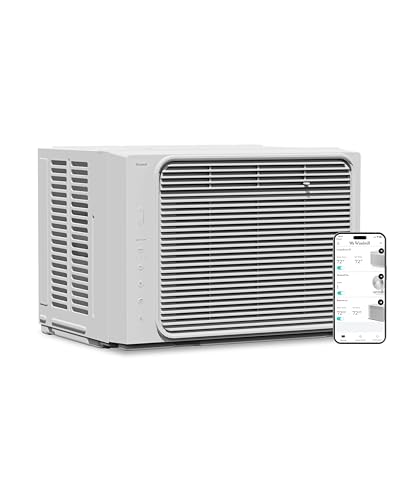
This 5,000 BTU window unit is tailored for compact spaces up to 150 square feet, offering quiet operation suitable for bedrooms or small offices. It supports app-based control and voice assistants for convenient remote management. For solar compatibility, the unit’s lower BTU and efficient compressor can reduce overall power consumption, which is beneficial when solar capacity is limited. It’s a practical option where space and power constraints demand efficient cooling without heavy electrical loads.
Buying Guide: Key Considerations For Solar-Powered Air Conditioning
When coupling air conditioning with solar power, several factors determine overall performance and reliability. First, evaluate inverter-based units. Inverter compressors adjust output to match cooling demand, which lowers startup surges and reduces energy waste—a critical advantage for solar systems with limited battery capacity.
Second, sizing matters. Oversized units cool quickly but consume more energy and can short-cycle, whereas undersized units may run constantly, draining batteries. For off-grid setups, prioritize units in the 3,000–9,000 BTU range for smaller spaces and 9,000–12,000 BTU for larger rooms when paired with adequate solar and storage.
Third, check electronic controls and smart features. Remote and mobile app control enables pre-cooling while battery charging is favorable, while voice control supports hands-free operation in systems where you want flexible placement without running long extension cords.
Fourth, consider installation type. Portable units offer placement flexibility but typically require continuous power; mini split systems provide higher efficiency and can be paired with solar in well-designed battery/inverter setups. Window units can be best for renters or fixed-space cooling with modest power needs, though installation modifications may be needed for energy efficiency.
Fifth, assess energy efficiency metrics. Look for units with high SEER (Seasonal Energy Efficiency Ratio) or efficient inverter technology. An energy-efficient model reduces the solar array size and battery storage required to meet daily cooling needs, lowering overall system costs and complexity.
Finally, plan for backup and resilience. A solar-compatible cooling strategy should include a reliable inverter, a sufficient battery bank, and a charge controller that can handle peak loads. If you expect variable sun exposure, design for a higher cushion in daily energy budgets to maintain comfortable temperatures during extended cloudy periods.