Best Solar Sun Tracking System for Higher Power Output and Flexibility
Answering the core search intent, a solar sun tracking system is used to maximize PV efficiency by following the sun’s path. This guide compares five practical trackers to help buyers pick the right type—dual-axis for maximum daily output, single-axis for simpler setups, or party-friendly kits for off-grid and yard use. The top picks cater to farms, sheds, cabins, RVs, and DIY projects where extended sun exposure matters.
Who should consider these products? A dual-axis tracker is best for users needing the highest possible daily energy gains and longer sun exposure periods. A single-axis tracker suits those seeking a balance of efficiency and simpler installation. Off-grid enthusiasts and weekend hobbyists will value robust kits with built-in wind protection and intuitive controls. Use this summary table to compare quickly.
| Product | |||
|---|---|---|---|
| ECO-WORTHY Dual Axis Tracking System (Standard) | Dual-Axis | Farm, Yard, Field Setups | 270° tracking and strong wind stability |
| ECO-WORTHY Dual Axis Tracking System (Expanded Version) | Dual-Axis | Higher panel counts and harsher weather areas | Intelligent light sensing and 270° tracking |
| ECO-WORTHY Single Axis Tracking System | Single-Axis | Medium installations with budget consideration | 30%+ power gain with simple setup |
| ECO-WORTHY 1200W Solar Tracker System | Dual-Axis | Off-grid homes, sheds, cabins | High daily output with 195W panels |
| BINGOX Dual-Axis Solar Tracker Controller Kit | Dual-Axis Controller Kit | DIY projects, RVs, off-grid systems | Sun tracking with LCD, wind sensor, remote |
ECO-WORTHY Dual Axis Tracking System (Standard)

This dual-axis tracker is designed to maximize daily PV energy by turning panels toward the sun with 270° rotation. It uses a wind-speed sensor and auto-resets to a horizon angle during heavy winds to maintain stability. Best for buyers who want noticeable gains in power and a robust base system for yard or field installations.
Who this is best for: property owners needing reliable, weather-aware tracking that can handle varied sun angles across the day. Why chosen: strong wind protection feature and wide rotation support higher energy capture. Caution: data shows manual angle settings may be required for extreme weather tuning.
ECO-WORTHY Dual Axis Tracking System (Expanded Version)

The expanded version adds intelligent light sensing and 270° tracking to optimize performance across variable light conditions. It’s designed for higher panel counts and more complex installations, with automatic wind leveling at higher speeds. Best for: users who need maximum throughput with strong storm resistance. Better for: installations requiring adaptive sun tracking throughout the day. Limitation: setup complexity can be higher than the standard kit.
ECO-WORTHY Single Axis Tracking System

Single-axis tracking keeps panels oriented toward the sun along a single axis to boost power by at least 30% compared to fixed mounts. It’s suitable for installations with a smaller footprint or where budget and simplicity matter. Best for: homeowners or small farms seeking notable gains without dual-axis complexity. Caution: fewer degrees of freedom may limit peak energy on certain days.
ECO-WORTHY 1200W Solar Tracker System

This 1200W kit uses six 195W panels and a dual-axis tracker designed for off-grid use in sheds, fields, or remote homes. It emphasizes higher daily output with balanced wind resistance and a 270° rotation range. Best for: off-grid setups requiring substantial daily energy. Choose this if: you need a turnkey solution with strong energy potential and real-world daily use. Caution: system size may require more space and solid mounting for stability.
BINGOX Dual-Axis Solar Tracker Controller Kit
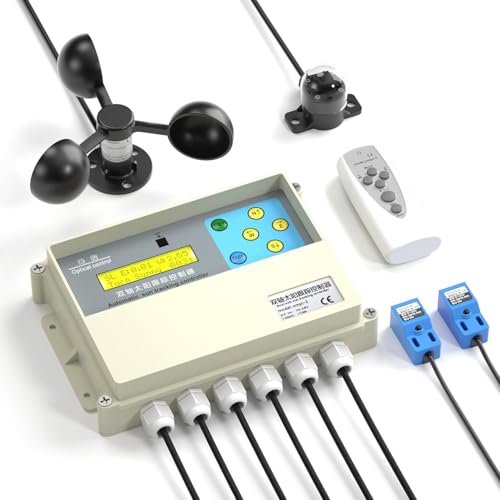
The kit provides auto sun tracking with both east–west and north–south movement, a wind protection system, and a clear LCD menu with a remote for adjustments. It’s best for DIY projects and off-grid systems where flexible control is needed. Better for: users who want a modular controller with wind-aware protection. Limitation: as a controller kit, integration with existing structures may require additional hardware or knowledge.
LeTkingok Sun Automatic Tracking Controller

This dual-axis controller enables real-time sun tracking and wind leveling, with hemispheric applicability. It includes manual control options and LCD data display. Best for: users who need a versatile controller that works across hemispheres and supports manual overrides. Caution: northern vs southern hemisphere settings require correct configuration for accurate tracking.
Dual Axis Solar Tracker Controller Kit

Controller kit with sun sensor, wind sensor, two limit sensors, and a remote control enables real-time sunlight tracking and wind-based safety adjustments. Best for: DIY enthusiasts who want a fully featured controller. Avoid this if you prefer an integrated all-in-one preassembled tracker, as wiring and setup may be more involved.
Aitoserlea Single Axis Sun Tracking Controller

Monitors sun position with a four-quadrant light sensor design for tracking and supports PLC-like control of motor platforms. Best for: projects needing precise single-axis tracking with a straightforward control scheme. Note: may require hemispheric orientation adjustments for optimal performance in different locations.
Buying Guide: Key Purchase Considerations
- Tracking Type: Dual-axis trackers deliver the highest daily gains by following the sun across both axes, while single-axis trackers are simpler and more affordable yet still boost output.
- Installation Capacity: Determine the number and size of panels you intend to mount. Expanded dual-axis kits handle larger arrays but require more space and robust mounting.
- Weather Resilience: Look for wind sensors and auto-leveling features to protect the system during storms or strong gusts.
- Control Features: LCD readouts, remotes, and intuitive controls reduce setup time and ongoing adjustments. Consider hemispheric compatibility if you move between northern and southern hemispheres.
- Support and After-Sales: Some ECO-WORTHY kits advertise after-sales support and diagnostics by engineers. Confirm warranty expectations and replacement policies with the seller.
- System Size and Space: Ensure you have enough ground or roof space for the intended number of panels and the tracker’s footprint.
- Maintenance Needs: Windage and snow clearance capabilities can influence long-term reliability; some systems provide snow removal aids or manual override.
Frequently Asked Questions
- What is the main benefit of a dual-axis solar tracker?
It maximizes sun exposure by adjusting height and tilt in two axes, typically delivering higher daily energy gains than fixed mounts or single-axis trackers. - Do trackers require more maintenance than fixed mounts?
Yes, trackers have moving parts and sensors that may need occasional checks, especially in windy or snowy climates. - Are wind sensors essential on trackers?
Wind sensors help protect the system by adjusting or locking positions during high winds, reducing damage risk. - Can trackers work in all hemispheres?
Many controllers support both northern and southern hemispheres, but settings must be configured correctly for accurate tracking. - Is a single-axis tracker enough for energy goals?
For many setups, a single-axis tracker significantly improves output over fixed mounts, while dual-axis offers larger gains in optimal conditions. - What should I consider before purchasing a tracker kit?
Consider panel compatibility, installation space, local weather, installation expertise, and whether you prefer an integrated kit or a modular controller approach.