Best Solar Pv Battery Systems for Home Power
Answer: A complete solar PV battery system pair is best for homeowners seeking reliable off-grid power or backup power during outages. The top picks below cover full systems, smart battery options, and essential safety components. The buyers most likely to benefit are homeowners wanting off-grid independence, RV or tiny-home users seeking portable energy, and DIY enthusiasts building resilient solar setups.
Overview of selected products:
| Product | Type | Key Benefit | Best For |
|---|---|---|---|
| ECO-WORTHY 10000W Off-Grid System | Complete Home System | High capacity 10kW inverter and 16.1 kWh storage | Full home backup power for outages |
| ECO-WORTHY 200W Solar Starter Kit | Starter Kit | All-in-one RV/off-grid kit with inverter and battery | Portable off-grid or small-scale setups |
| SOLPERK 20W Panel Kit | Panel + Controller Kit | Smart MPPT controller with 20W panel for maintenance charging | Storing or maintaining small 12V batteries |
| Pjerjzn 1000V Disconnect Switch | PV Disconnect | IP65 protection and quick, safe wiring | Solar system safety and modular wiring |
| WENGART DC MCCB 500V | DC Circuit Breaker | Overcurrent protection for DC solar systems and ESS | System protection in solar arrays and storage |
ECO-WORTHY 10000W Output Complete Off-Grid Solar System

The ECO-WORTHY 10000W system delivers up to 10kW continuous output with 120V/240V split-phase, supporting common home appliances. It integrates 5 × 590W solar panels (total PV capacity around 2.95 kW) and a 48V 314Ah LiFePO4 battery offering 16.1 kWh storage. This all-in-one kit is designed for convenient installation and reliable home power. Best for: homeowners seeking a scalable, single-package solution for whole-home backup or daily off-grid use. Limitation: the system’s scalability is capped by the parallel capacity (up to six units in some configurations) and may require professional grid-compliance checks for some installations.
Why it’s selected: Combines a high-power inverter, sizable storage, and integrated monitoring, making it a strong all-in-one option for reliable home power without extensive component sourcing.
ECO-WORTHY 200 Watt Solar Panel Starter Kit
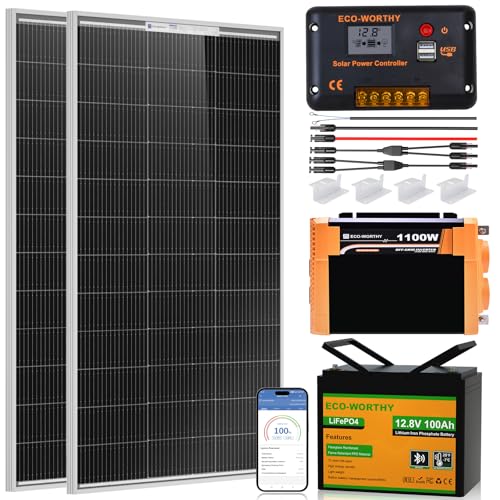
This starter kit provides a compact, beginner-friendly off-grid option. It includes two 100W panels, a 12.8V 100Ah lithium battery, an 1100W inverter, and a 30A PWM charge controller with all necessary cables. Best for: RVs, small cabins, or weekend campers seeking a straightforward, self-contained energy package. Limitation: lower total power and storage mean it’s not suitable for running large home circuits during outages.
Why it’s selected: A practical, low-barrier entry into solar storage systems, enabling users to experience real solar power with minimal setup complexity.
Pjerjzn Solar Panel Disconnect Switch 1000V 60A
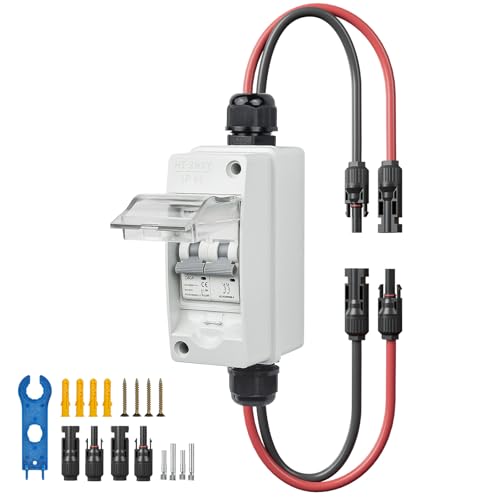
This disconnect switch is designed for quick, safe installation between solar panels and inverters. It features IP65 waterproof and dustproof construction, a robust handle, and built-in DC switchgear for effective protection. Best for: users needing a reliable safety boundary in larger PV arrays or those who want easy maintenance access. Limitation: data emphasizes safety and installation ease, with less focus on integrated monitoring or advanced protection features.
Voltset 12V Solar Battery Charger Kit

This kit includes a high-efficiency MPPT charger, a 20W monocrystalline panel, and smart protection features. Best for: maintaining or trickle-charging 12V batteries in automotive, marine, trailer, or RV applications. Limitation: 20W is modest for heavy-use scenarios; best used for battery maintenance rather than full-time powering needs.
YQBYJING Solar Panel Disconnect Switch 40Amp

Offers a 40A DC/AC shutoff with IP65 protection and UV resistance for outdoor use. Best for: quick disconnection in PV systems requiring robust weather sealing. Limitation: designed primarily for switching, not full-system protection or monitoring capabilities.
SOLPERK Solar Panel Kit 20W 12V
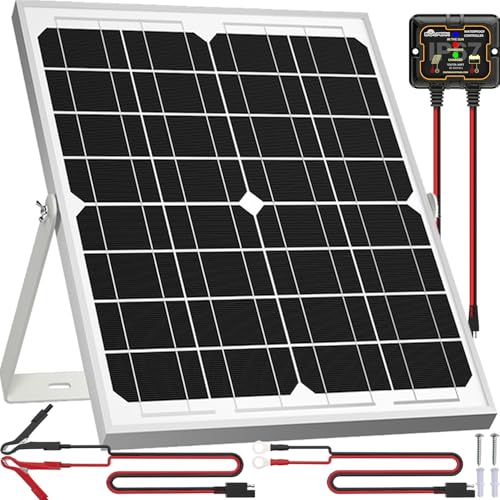
This kit offers a high-efficiency 20W panel with a smart MPPT controller and a sturdy mounting bracket. Best for: lightweight maintenance charging for boats, RVs, or small backup batteries. Limitation: limited power output makes it unsuitable for larger energy loads or sustained off-grid operation.
WENGART DC MCCB 500V Solar Breaker

The WENGART WGM1PV-250 is a high-performance DC MCCB rated for 500V DC, with arc-chutes and a flame-retardant shell. Best for: providing overcurrent protection in solar arrays and energy storage systems. Limitation: emphasis on protection over active monitoring or electrical diagnostics.
Buying Guide: Key Considerations for Solar PV Battery Systems
- System scale: Determine whether you need a full-home backup, a smaller off-grid setup, or a trickle-charging solution for individual batteries. Bigger homes require higher inverter capacity and larger storage (kWh).
- Battery chemistry: LiFePO4 offers safety and long life, while other chemistries may be cheaper upfront but shorter-lived. Consider depth of discharge, cycle life, and environmental tolerance.
- Inverter and charging: Choose an inverter with sufficient continuous power for your essentials and ensure MPPT controllers optimize charging under your local sun conditions.
- Safety components: Include disconnects, breakers, and proper protective devices. Proper wiring and IP-rated parts improve durability in outdoor installations.
- Expandability: If future energy needs grow, verify the system can be expanded (more panels, additional batteries, or parallel inverters) without major rewiring.
- Monitoring and control: Built-in WiFi, Bluetooth, or PC connectivity helps track energy production, consumption, and battery health for maintenance and reliability.
- Installation context: Ground-mounted vs. roof-top mounting, exposure to weather, and local electrical codes can influence component choice and layout.
- Maintenance: Some kits emphasize plug-and-play installation; others require more technical wiring. Assess your comfort with DIY versus professional installation.
Frequently Asked Questions
- What is the main difference between a complete system and a kit?
Answer: A complete system includes inverter, battery, and panels in one package, while a kit provides individual components that you assemble yourself or with professional help. - Which battery type is best for home backup?
Answer: Lithium iron phosphate (LiFePO4) batteries offer longer life, better safety, and higher cycle counts for home backup applications. - Do I need a disconnect switch in a solar system?
Answer: Yes. A disconnect switch improves safety by allowing quick isolation of the PV array from the rest of the system for maintenance or emergency shutdowns. - Can I expand a small solar kit later?
Answer: Many systems allow parallel expansion or module additions, but confirm compatibility with inverters, charge controllers, and battery chemistry before purchasing. - Is a monitoring feature important?
Answer: Monitoring helps optimize performance, plan maintenance, and diagnose issues quickly, especially in off-grid or backup setups. - What should I consider for outdoor installations?
Answer: Use IP-rated enclosures, weatherproof disconnects, and corrosion-resistant mounting hardware to endure exposure and extend component life.