Best Solar Powered Ventilation Fans for Efficient Airflow and Lower Energy Costs
Solar powered ventilation fans offer a reliable, energy-efficient way to improve air circulation in greenhouses, sheds, chicken coops, and other small spaces. This guide highlights top-rated options, focusing on built-in battery backup, adjustable speeds, and versatile installation. Whether you need intake, exhaust, or both, these products help reduce heat, moisture, and odors while staying off the grid whenever possible.
The following quick-reference table summarizes five selected products to help you compare key features at a glance. Note that all details are based on the listed specifications and typical use cases.
| Product | Brand | Key Benefit | Notable Feature |
|---|---|---|---|
| 25W Solar Fan for Chicken Coop with Battery | Pet Deluxe | Battery-backed operation for day and night use | 2500mAh built-in battery; 2-speed + 3 modes; dual independent fans |
| Solar Exhaust Fan, 25W + 8-Inch | SHENVITASO | High airflow with low noise | 430 CFM; 16.4 ft cord; anti-backflow valve |
| Solar Attic Fan 32W 1600CFM | DC HOUSE | High airflow for larger spaces | 1600 CFM; off-grid operation; sunrise-to-dusk control |
| GROWNEER Solar Powered Exhaust Fan | GROWNEER | Smart power with battery support | 3200 mAh battery; 1200 CFM; 40-60 dBA |
| Prozilon 25W 8″ Solar Exhaust Kit | Prozilon | Ultra-quiet operation with strong airflow | ≤36 dB; 430 CFM; 16.4 ft cord |
25W Solar Fan for Chicken Coop with Battery

The Pet Deluxe solar fan family combines solar energy capture with a built-in battery to ensure continuous operation even during nighttime or overcast days. This model features two independent fans with a 4.7″ and a longer 9.84 ft cord, enabling flexible placement for intake, exhaust, or both. Three control modes cover continuous operation, timed cycling, and motion-sensing startup to conserve energy when poultry activity is detected. The system is suited for compact spaces like 6×6 ft coops or small greenhouses, delivering cooler air and reduced heat buildup.
Key advantages include: a 2500mAh battery that stores daytime energy for use later, smart modes that tailor airflow to conditions, and a DIY dual-fan setup that expands air circulation. The unit is designed to draw attention to poultry welfare by pulling in fresh air and expelling heat and dust. Installation typically requires mounting the two fans where airflow is needed most, with power supplied by solar panels and the internal battery sustaining operation when sunlight is limited.
Solar Exhaust Fan, 25W + 8-Inch

This SHENVITASO kit combines a 25W solar panel with an 8-inch exhaust fan and a protective anti-backflow valve. The system is designed for day and night use, with a 16.4-foot cord allowing flexible rooftop or wall placement. It includes a power adapter option so you can connect to household power when solar input is insufficient. The 430 CFM airflow provides strong cooling for sheds, greenhouses, or small workshops, while the quiet operation helps maintain a peaceful environment. The anti-backflow valve prevents insects and animals from entering when the fan is off.
Highlights include robust solar efficiency, adjustable mounting brackets, and a focus on energy-efficient ventilation. The kit supports small spaces needing reliable heat and moisture control and can be used for chicken coops, greenhouses, or dog houses. The system emphasizes consistency through the included adapter and long reach cable, ensuring dependable operation across variable sun exposure.
Solar Attic Fan 32W 1600CFM
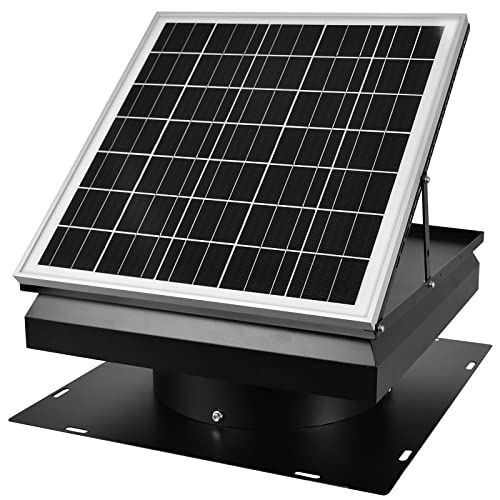
DC HOUSE presents a high-capacity solar attic fan designed to actively reduce attic temperatures and lower cooling loads. This 32W system delivers up to 1600 CFM, enabling effective climate control for homes, garages, RVs, greenhouses, and large barns. The unit operates off-grid, relying on premium monocrystalline solar panels to capture sunlight and automatically activate at sunrise, even in partially cloudy conditions. It powers down at dusk, providing a set-it-and-forget-it solution for steady airflow without electrical wiring complexities.
Key considerations include climate resilience, wind tolerance, and integration with existing venting. The design focuses on reducing heat buildup and the associated AC load, with guidance to pair it with additional vents for optimal cross-ventilation. While very effective in sunny regions, performance can vary with roof orientation and shading. The system is best suited for larger spaces where a strong, constant airflow is beneficial.
GROWNEER Solar Powered Exhaust Fan
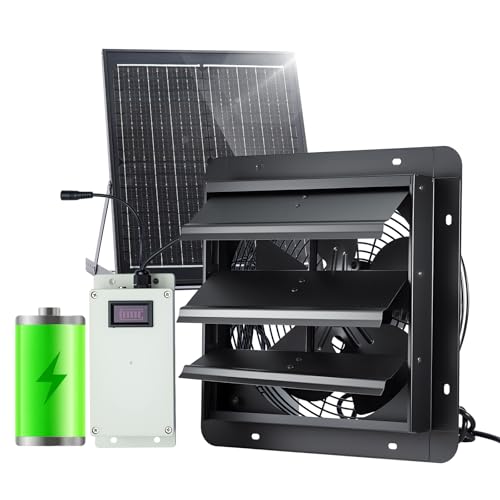
The GROWNEER kit emphasizes smart power management with a built-in 3200mAh battery and a robust 1200 CFM airflow at 2600 RPM. It supports spaces up to about 1400 square feet and operates with a noise range of 40-60 dBA, balancing strong performance with reasonable sound output. The louvered metal body provides durability and rust resistance, while the unit’s intelligent battery back-up ensures continued operation during cloudy periods or at night. An automatic louver closes when the fan stops, reducing dust intake and backdraft risk.
Considerations include noise tolerance, battery capacity for longer low-sun periods, and the versatility of mounting options. The product is well-suited to greenhouses, attics, sheds, and larger chicken coops where persistent airflow is needed without relying on fixed electrical wiring. The rugged construction supports outdoor use in various weather conditions, making it a solid all-around performer for off-grid ventilation needs.
pqins 7.1″ Solar Greenhouse Fan 2 Pack

This two-pack from pqins provides flexible, separate solar panels and fans for intake and exhaust applications. Each 7.1″ fan can reach up to 3800 RPM with a total combined airflow of 1800-900 CFM depending on configuration, making them suitable for small greenhouse spaces, chicken coops, or sheds. The 16.5 ft cord length enables distant panel placement for optimal sun exposure while keeping the fans close to the desired air path. The kit is positioned as a cost-effective, modular solution for enhancing ventilation in compact areas.
Key points include automatic high-speed operation on sunny days and reduced speed on cloudier days to match ventilation needs. The separate panels and fans support versatile installation, including one for intake and one for exhaust, or both for one-direction airflow. The setup is best for users seeking adjustable, modular control of airflow with straightforward installation.
pqins 7.1″ Large Solar Greenhouse Fan

The pqins large greenhouse fan extends the concept with a bigger 7.1″ design and IP67 waterproofing for outdoor reliability. A single unit may reach up to 3800 RPM, delivering substantial airflow for spaces around 80–120 square feet, such as larger greenhouses, sheds, or chicken coops. The kit emphasizes a dual-purpose approach—one panel, one fan, or separate panels for intake and exhaust. The waterproofing and heavy-duty build are meant to withstand outdoor exposure and seasonal changes, offering long service life in outdoor ventilation roles.
Buying Guide: Key Purchase Considerations And Comparisons
Before choosing a solar powered ventilation fan, consider space size, climate, and operating patterns. The following factors help refine decisions across different use cases.
- Airflow needs: Measure space volume (length × width × height) to estimate required CFM. Higher CFM is better for hot, humid spaces, especially greenhouses and attics.
- Power source and autonomy: Decide if you need a built-in battery for night-time use or if daytime operation suffices. Battery-backed models improve reliability in dim weather.
- Installation flexibility: Look for separate panels and fans if you want to optimize placement for sun exposure and airflow direction. Longer cables increase placement options but may add clutter.
- Noise and durability: Check decibel levels and enclosure materials. Metal housings offer durability, while brushless motors reduce noise and wear.
- Ventilation strategy: Determine whether you need intake, exhaust, or both. Dual-fan configurations expand air exchange and can help control humidity and odors more effectively.
- Weather resistance: For outdoor installations, IP ratings, waterproofing, and corrosion resistance affect long-term performance in varied climates.
- Maintenance: Assess ease of cleaning, filter or vent cover accessibility, and whether batteries require replacement after several years.
In practice, smaller spaces such as 6×6 ft coops may benefit from compact dual-fan kits with battery backup, while larger sheds or greenhouses might require higher CFM units like the 1600 CFM attic fan or dual-pack solutions for strategic intake and exhaust.
Overall, solar powered ventilation fans provide a low-maintenance option for improving air quality and comfort without a heavy dependence on the electrical grid. When selecting a model, balance upfront costs with long-term energy savings, expected climate conditions, and installation feasibility to ensure a satisfactory, durable solution.