Best Solar Powered Electric Fence Solutions for 2026
Exploring solar powered electric fence options helps protect livestock, poultry, gardens, and property without drawing from the grid. This guide highlights five reliable chargers, summarizing key specs and features to help you choose the right level of protection for your fencing needs.
| Product | Brand | Output (Joules) | Range (miles) | Power Source |
|---|---|---|---|---|
| 10 Miles Solar Fence Charger with Day/Night Mode | ANDMON | 0.11 | 2 | Solar |
| Zareba ESP5M-Z Solar Powered Electric Fence Charger | Zareba | — | 5 | Solar |
| Andmon MINI400 20 Miles Solar Electric Fence Charger | ANDMON | 0.3 | 20 | Solar |
| FarmNix 30 Miles Solar Electric Fence Charger | FarmNix | 0.3–1.5 | 30 | Solar |
| Andmon 50 Miles Solar Electric Fence Charger | ANDMON | 0.95 | 50 | Solar/DC |
The following sections cover five selected products in detail. Each entry includes a clickable Amazon link, an image, and a concise overview of features that impact practical use on real farms, ranches, or large properties.
ANDMON 10 Miles Solar Fence Charger

The ANDMON 10 Miles Solar Fence Charger is a compact, portable energizer designed for easy setup and movement. It energizes up to 2 miles of fencing and is built around a built-in solar panel with an internal GEL battery, making it suitable for strip grazing or temporary setups. With a Day/Night mode, it adapts to changing light conditions to maintain reliable power. Mounting on a steel rod and connecting to a fence are straightforward tasks. Its emphasis on portability supports deployments across smaller fenced areas or temporary rotational grazing systems.
Zareba ESP5M-Z Solar Powered Fence Charger

The Zareba ESP5M-Z offers a 5-mile rating under ideal conditions and includes a built-in mounting bracket for common post types. It is designed to perform with minimal weed interference and comes with a one-year limited warranty, including coverage for lightning damage. The unit is positioned as a versatile solution for farms and homesteads that require dependable, mid-range fencing protection with straightforward installation and maintenance.
Andmon MINI400 20 Miles Solar Fence Charger

The Andmon MINI400 is a compact, high-output option designed to energize up to 20 miles of fencing. It includes a robust 18.5V/3W solar panel and a 12V/4.5Ah sealed lead-acid battery, enabling operation for approximately 14 days without sun. The Day/Night Mode helps adapt to varying light conditions, which improves reliability in longer fencing runs or areas with intermittent sunlight. This model emphasizes higher energy output in a small form factor for larger properties.
FarmNix 30 Miles Solar Electric Fence Charger
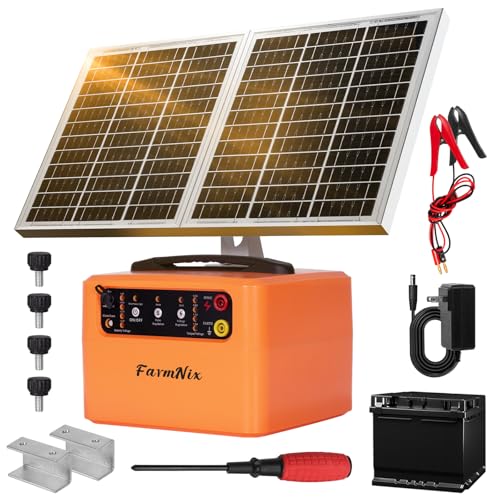
The FarmNix system provides 6KV/8KV/10KV/12KV adjustable output and 0.3/0.8/1.1/1.5 Joules of energy output, allowing tailored pulses for different livestock or predator control needs. It supports up to 30 miles of fence with day and night mode for around-the-clock protection. A 15W solar panel paired with a 12V 7Ah sealed lead-acid battery underpins long uptime, with a battery life of up to 18 days at lower energy settings. The unit is noted for versatility across poultry, livestock, gardens, and larger farm fences.
Andmon 50 Miles Solar Electric Fence Charger

The Andmon 50 Miles model delivers up to 0.95 joules of output and can power fences up to 50 miles. It combines a dedicated solar panel with a DC charging option, providing flexible energy sources for extended outages or remote locations. A built-in 12V/12Ah battery supports up to 14 days of operation without sunlight, making it a strong candidate for large farms or properties with extensive fencing needs. Installation supports multiple post types, including Y-posts and wooden posts, for adaptable mounting across varied terrains.
Buying Guide: Key Considerations for Solar Powered Electric Fences
- Range versus power output: Higher mile ratings generally require more energy; match the charger’s output joules to your fence length and livestock type for effective pulses without stressing the animals.
- Power source and reliability: Look for models with robust solar panels and sealed lead-acid or lithium batteries. Day/Night or auto-sensing modes improve performance in variable light conditions.
- Fence type and installation: Consider post types (T-posts, Y-posts, wooden posts) and whether you need brackets or mounting hardware included. Some units offer universal mounting options for flexibility.
- Weather resistance: Outdoor environments demand weatherproof enclosures and corrosion-resistant components to ensure year-round operation.
- Battery life and maintenance: Longer uptime between sunlight hours is beneficial for fenced areas with limited sun. Check maintenance requirements and replaceable battery options.
- Safety and compliance: Ensure the energizer adheres to local regulations and safety guidelines for livestock protection and predator deterrence.
- Cost of ownership: Consider initial cost, battery life, and maintenance when comparing models with similar ranges and joule outputs.
- Remote management and monitoring: Some units offer day/night modes or remote alerts, which can help manage large grazing systems efficiently.
- Warranty and support: A reputable warranty and accessible customer support can save time and money if issues arise.
When evaluating solar powered electric fence options, prioritize a balance between range, energy output, and your specific fencing layout. For larger properties with diverse terrain, higher joule outputs and longer battery life translate to more reliable protection across extended distances. For smaller or portable setups, compact models with flexible mounting and quick setup can meet daily guarding needs without requiring heavy infrastructure.