Best Solar Power Systems With Battery Storage for Home and On‑The‑Go Reliability
Growing interest in off-grid living and reliable home backup has made solar power systems with battery storage a top choice for many American households. This guide highlights five prominent options that balance capacity, portability, and smart features. Explore a quick summary below, then dive into detailed product sections to compare performance, expandability, and suitability for your needs.
Quick Summary Table
| Product | Brand | Key Capacity | Best For |
|---|---|---|---|
| ECO-WORTHY 48V 600Ah Server Rack Battery | ECO-WORTHY | ~30.72 kWh | Home backup in rack-mount systems |
| Jackery Solar Generator 1000 v2 | Jackery | 1,070 Wh | Portable, outdoor/off-grid use |
| BPS-3000WPro Solar Power System | BESTSUNSOLAR | 3 kW system | Home solar with auto grid switching |
| ECO-WORTHY 200W Starter Kit | ECO-WORTHY | 200W kit + 50 Ah LiFePO4 | Beginner-friendly RV/off-grid |
| OUPES Mega 1 Portable Power Station | OUPES | 2,000 W continuous | High-demand apps and expandable power |
ECO-WORTHY 48V 600Ah Server Rack Battery Kit

The ECO-WORTHY 48V 600Ah server rack battery is designed for high-capacity energy storage with a compact rack-friendly form. It includes integrated CAN/RS485 interfaces for closed-loop communication with compatible inverters, plus Bluetooth and WiFi for remote monitoring via the ECO-WORTHY app. This module supports paralleling up to 32 units for expanded capacity (up to 163.8 kWh). Certifications include UL1973 and UL9540A, with California Energy Commission (CEC) alignment for safer, more reliable energy storage, making it suitable for home backup and larger microgrid setups.
Jackery Solar Generator 1000 v2

This portable power station delivers 1,070 Wh capacity with a 1,500 W AC output and 3,000 W surge, making it capable of running multiple appliances during outdoor trips or emergencies. It weighs about 23.8 pounds for easy transport and features one-hour fast charging for rapid recharging via the Jackery app. The unit uses a durable LiFePO4 battery designed to maintain ample capacity after thousands of cycles, providing dependable long-term use in off-grid or backup scenarios.
BPS-3000WPro Solar Power System

This 3 kW system pairs 1,200 W solar panels with a 25.6V 100 Ah LiFePO4 battery pack. It delivers about 7.2–9.6 kWh daily in optimal sun and includes a 120 V hybrid inverter with auto grid switching. The configuration supports home energy storage for daily use as well as backup during grid outages. It’s designed for mid-sized homes seeking a reliable, scalable off-grid or grid-tied solution with energy storage.
ECO-WORTHY 200W Complete Solar Starter Kit
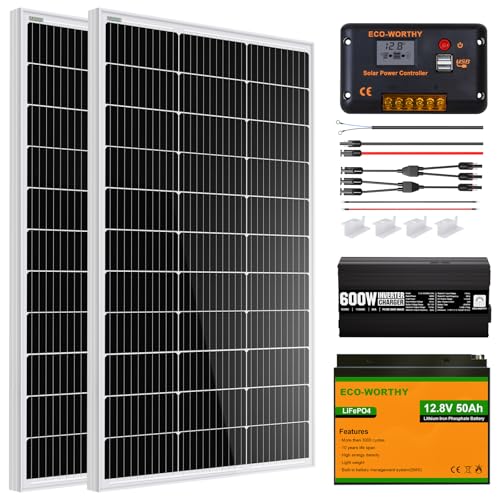
This beginner-friendly solar kit includes a 200 W panel, a 50 Ah LiFePO4 battery, a 30 A charge controller, and all necessary cables and mounting hardware. The kit provides up to 800 Wh daily output under good sunlight, making it a practical starting point for RVs, campers, or small off-grid cabins. The monocrystalline panel is built for outdoor durability with IP65 protection and robust wind and snow resistance.
OUPES Mega 1 Portable Power Station
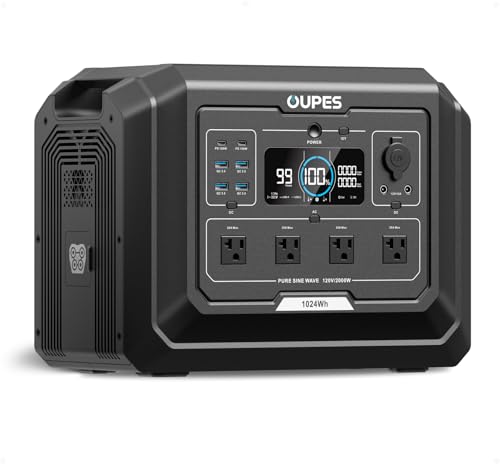
The OUPES Mega 1 delivers 2,000 W continuous output (4,500 W surge) from a 1,024 Wh LiFePO4 battery, with modular expansion through extra batteries to scale capacity up to 5 kWh. It supports professional-grade power delivery through pure sine-wave AC outlets, ensuring stable operation for sensitive electronics and high-demand appliances. Fast recharging and expandable capacity make it well-suited for home backup and mobile power needs during trips or emergencies.
Buying Guide: Key Purchase Considerations
- System Type and Use Case: Decide between full home backup, portable off-grid, or mix-and-match setups. Rack-mounted systems are ideal for home energy storage, while portable power stations excel for travel and emergencies.
- Battery Chemistry and Lifespan: LiFePO4 batteries offer long cycle life and safety advantages. Consider cycle life, depth of discharge, and warranty when comparing options.
- Capacity and Expandability: Assess daily power needs and peak load. Look for systems that allow additional modules or parallel runtimes to grow with your energy demand.
- Inverter and Safety Certifications: Verify inverter quality, grid-tie capabilities, and safety certifications (UL1973, UL9540A, CEC) for reliability and compliance with local codes.
- Monitoring and Smart Features: Built-in Bluetooth/WiFi, mobile apps, and data logging help track performance, battery status, and system health.
- Portability vs. Permanence: Portable units offer flexibility, but fixed systems with larger batteries provide steadier long-term backup for homes.
- Upgrade Paths and Compatibility: Ensure compatibility with existing solar panels, inverters, and charge controllers. Consider communication protocols (CAN/RS485) for advanced control.
- Maintenance and Lifespan: Evaluate ease of installation, upkeep requirements, and service availability for long-term reliability.
Choosing the right solar power system with battery storage involves balancing capacity, portability, and future expandability. For dependable home backup, prioritize high-capacity, safely certified storage with monitoring. For mobility, favor lightweight, fast-charging generators with practical outputs. Combining both approaches can yield a resilient energy strategy for everyday use and emergencies.