Best Solar Power Lighting Kits for Home Off-Grid and Emergency Lighting
Answering the search intent for practical, ready-to-use solar lighting solutions. This guide highlights five widely relevant solar power lighting kits, ideal for homes, cabins, and emergency preparedness. Best for compact, portable use, outdoor enthusiasts, or anyone seeking independent off-grid lighting with charging capabilities. The top picks balance durability, versatility, and ease of installation while clearly outlining who benefits most from each option.
Quick comparison of selected products:
| Product | Best For | Key Advantage | Limitation |
|---|---|---|---|
| GVSHINE Solar Lights Kit | Emergency backup, small off-grid setups | Integrated panel, battery, multiple LEDs, phone charging | Compact system may limit high-load use |
| DNYSYSJ Solar Generator Kit | Indoor/outdoor lighting and device charging | Versatile ports, compact inverter | May require careful setup for long runs |
| XTAUTO Collapsible Lantern Kit | Camping, tents, temporary outages | 360° lighting, collapsible and portable | 4-pack size is suited for multi-spot lighting |
| Lichamp Portable Lantern Kit | Emergency power, small spaces | USB output, dual power source | 4-pack means multiple units |
| JUOPTGJ Solar Inverter LED Kit | Home emergencies, multi-device charging | Multiple sockets, 4 LED jacks | Integrated system may be larger and heavier |
The following sections present concise, buyer-focused details for each kit. Each entry explains who should consider the product, why it was selected, and any notable limitation based on the data provided.
GVSHINE Solar Lights for Inside Kit

Best for emergency power and off-grid readiness in a compact package. This kit combines a 30W flexible solar panel, a 115Wh backup battery, and multiple LED outputs to cover basic lighting and phone charging needs during outages. The design emphasizes an independent, off-grid power system, making it suitable for small cabins, sheds, or storm-ready setups. The included adapters support common devices, including iPhone and Android, which broadens its practicality for everyday use.
- Best for: Small homes, sheds, RVs, or as a hurricane-season backup power source.
- Why selected: All-in-one approach with a flexible panel and essential charging options reduces extra hardware.
- Caution: The system’s footprint and battery capacity may limit long-duration, high-load power use.
DNYSYSJ Solar Generator Kit

Best for indoor/outdoor lighting with flexible charging for mobile devices. The kit uses a robust monocrystalline solar panel and a compact inverter with multiple ports, including USB outputs and a 12V socket. Its design supports reliable performance across voltage conditions, making it a sensible option for off-grid camping, patios, or emergency lighting in homes. The kit is also suited for travelers who want a portable power source without complex setup.
- Best for: Quick-to-deploy lighting and device charging during outages or outdoor activities.
- Why selected: Versatile port configuration simplifies powering a range of small devices.
- Caution: Limited high-load capacity; plan around lower-watt usage for extended outages.
XTAUTO Collapsible Lantern Kit
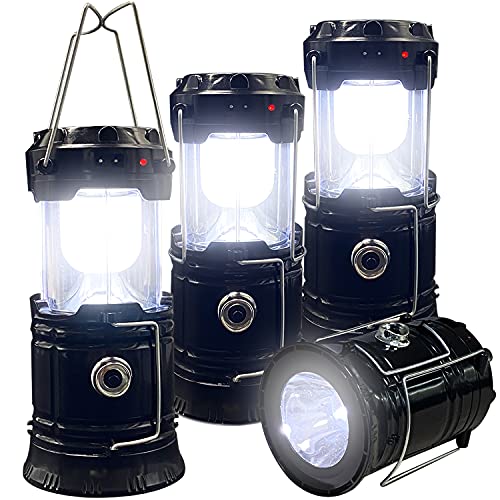
Best for camping, tents, and multi-night outages where portability matters. The kit includes a collapsible lantern with 360° lighting, a durable ABS construction, and a lightweight form factor that fits easily into backpacks or emergency kits. A 360° lighting design ensures broad illumination in small spaces, while the collapsible form makes storage straightforward.
- Best for: Outdoor trips, tents, and mobile emergency lighting kits.
- Why selected: High portability and versatile lighting modes maximize usable brightness per charge.
- Caution: The 4-pack size is designed for dispersed lighting rather than a single central light.
Lichamp Collapsible Lantern Kit
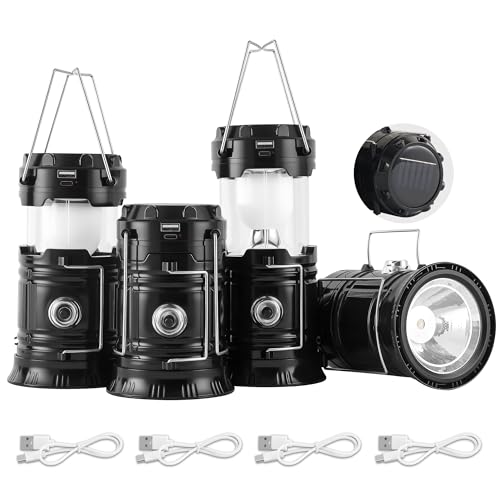
Best for power outages and versatile charging needs in compact spaces. This kit offers a USB output alongside a rechargeable battery with solar and USB charging options, plus a 2-in-1 flashlight and lantern design. The dual power source capability helps during extended outages or when solar charging is inconsistent.
- Best for: Small rooms, emergency kits, and travel-ready lighting.
- Why selected: USB output supports charging phones, tablets, and other devices in emergencies.
- Caution: The kit’s brightness is optimized for close-range illumination rather than large-area coverage.
JUOPTGJ Solar Inverter Kit
Best for home emergencies needing multi-device charging and lighting. This kit includes a multi-function inverter with several sockets, two USB ports, a 12V socket, four bulb jacks, and a solar charging port. It emphasizes safe operation with built-in protection features and a robust design for long-term use in home or cabin settings.
- Best for: Home power-outage readiness and multi-device charging.
- Why selected: Wide socket variety supports multiple devices and lighting needs from a single unit.
- Caution: Integrated system may be heavier and require secure placement during use.
Buying Guide: Key Considerations for Solar Power Lighting Kits
When choosing a solar lighting kit, consider adaptability to your space, practical power needs, and ongoing maintenance requirements. Check panel type, battery capacity, and number of outputs to ensure compatibility with your devices and typical outage duration.
- Power capacity and runtime: Choose a kit with a battery capacity that matches your expected usage, especially during extended outages.
- Port selection: Ensure enough USB and DC outputs for phones, tablets, lights, and small appliances.
- Portability vs. capacity: Balance the need for portability with the demand for brighter, longer-lasting lighting.
- Durability and weatherproofing: Look for IP ratings or described waterproofing for outdoor use or humid environments.
- Ease of use: Favor kits with straightforward setup, clear instructions, and included adapters for common devices.
Frequently Asked Questions
- What should I consider first when buying a solar lighting kit?
Answer: Start with your intended use (outdoor, emergency indoors, or camping), then match battery capacity, panel efficiency, and the number of outputs to your device loads and backup duration needs. - Are these kits suitable for long-term off-grid living?
- Can I charge a phone directly from these kits?
- Do solar lighting kits require professional installation?
- What maintenance is needed for solar kits?
Answer: They can be part of an off-grid setup for lighting and small devices, but assess total watt-hours and daily usage to avoid shortfalls during cloudy days.
Answer: Yes, most kits include USB ports or adapters compatible with mobile devices; confirm the USB output amperage for faster charging.
Answer: Most kits are designed for DIY setup, though some larger systems may benefit from a professional assessment for optimal placement and wiring safety.
Answer: Regularly inspect panels for cleanliness, check battery health, and replace worn cables or connectors as needed to maintain performance.