Best Solar Power Inverter Chargers for Off-Grid Homes
Find the right solar power inverter charger for your off-grid needs. This guide highlights five top options that balance output, MPPT charging, and battery compatibility. Ideal buyers include RV and camper enthusiasts, small homes, or users seeking battery-less or AGM/Lithium compatibility. The selections emphasize stable pure sine wave output, solid MPPT performance, and practical features like LCD displays or multiple charging modes. Below is a quick table of the chosen products to help you compare at a glance.
| Product | Nominal Inverter Power | MPPT (A) | Battery Type Info | Best For |
|---|---|---|---|---|
| SUMRY Hybrid Solar Inverter (4000W) | 4000W | 140A | Battery-Less or AGM/Lithium | Higher-load homes, RVs |
| SUMRY Solar Inverter Charger (3600W) | 3600W | 120A | Battery-Less or AGM/Lithium | Mid-sized homes, off-grid setups |
| LANDERPOW 3000W Pure Sine Wave | 3000W | Unknown in data | Battery-ready with multiple outlets | RV, small rigs, basic off-grid |
| Aninerel 3000W Hybrid Inverter | 3000W | 100A | Battery-Less or AGM/Lithium | RVs and cabins needing built-in MPPT |
| SUNGOLDPOWER UL1741 5000W Hybrid | 5000W | 80A | Hybrid solar + AC charging | Off-grid systems needing robust power |
SUMRY Hybrid Solar Inverter, 4000W with LCD

The 4000W rated inverter delivers pure sine wave output with an 8000W peak capacity. It includes a 140A MPPT charge controller and supports PV input up to 5600W. The glass top with a large LCD display provides real-time data. Best for users who need high continuous power and a clear, integrated monitoring interface. Limitations include the need to verify your load sum against the high wattage capabilities to avoid overloading.
SUMRY Solar Inverter Charger, 3600W

This all-in-one unit combines 3600W inverter power, a 120A MPPT solar charger, and a 100A AC charger. It supports PV inputs from 60V to 500V, with up to 4200W PV input power. It works with or without a battery, enabling solar-powered operation when PV input exceeds 120V and the grid is not connected. Best for battery-flexible setups; better with a battery to reduce grid draw. Caution: no-battery operation draws more from PV, which can limit performance during cloudy days.
LANDERPOW 3000W Pure Sine Wave Inverter

This unit provides 3000W continuous power with up to 6000W surge and boasts high efficiency (>91%). It includes 3 AC outlets, USB-C, USB-A ports, and remote control. It is suitable for RVs, homes, and emergencies. Best for robust, plug-and-play setups, but note that peak power is separate from continuous output and starts devices within its rating. Use with caution for devices with high startup currents.
Aninerel 3000W Hybrid Inverter

The Aninerel 3000W unit features a built-in 100A MPPT solar charger and a responsive LCD screen for real-time monitoring. It is designed for 24V systems, supports 4,000W PV input, and works with AGM, GEL, Lead-Acid, Li-Ion, and LiFePO4 batteries. Best for off-grid cabins or RVs needing integrated monitoring and strong MPPT charging. Limitation: keep an eye on maximum PV input voltage and charging current to match your battery configuration.
Aninerel 12,000W Solar Hybrid Inverter

This high-capacity inverter offers 12,000W continuous output with dual MPPT controllers and up to 22,000W peak. It supports parallel expansion with up to six units, enabling scalable power for larger off-grid needs. Best for larger homes, workshops, or remote facilities needing significant, expandable power. Caution: parallel operation increases system complexity and requires careful balance of PV and battery configurations.
AMPINVT Solar Inverter 5000W
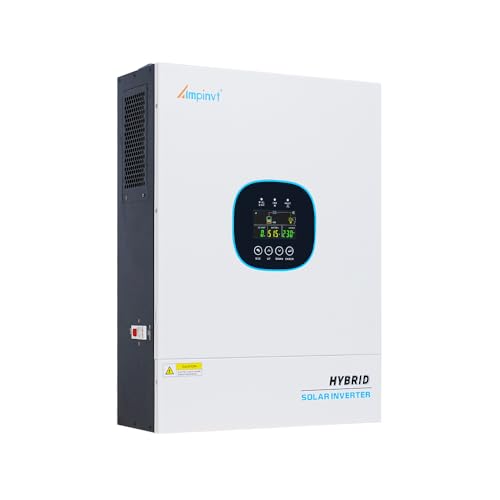
AMPINVT offers 5000W pure sine wave output with a built-in 100A MPPT solar charger and multiple charging modes. It supports up to 5500W PV input and 100A charging, with PV load priority, inverter priority, and solar priority modes. Best for scalable solar setups where users want flexible charging strategies. Limitation: parallel operation is possible but may require additional equipment; verify compatibility for high-current needs.
Y&H 2200W Solar Hybrid Inverter

The Y&H unit provides 2200W pure sine wave output with an 80A MPPT solar charger and built-in AC charger. It supports a wide PV input range (55-450V) and can handle 12V lead-acid or lithium batteries. Best for compact, low-to-mid power off-grid setups. Limitation: output is lower than premium models, so it may not handle large loads simultaneously without battery buffering.
Buying Guide
What should you look for when choosing a solar power inverter charger?
- Power needs: Match continuous wattage to your expected loads. Consider surge capability for startup-heavy appliances.
- Battery compatibility: Ensure compatibility with AGM, Gel, Lead-Acid, Li-Ion, or LiFePO4. Verify whether the unit supports battery-less operation or requires a battery for optimal performance.
- MPPT capabilities: Check MPPT current (A) and PV input voltage range. Higher MPPT current improves charging in sunny conditions and reduces charge time.
- PV input limits: Confirm the maximum PV input power and voltage. High PV input supports more solar harvest with fewer panels in some setups.
- Monitoring and control: LCD displays and user interfaces help monitor voltage, current, and battery status. Consider models with remote control or app support if you need real-time access.
- Expansion options: If future growth is planned, look for parallel-ready units that allow upscaling of total inverter power.
Frequently Asked Questions
- What is a solar power inverter charger?
- Do I need a battery for these devices?
- What is MPPT and why is it important?
- Can these inverters run sensitive electronics?
- Is parallel operation worth it?
- How do I choose between 3600W, 4000W, and 5000W models?
An inverter charger combines an inverter, an MPPT solar charger, and an AC charger in one unit. It converts DC from solar panels or batteries to AC power and can manage charging from solar, grid, or generators.
Many models can operate without a battery (battery-less) when solar input is sufficient, but a battery is recommended to ensure reliable power during low-sun conditions and to provide energy storage for outages.
Maximum Power Point Tracking optimizes solar charging by adjusting the electrical load to extract maximum power from solar panels. Higher MPPT current generally means faster charging in varying light conditions.
Yes, all listed units deliver pure sine wave output, which is suitable for sensitive devices. Always check the load compatibility for devices with high startup currents.
Parallel setups can scale total power for larger needs but require matching units and proper configuration. Ensure your system supports parallel connections and is installed safely.
Choose based on your peak and continuous load requirements. Higher wattage models handle larger appliances and longer operation, while smaller models are lighter and more cost-efficient for modest loads.