Best Solar Power Home Lighting System for Reliable Off-Grid Living
Discover practical solar lighting and power solutions designed to keep homes bright during outages, raise indoor lighting efficiency, and enable small appliances to run off-grid. This guide highlights five top options, covering everything from compact indoor/outdoor kits to larger home-use systems. Each choice emphasizes durability, ease of installation, and energy efficiency to help you compare performance, installation needs, and real-world use cases.
| Product | Brand | Key Benefit |
|---|---|---|
| GVSHINE Solar Lights for Inside, 4 Bulbs Kit | GVSHINE | Independent off-grid power with built-in charging and lighting |
| Solar Generator with 4 LED Bulbs & Panel | DNYSYSJ | Compact inverter with multiple ports for devices and lighting |
| APILAB Solar Shed Light Indoor Outdoor | APILAB | Dual lamp, dusk-to-dawn operation with pull string control |
| ECO-WORTHY 4.68KWH Solar Power Kit | ECO-WORTHY | High-capacity home solar kit with bifacial panels and inverter |
| aosu Security Cameras Solar Kit | aosu | Self-contained solar security with remote monitoring |
GVSHINE All-In-One Solar Lighting Kit

GVSHINE presents an internal solar lighting system designed for off-grid reliability. The kit combines a 30W flexible solar panel with a 115Wh backup battery and a selection of LED modules that cover common indoor needs. Its design supports emergency scenarios such as storms or power outages, ensuring basic lighting and charging capability without relying on the grid. The included accessories simplify setup, including adapters and cords suitable for household use. The flexible panel adds versatility for non-flat mounting surfaces, expanding the range of indoor and sheltered outdoor installations.
Key features include an integrated emergency power supply and a compact footprint that fits small spaces while still delivering consistent illumination. The system is described as weather-tolerant and adaptable to curved surfaces, enabling placement on sun-exposed walls, sheds, or trailers. While primarily marketed for emergency or backup use, the kit can serve as a stand-alone daily lighting solution in cabins or garages where access to grid power is limited.
DNYSYSJ Solar Generator With Lighting Kit

This DNYSYSJ solar generator kit blends a compact inverter with multi-port capability and a built-in solar charging port. The design supports emergency lighting and charging small devices, making it suitable for both indoor and outdoor use. The unit’s rugged construction uses monocrystalline silicon and aluminum, paired with an ABS enclosure to withstand typical outdoor environments. With several output options—two USB ports, a 12V socket, multiple bulb jacks, and a solar charging port—it offers flexible power for lighting and essential electronics during outages or camping trips.
Its emphasis on portability, durability, and broad compatibility makes it a practical option for households seeking a balanced mix of lighting and device charging. The product highlights long-term stability under varying voltage conditions and a straightforward setup that does not require specialized electrical work, appealing to users seeking a dependable off-grid lighting backbone without complex installation.
APILAB Solar Shed Light Indoor Outdoor

APILAB’s solar shed light pairs two pendant lights with a strong 12,000 mAh battery in a centralized power box. The system offers dusk-to-dawn operation and three lighting modes, making it adaptable for both day and night use. The dual-lamp configuration covers wider areas from a single control point, which is ideal for sheds, garages, and barns where even illumination is necessary. The pull-string control enables quick mode changes without remote operation, and a compact form factor supports flexible placement in small spaces.
The design focuses on simple, intuitive operation and reliable nighttime lighting, while the day-time mode provides steady illumination for tasks requiring consistent light. With IP-rated components and a cable reach that allows indoor-outdoor installation, this option suits both utility sheds and covered outdoor spaces.
ECO-WORTHY 4.68KWH Solar Power Kit

ECO-WORTHY offers a larger-scale solar power kit designed for home use with 4.68 kWh daily output in ideal sun conditions. The system features 6 x 195W N-type bifacial panels, a 48V 50Ah lithium battery, and a 3500W inverter with WiFi monitoring. Its MPPT controller supports parallel connections, enabling scalable power for home appliances like air conditioners, TVs, and refrigerators. This kit targets users seeking a robust, grid-like solution that supports substantial daytime energy use and nighttime storage.
The bifacial panel design increases energy capture in varied lighting, while the inverter’s versatility accommodates common 110V/120V loads. The package emphasizes reliability, durability, and remote monitoring, making it suitable for cabins, sheds, or home installations where a larger, fixed solar system is desired. Prospective buyers should consider roof space, installation capability, and long-term maintenance when evaluating this kit.
aosu Solar Security Kit
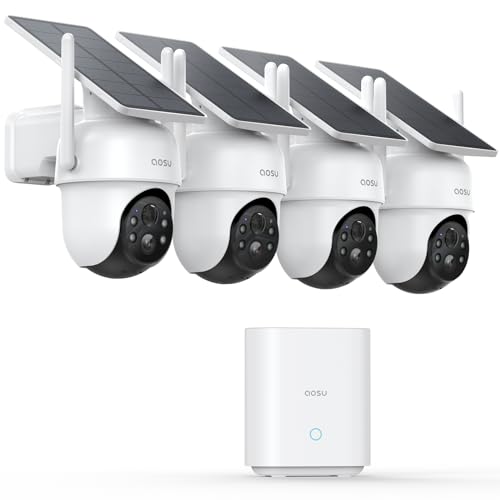
The aosu solar kit focuses on security with a camera system that operates without ongoing subscriptions. It provides local storage with aosuBase and supports instant notifications, essential live streaming, and cross-camera tracking to relate events across cameras. The system is designed for outdoor installation with a solar panel charged battery, enabling operation with limited daily sunlight. It is positioned as a low-maintenance solution for monitoring porches, driveways, or yards, offering remote access and reliable recording even if some cameras are damaged or moved.
Key advantages include encryption for local storage, 32GB of onboard storage, and multi-camera live views. This kit balances security features with energy independence, making it a practical choice for homeowners who want solar-powered surveillance without recurring fees. Potential buyers should confirm camera range, battery life, weather resilience, and compatibility with their home network when planning installation.
Buying Guide: Key Considerations For Choosing A Solar Power Home Lighting System
- Power needs and scalability: Assess your daily energy usage and space for solar panels. Smaller kits work well for emergency lighting and charging essentials, while larger kits support appliances and longer off-grid operation.
- Battery type and capacity: Lithium batteries typically offer longer life and deeper discharge, but cost more upfront. Consider usable capacity in watt-hours and the rate of discharge during outages.
- Weather resistance and durability: Look for IP ratings, rugged enclosures, and panels designed for outdoor exposure if you plan outdoor mounting or shed installations.
- Port availability and device compatibility: Ensure the kit provides USB, 12V, and AC options to support phones, fans, radios, and other devices you rely on.
- Ease of installation: Systems with plug-and-play components, clear instructions, and minimal wiring are preferable for homeowners DIY-ing installations.
- Monitoring and control: WiFi or app-based monitoring helps track battery health, charging efficiency, and energy use over time, informing maintenance.
- Maintenance and reliability: Consider component quality, warranty terms, and ease of finding replacement parts or batteries as technology evolves.
- Cost of ownership: Weigh upfront investment against long-term savings from reduced electricity usage and resilience during outages.
- Future-proofing: If you anticipate expanded power needs, choose a modular system that can add panels, battery capacity, or more inverters without a full replacement.
In summary, the best solar power home lighting solution depends on your space, typical weather conditions, and intended use—whether it is for emergency lighting, security, or full-home backup power. The five options above illustrate a spectrum from compact indoor kits to robust home-scale systems, each with its own strengths in durability, ease of use, and energy efficiency. Consider your priorities—simplicity, scalability, or security—as you select the right setup for your home.