Best Solar Power Solutions for Your Motorhome on the Road
The right solar setup can keep a motorhome energized off-grid, from quiet campsites to full-time adventures. Below is a curated selection of five solar products designed for RV living, portable charging, and expandable systems. Each option balances efficiency, durability, and user-friendly installation to help you choose a reliable energy backbone for your motorhome journeys.
| Product | Key Strength | Ideal For |
|---|---|---|
| Renogy 200 Watts 12 Volts RV Kit | RV-focused kit with Adventurer 30A PWM controller | Built-in controller, mounting hardware, ideal for fixed rooftop setups |
| BLUETTI AC200L | High capacity expandable power station | Extended trips, emergency power, home backup |
| Renogy 200W Portable Solar Panel | Lightweight, foldable, high efficiency | Mobility for small spaces, quick setup |
| Topsolar 340W Panel | High wattage for off-grid systems | Max power in a compact roof footprint |
| MARBERO Solar Powered Generator 155Wh | Portable power with foldable panels | Compact off-grid trips, backup power on the go |
These selections cover rooftop installs, portable panels for flexible layouts, and compact generators for quick-swap or emergency power. Each product is evaluated for motorhome use, balancing footprint, wattage, durability, and ease of integration with typical RV electrical systems.
Renogy 200W RV Solar Kit With Adventurer Controller
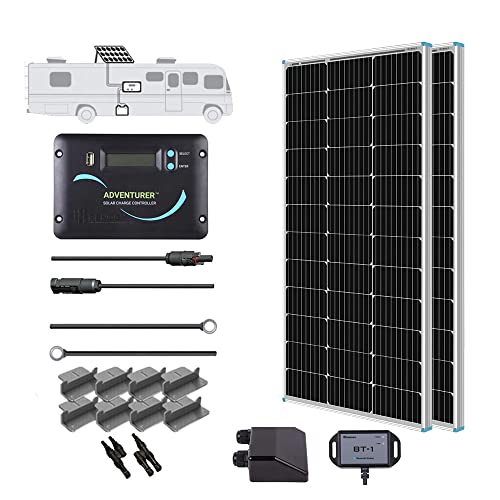
The Renogy 200 Watts 12 Volts Monocrystalline RV Solar Panel Kit is designed for RV, boat, and trailer usage. It includes mounting brackets and an Adventurer 30A PWM charge controller, enabling flush mounting on RV or camper walls. The kit highlights a 22% module efficiency and a corrosion-resistant aluminum frame built to withstand wind and snow loads, making it a fit for outdoor duty. With an estimated daily output of around 800Wh under optimal sun, it provides a compact footprint for smaller roof areas while offering robust protection features such as overcharge and short-circuit protection.
This setup suits RV owners who want a ready-to-install, all-in-one solution with protective features and a clean, space-conscious install. The PWM controller simplifies wiring and battery management for everyday use and casual DIY installations. While it emphasizes a smaller footprint, ensure your RV’s battery bank and wiring are compatible with a 12V system and that the roof space can accommodate the panel dimensions and mounting hardware.
BLUETTI AC200L Portable Power Station

The BLUETTI AC200L is a versatile portable power station designed for RV use and off-grid living. It offers a substantial base capacity with 2048Wh LiFePO4 to 8192Wh expandable storage, supporting high power needs and long trips. With up to 2400W AC input charging and 1200W solar input, it can recharge quickly, providing fast power when sunlight is available. The system supports multiple expansion batteries, allowing users to tailor energy storage to match travel duration and gadget load. It is particularly suitable for full-timers seeking a modular, scalable energy backbone with reliable performance in varied weather.
Consider the AC200L if you need a dependable energy hub that can power essential appliances, charge laptops, run a CPAP, or supply emergency power. It’s heavier and less portable than a single-panel solution, but it compensates with a robust, expandable battery system and user-friendly management features that RV owners often value for long trips and home backup scenarios.
Renogy 200W Portable Solar Panel

This Renogy portable solar panel is a 200W foldable option designed for RV camping and off-grid use. It highlights industry-leading 25% cell efficiency through 16BB N-Type cells, delivering higher daily output in limited space. The device weighs around 13.89 pounds and folds down to compact dimensions for easy storage, making it ideal for motorhomes with tight storage or roof space. A magnetic closure design helps with setup and deployment, and its MC4 output enables charging of portable power stations or 12V battery systems with various chemistry types. It’s a practical choice for RV dwellers who want portable, high-efficiency power on the go.
Key considerations include ensuring compatibility with your power station or battery system, checking weight limits for roof mounting if you plan a fixed install, and confirming the panel’s DC output aligns with your charge controller and battery bank.
Topsolar 340W Solar Panel For Motorhomes

The Topsolar 340W solar panel is built to deliver substantial power output for motorhomes and off-grid setups. With a claimed 23% conversion efficiency, it aims to maximize energy capture, especially on sunny days or when roof space is ample. The panel features a durable aluminum frame and robust waterproofing in the IP65/IP67 range, designed to withstand outdoor conditions. Pre-drilled mounting holes simplify installation on RV roofs or auxiliary carport setups. This panel is well-suited for RV owners who want a high-wattage, durable option that can pair with controllers and battery banks to sustain a more demanding energy load on the road.
When integrating a 340W panel, plan for a compatible charge controller and battery sizing to maximize daily output. Consider shading, mounting angle, and the potential need for a second panel or a storage strategy to balance peak sun hours with travel routes and climate conditions.
MARBERO 155Wh Solar Generator With Foldable Panels

The MARBERO 155Wh solar generator combines a compact lithium battery with a 30W foldable solar panel. It provides essential AC, DC, and USB outputs, making it suitable for light RV trips, camping, and emergency backups. The kit is designed for portability—its small footprint and low weight enable easy stow-away in a vehicle trunk or cabinet. It’s best for charging small devices, LEDs, and cooling devices during brief outages or when you’re off-grid for a short period. The included solar panel helps replenish the battery in sunny conditions, though the total energy capacity is modest compared with larger power stations.
Ideal uses include weekend getaways, tent camping, or as a supplementary backup in a motorhome. For longer trips or higher appliance loads, pair this setup with a larger power station or additional solar panels to extend runtime and reliability during cloudy days or extended stays off-grid.
Buying Guide: Key Purchase Considerations For Motorhomes
When selecting solar power for a motorhome, consider how you will use power, how much energy you consume, and how you want to upgrade over time. The following factors help balance cost, practicality, and performance.
- Power needs and load profile: Map typical daily usage, including lights, fridge, fans, charging devices, and entertainment. This helps determine whether you need a portable setup for occasional use or a full rooftop kit with a large battery bank.
- System type and expandability: Fixed rooftop panels offer permanence and aesthetics, while portable panels provide flexibility for changeable roof space and seasonal use. Consider a power station or battery system that can expand as your energy needs grow.
- Battery chemistry and capacity: Lithium-based packs (LiFePO4) offer longer life, better safety, and deeper discharge. Match capacity to your daily consumption and recharge rate with solar input.
- Charge controllers and inverters: PWM controllers are simple and cost-effective for basic setups; MPPT controllers optimize energy capture in variable conditions. Inverters determine whether you can run AC appliances and at what power level.
- Durability and weather resistance: RV installations endure wind, sun exposure, and temperature swings. Look for corrosion-resistant frames, IP-rated components, and robust mounting hardware.
- Space and installation: Roof area, weight load, and ease of installation influence panel size and configuration. Foldable panels offer flexibility for small cabins or trailers with limited storage.
- Maintenance and warranties: Longer warranties and reputable brands reduce long-term risk. Check warranty coverage for panels, controllers, and batteries, plus service options.
- Cost and value: Compare wattage, efficiency, and system expandability. A higher price may be justified by better efficiency, reduced maintenance, and easier expansion in the future.
In practice, a balanced approach often includes a rooftop panel or two for steady daily output, supplemented by a portable solar panel or small power station for flexibility during travel or in shaded areas. Always verify compatibility with your existing battery bank, controller, and inverter to ensure a cohesive, safe, and efficient RV energy system.