Best Solar Power Electric System Kits for Home Backup and Off-Grid Use
Discover top solar power kits designed to power homes, cabins, and RVs with reliable off-grid capabilities. This guide highlights five highly regarded options from ECO-WORTHY, Jackery, and PLUGGEDSOLAR. Each kit combines solar panels, inverters, and battery storage to deliver steady daytime generation and flexible energy storage for nighttime use. Compare outputs, battery types, and expandability to find a system that fits your energy goals and budget.
| Product | Approximate Output (Daily) | Battery Type | Key Feature |
|---|---|---|---|
| ECO-WORTHY 10KW Off-Grid Complete Kit | 9.36 KWh | Lithium (UL 1973 & UL 9540A) | Parallel up to 6 kits for large homes |
| ECO-WORTHY 4.68KWH Complete Kit | 4.68 KWh | Li-ion | High-efficiency N-Type panels, 6-unit parallel |
| [Ultra] ECO-WORTHY 1200W 24V System | 5.52 KWh | 12.8V Li Battery | Dual-axis tracking option |
| Jackery Solar Generator 1000 V2 | 1070 Wh (station) | LiFePO4 | Fast charging and light for portability |
| Plug and Play 800-Watt Solar Panel System | Estimated 1500 kWh/year | Not specified (integrated kit) | Plug-and-play to wall outlet |
ECO-WORTHY 10KW Off-Grid Complete Kit

This 10 kW off-grid system is designed for home use, sheds, cabins, or farms that require substantial daytime generation and reliable 240V AC output. The kit includes 12 panels rated at 195W each, delivering an overall 2340W array. An UL-certified 10kW inverter provides continuous power, while parallel expansion up to six units enables higher total output. Real-time battery monitoring is available via a mobile app, with CAN/RS485 communication for the lithium storage. The kit emphasizes safety with UL 1741 and UL 9540A certifications and CEC compliance.
What to know: The system aims to deliver about 9.36 KWh per day under ideal sun, sufficient for running a mix of appliances like air conditioning, TV, refrigerator, and kitchen devices. Parallel operation supports high-powered loads, but installation complexity grows with additional units. Battery monitoring and WiFi/Bluetooth connectivity add convenience for ongoing maintenance and performance tracking.
ECO-WORTHY 4.68KWH Complete Kit

This 4.68 kWh kit uses six 195W N-Type bifacial panels to deliver improved efficiency, especially in high-temperature environments. The upgraded 3500W inverter converts 48V DC to 110/120V AC and includes a built-in MPPT controller for stable charging. It supports parallel connections (up to six units, totaling about 21 kW) and offers 20ms UPS switching. The system is designed to power common home appliances such as air conditioners, TVs, refrigerators, and microwaves, with an emphasis on reliable performance and WiFi monitoring/control features.
Considerations: While smaller than the 10 kW kit, this option remains scalable. The N-Type bifacial panels provide efficiency gains, but real-world results depend on site shading, panel tilt, and geographic location. The 7000W surge capacity adds resilience for starting heavy loads when needed.
[Ultra] ECO-WORTHY 1200W 24V Off-Grid System
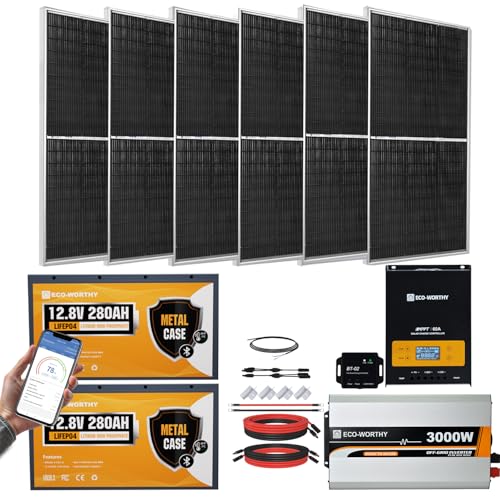
This 1200W system targets off-grid trials, RVs, cabins, and small homes. It includes six 195W panels, a 60A MPPT charge controller, and a 3000W pure sine wave inverter, supporting 48V DC to 110/120V AC conversion. A dual-axis tracker option can increase daily energy yield by more than 40%, improving performance in contexts with variable sun exposure. The 12.8V 280Ah lithium battery pack offers robust storage and a higher cycle life, backed by a BMS for safety and longevity.
Considerations: This kit balances portability with power, making it suitable for travel trailers, sheds, and backup use. The dual-axis tracking option adds complexity and cost but yields meaningful gains in energy capture during daylight hours. Ensure compatible wiring and space for installation, as well as periodic maintenance for battery health.
Jackery Solar Generator 1000 V2

The Jackery Solar Generator 1000 V2 combines a portable power station with a 200W solar panel for outdoor and emergency use. It features a 1,070Wh LiFePO4 battery, a 1,500W continuous AC output with a 3,000W surge, and lightweight design at about 23.8 pounds. The unit supports fast charging via the Jackery app and emergency charging modes. It’s well-suited for camping, RV trips, and home backup during power outages, with easy transport and straightforward use.
Considerations: This option emphasizes portability and quick setup rather than large-scale home backup. It excels in scenarios where mobility and rapid deployment matter. Battery life is solid for weekend trips, but longer outages may require larger storage or additional modules. Ensure solar panel availability and charging times align with intended usage patterns.
Plug and Play Solar Panel Power System
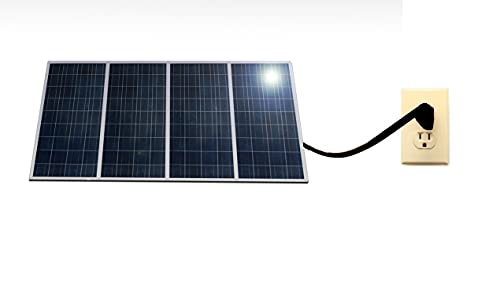
This kit offers a simple plug-and-play approach with 800-Watt solar panels and an 800-Watt inverter. It’s designed to plug directly into a wall outlet for straightforward electricity generation and use. The system estimates annual electricity generation around 1500 kWh, providing a practical means to reduce energy bills for typical residential use. It’s best for users seeking a minimal, install-ready solution with short setup time and easy operation.
Considerations: This system prioritizes simplicity over large-scale independence. Availability of space and sun exposure will determine daily output. For households seeking substantial energy independence or overnight storage, a larger, in-depth setup may be more suitable. Compatibility with local electrical codes and professional installation considerations should be reviewed.
Buying Guide: Key Purchase Considerations And System Comparisons
- Energy demand and daily output: Match kit daily KWh production with your typical energy usage. Higher daily output supports more appliances and longer backup windows, but requires larger solar arrays and storage.
- Battery chemistry and capacity: Lithium-based storage (Li-ion or LiFePO4) generally offers longer cycle life and better depth of discharge. Consider total storage capacity (kWh) and the ability to scale via parallel units.
- Inverter type and capacity: Pure sine wave inverters handle sensitive electronics and appliances. Check continuous and surge wattage ratings to ensure compatibility with starting surges of heavy loads like air conditioners or microwaves.
- Expandability: If future growth is likely, choose systems that support additional modules or parallel units. This is common in ECO-WORTHY kits but evaluate wiring, controllers, and safety certifications for multi-unit configurations.
- Monitoring and connectivity: Real-time battery and system monitoring via mobile apps adds visibility for performance, health, and maintenance. WiFi or Bluetooth connectivity enhances remote management.
- Install practicality: Consider space, mounting surfaces, weather exposure, and local regulations. Some kits are ideal for off-grid cabins or RVs, while others suit home backup and living areas.
- Portability vs. capacity: Portable power stations like the Jackery are versatile for travel and emergencies but are limited in long-term home backing. Fixed kits deliver higher sustained output but require installation planning.
- Certification and safety: Look for UL certifications (UL 1741, UL 1973, UL 9540A) and compliance with local safety standards. This helps with market access, warranty validity, and safe operation.
When selecting a solar power kit, assess how it integrates with existing electrical systems and whether you need professional installation. Consider your geographic location, typical weather conditions, and the expected duration of backup needs. A phased approach—starting with a smaller, expandable kit—can reduce upfront costs while enabling future growth to reach larger daily outputs or longer autonomy.