Best Solar Power Electric Fence Chargers for Livestock and Property Protection
Protecting livestock, pets, and gardens with reliable solar-powered fence chargers is essential for many American farms and homesteads. This guide highlights five top-performing solar fence energizers, detailing coverage, energy output, and key features. Use these options to compare portability, durability, and day/night operation—all designed for year-round performance without daily manual charging.
Summary of selected products
| Product | Brand | Coverage | Output |
|---|---|---|---|
| 24 Hour Solar Electric Fence Charger (10 Miles) | Epoify | Up to 10 miles | 0.18J |
| 10 Miles Solar Electric Fence Charger (Day/Night) | ANDMON | Up to 10 miles | 0.16J |
| Solar Electric Fence Charger (1.2J, 45 Miles) | Epoify | Up to 45 miles | 1.2J |
| Andmon MINI400 (20 Miles) | ANDMON | Up to 20 miles | 0.4J |
| Solar Electric Fence Charger (10 Miles, 0.20J) | PLOWIC | Up to 10 miles | 0.20J |
Epoify 24 Hour Solar Fence Charger — 10 Miles
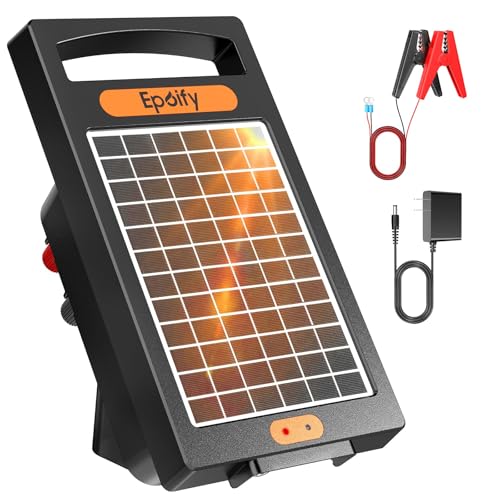
The 24 Hour Solar Electric Fence Charger from Epoify delivers a steady 0.18 joule pulse designed for livestock containment and predator deterrence. It can cover up to 10 miles of pasture fencing, making it suitable for small to medium grazing areas. The unit operates continuously, storing solar energy during the day to energize the fence at night, ensuring uninterrupted protection without daily charging.
Key features include:
– 0.18J output suitable for cattle, goats, poultry, and deterring raccoons and foxes
– Up to 10 miles coverage for pasture fencing
– Built-in rechargeable battery for day and night operation
ANDMON 10 Miles Solar Fence Charger — Day/Night Mode
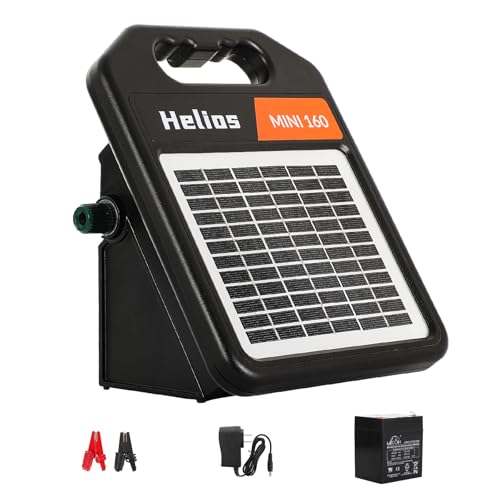
This compact, portable solar fence charger powers up to 10 miles of fencing and includes a day/night mode for continuous protection. It features a built-in solar panel and an internal GEL battery, designed to provide reliable power in low-light conditions. The unit is described as easy to install and move, ideal for strip grazing setups and flexible fencing layouts.
Highlights:
– Up to 10 miles of coverage
– Built-in solar panel and GEL battery for reliable power
– Portable and easy to install for frequent repositioning
Epoify Solar Fence Charger — 1.2J, 45 Miles

Designed for large pastures and greater livestock control, this unit stores 1.2 joules of energy and delivers 7–11kV pulses. It’s built to power up to 45 miles of fencing under optimal conditions. The charger features an upgraded solar panel and a robust battery system to maintain operation through cloudy days, storms, and winter weather.
Key points:
– Stored energy of 1.2J with 7–11kV output
– Up to 45 miles of coverage
– Upgraded 8W solar panel for faster charging and reliability
Andmon MINI400 20 Miles Solar Fence Charger

The Andmon MINI400 provides up to 20 miles of fence energizing capability with a 0.4J output. It uses an 18.5V/3W solar panel and a 12V/4.5Ah sealed lead-acid battery, enabling operation for up to 14 days without sun. It is designed for day/night operation and to function reliably in extreme temperatures (-20 to 80°C).
Highlights:
– 0.4J output for moderate to heavy fencing needs
– 20 miles of coverage
– 14-day backup power with a sealed lead-acid battery
PLOWIC Solar Electric Fence Charger — 0.20J, 10 Miles

This unit delivers up to 0.20J output with an 8KV voltage, powering as many as 10 miles of fencing. It features a 3W solar panel and a 10,400mAh battery, providing day/night operation and reliability in various weather conditions. The design emphasizes portability and durable outdoor use, suitable for gardens and livestock protection.
Important notes:
– 0.20J output for reliable livestock and garden protection
– 10 miles of coverage with day/night operation
– Solar panel and battery backup for continuous performance
Buying Guide: Key Factors To Consider
When selecting a solar fence charger, consider livestock type, fence length, climate, and maintenance needs. First, determine the required energy (joules) relative to animal size and fence material. Larger livestock or longer fences typically demand higher joule outputs and greater voltage tolerance.
Secondly, assess coverage needs. For large pastures or multi-zone fencing, units offering 30–45 miles of coverage provide flexibility and fewer devices. Day/night operation is essential in northern areas with long nights or overcast winters. Choose models with robust solar panels, large batteries, and weatherproof enclosures (IP ratings) for reliability.
Portability can matter for rotational grazing or temporary fencing. Lightweight, compact chargers with easy installation allow rapid relocation. Finally, verify compatibility with your fence type (polywire, tape, or braided wire) and ensure safe installation practices to protect both animals and the charger.
Comparative considerations:
– Output vs. coverage: Higher joules increase pulse strength and deterrence for larger animals, but the practical impact depends on fence length and grounding.
– Solar charging: Look for efficient panels and batteries that perform in low light and seasonal changes.
– Durability: All-weather ratings, rugged housings, and reliable mounting options reduce maintenance needs.
– Safety features: Grounding requirements, surge protection, and clear installation instructions help prevent accidents.