Best Solar Power Battery Kit Solutions for Off-Grid Power and RV Living
Answering the demand for reliable, user-friendly solar power battery kits, this guide highlights five solid options that balance value, durability, and ease of use. These kits suit different buyers—from weekend campers seeking portable power to RV enthusiasts building a semi-permanent off-grid setup. Each choice is explained with who it’s best for, why it stands out, and one practical caution to consider before purchasing. A quick summary table below helps compare core attributes at a glance.
| Product | Best For | Capacity / Output | Key Benefit | Limit/Consideration |
|---|---|---|---|---|
| ECI Power 100W Kit | Budget-friendly off-grid projects | 100W panel, 12V 20Ah LiFePO4 | Solid longevity and cycle life | Limited expandability |
| SOLPERK 20W Kit | Small trailers, boats, trickle charging | 20W panel, smart MPPT controller | Smart charging and durability | Low total power for heavy loads |
| ExpertPower 100W Kit | Beginner installs for cabins or campers | 100W panel, 12V 21Ah Gel | Reliable, easy setup | Gel battery weight and size |
| ECO-WORTHY 200W Complete Starter | Full RV/off-grid kits | Two 100W panels, inverter, battery | All-in-one solution | Inverter and heavy components add weight |
| ECO-WORTHY 200W Starter Kit | Mid-range off-grid RV or cabin use | Two 100W panels, 12V LiFePO4 battery, 1100W inverter | Balanced power and versatility | Basic assembly required |
ECI Power 100W 12V Solar Power Kit

Features include a 12V 20Ah LiFePO4 battery, a 100W mono panel, and a 10A PWM controller with cables and mounting brackets. The kit emphasizes safe lithium power at a consumer-friendly price, with an estimated cycle life of at least 2000 cycles at 80% depth of discharge and up to 5000 cycles at 50% DOD. Best for: RVs, trailers, campers, boats, or other off-grid projects on a budget. Caution: PWM controllers are simple and may be less efficient under heavy, fluctuating loads compared with MPPT controllers.
SOLPERK Solar Panel Kit 20W 12V
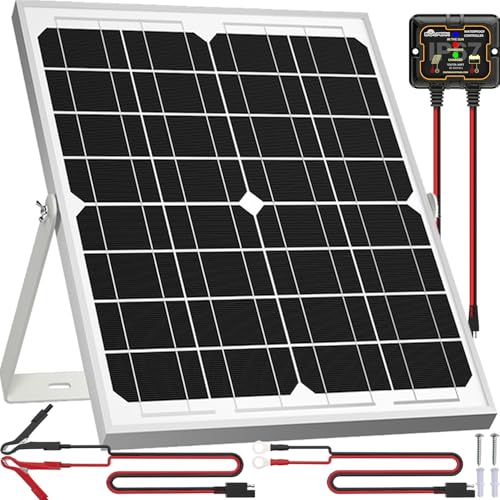
This kit integrates a 20W monocrystalline panel with an 8A smart MPPT controller and a robust mounting system. It’s designed to keep small 12V batteries topped up in trailers, boats, RVs, or cars, and to withstand diverse weather due to its waterproof construction and weatherproof frame. Best for: trickle charging and maintenance on smaller systems. Caution: 20W is limited for powering higher-draw devices or long-term energy-intensive use.
ZeroKor Portable Solar Generator Kit

This portable kit pairs a 300W solar generator with a foldable 60W panel and a 280Wh battery. It offers USB, DC, and AC outputs, along with multiple recharging options (home, car, or solar). Best for: campers and small-group outdoor activities needing a flexible, all-in-one power source. Caution: Peak loads over 300W can cause strain; certain devices (like high-wattAppliances) may exceed its sustained capacity.
ExpertPower 100W 12V Solar Power Kit

Includes a 100W monocrystalline panel, 10A PWM controller, and a 12V 21Ah Gel deep-cycle battery, plus cables and mounting brackets. Best for: beginners seeking a simple, durable installation for cabins or RVs. Caution: Gel batteries can be heavier than LiFePO4 equivalents; ensure proper ventilation and handling guidelines when charging indoors.
ECO-WORTHY 200W Complete Starter Kit for RV Off Grid
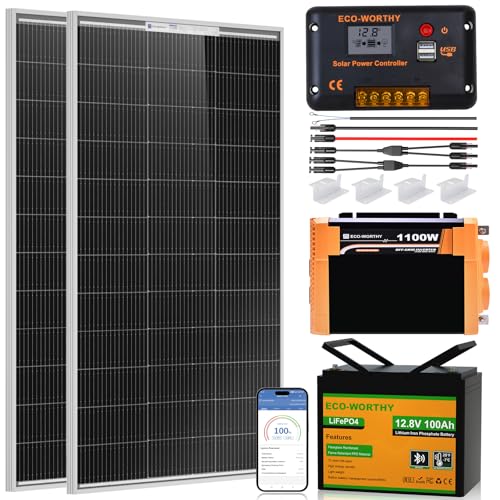
This one-stop system includes two 100W panels, a 12.8V 100Ah LiFePO4 battery, an inverter, and a 30A PWM controller. It’s designed for RVs and off-grid use, offering up to 800Wh daily output in typical sun. Best for: new off-grid setups needing a fully integrated package. Caution: Heavier components require solid mounting and electrical safety awareness during installation.
ECO-WORTHY 200W Starter Kit

This kit mirrors a practical mid-range setup, delivering two 100W panels with a 12V LiFePO4 battery and a 1100W inverter. It suits RVs, cabins, or boats where a balance of power and portability is desired. Best for: those who want solid energy capacity without expanding into a full industrial solar system. Caution: The included cables and hardware should be checked for compatibility with your inverter and battery model during setup.
Buying Guide: How To Choose The Right Solar Power Battery Kit
- What is my power target? Determine daily energy needs. If you anticipate running high-draw devices, prefer higher wattage panels and larger battery capacity.
- What type of battery chemistry fits my project? LiFePO4 offers long cycle life and safety, but adds weight and may cost more than Gel or AGM options. Compatibility with your inverter and controller matters.
- Is MPPT worth it for me? MPPT controllers generally harvest more energy in variable conditions, especially with longer cabling or shading; PWM is simpler and often cheaper but less efficient.
- Do I need an all-in-one kit or a modular build? All-in-one kits simplify setup, while modular systems offer easy upgrades and replacement parts as power needs grow.
- Portability vs. permanence: Portable kits suit campers and boats, while higher-capacity kits with mounting hardware are better for RV or cabin installations.
Practical Considerations
- Durability: Look for tempered glass, weatherproof frames, and corrosion-resistant components for outdoor use.
- Expandability: If future power needs rise, choose a system that supports additional panels or larger batteries.
- Safety: Ensure correct wiring, fusing, and ventilation for LiFePO4 or Gel batteries, especially when used indoors or in confined spaces.
- Installation: Basic DIY installation is feasible for many kits, but consider professional help for electrical work and mounting on large vehicles or boats.
Frequently Asked Questions
- What is a solar power battery kit best used for? – It provides off-grid or backup power for RVs, boats, cabins, and camping setups, combining panels, battery storage, and charge controllers in one package.
- Should I choose LiFePO4 or Gel batteries? – LiFePO4 generally offers longer life and better safety in outdoor installations, while Gel can be lighter in some cases but may have different charging requirements.
- Is MPPT worth the extra cost? – In most setups, MPPT improves charging efficiency, especially with higher voltages, longer cable runs, or fluctuating sunlight.
- Can I expand a starter kit later? – Many kits are designed for expansion, but confirm compatibility with additional panels, controllers, or batteries before buying.
- What maintenance is required? – Regular inspection of cables and connections, keeping panels clean, and monitoring battery health are key tasks for longevity.
- What is the typical daily output for a 200W system? – Output depends on sun, but a well-placed 200W kit might deliver several hundred watt-hours daily under typical conditions.