Best Portable Solar Panel Kits for Camping and RV Use
Answer: Portable solar panel kits are ideal for outdoor enthusiasts who need reliable off-grid power. They suit campers, RV travelers, and emergency-prep households by providing easy, lightweight solar charging without heavy installation. Below are five top options, each chosen for portability, ease of use, and compatibility with common battery banks and power stations. The following summaries highlight who benefits most from each kit and why it stands out, along with a practical note to consider before you buy.
| Product | Best For | Watts | Key Advantage |
|---|---|---|---|
| Renogy 200W Portable Solar Panel Kit | RVers and campers seeking high efficiency | 200 | 25% efficiency with foldable design |
| Renogy 100W Portable Solar Panel Kit | Lightweight starters and solo travelers | 100 | Compact, easy carry |
| Renogy 400W Portable Solar Panel Suitcase | Off-grid power for larger setups | 400 | Durable, quick setup |
| GRECELL 200W Portable Solar Panel Kit | Durable, weather-ready kits | 200 | ETFE protection, IP65 |
| DOKIO 200W Portable Foldable Solar Panel Kit | Flexible, budget-minded packs | 200 | Standalone controller, long cable |
Renogy 200W Portable Solar Panel Kit
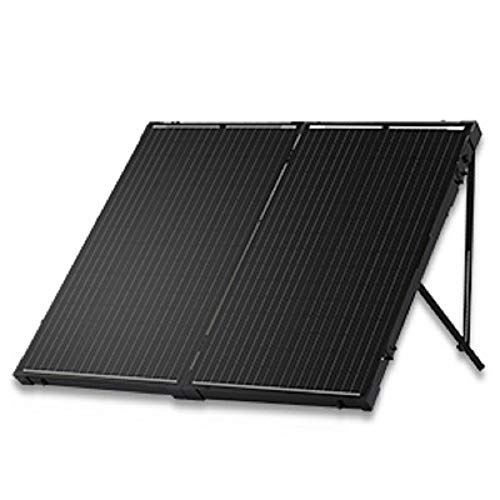
Best for: RV owners and campers who want maximum daily energy. This kit uses N-Type cells with up to 25% efficiency, helping charge a 12V system faster, especially in mid-day sun. The included 20A PWM charge controller and weather-ready cables simplify setup, making it a strong all-around option for off-grid adventures.
Why selected: High efficiency and a practical foldable form make it a standout for demanding outdoor uses. The tilt-ready kickstand helps optimize sun exposure, and the included controller reduces wiring hassles. The main limitation is weight for ultra-light backpackers, given at roughly 12.9 kg (28.46 lbs).
Renogy 100W Portable Solar Panel Kit
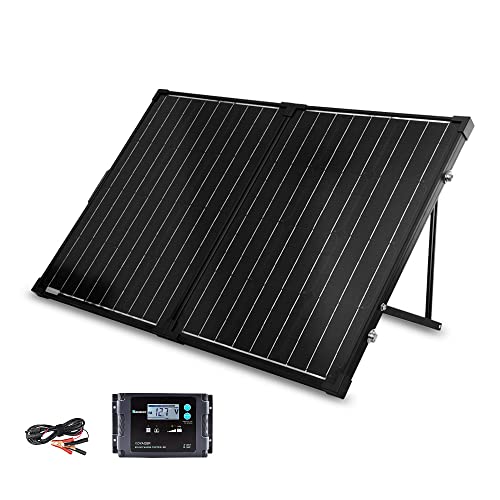
Best for: Solo travelers or small campsites needing dependable power without excess weight. The 100W kit maintains 25% efficiency with foldable design and a compact 7.9 kg weight, enabling easy carry in a backpack or small vehicle setup.
Why selected: It offers plug-and-play convenience with a pre-installed controller, suitable for beginners. A caveat is the lower wattage, which may limit daily charging during longer sunny periods or with larger power demands.
Renogy 400W Portable Solar Panel Suitcase

Best for: RVs, vans, or emergency backups where higher solar input is beneficial. With 400W and a rugged, foldable design, this kit supports faster replenishment of larger power stations or batteries after a blackout or extended camping trip.
Why selected: Durability and quick setup edge out some smaller kits in medium-to-large off-grid scenarios. The data notes a 3-year material and workmanship warranty, but this kit is heavier and less portable than smaller options, so consider your travel style before buying.
GRECELL 200W Portable Solar Panel Kit

Best for: Outdoor enthusiasts who need rugged, weather-resistant panels. This kit features 23.5% high conversion efficiency with ETFE lamination and IP65 waterproofing, making it a solid choice for variable conditions and more aggressive outdoor use.
Why selected: The strong waterproofing and durable outer shell suits adventure plans where rain and grit are possibilities. A potential limitation is that it does not include a built-in controller in some bundles, so users should verify compatible charging options before purchase.
DOKIO 200W Portable Foldable Solar Panel Kit

Best for: Budget-conscious buyers who still want a solid 200W foldable option. The DOKIO kit includes a separate PWM controller and a long 9.84 ft (3 m) cable, enabling flexible placement for best sun exposure while keeping the controller shaded.
Why selected: The standalone controller adds safety and upgrade flexibility, which is helpful for users who plan to swap batteries or power stations over time. A limitation to note is that some users may prefer an integrated controller for fewer components and faster setup.
Buying Guide
What should you look for when selecting a portable solar panel kit?
- Power needs: Match total watts to your typical load. Higher wattage suits larger power stations or multiple devices, while 100W–200W kits fit light camping or emergency prep.
- Portability: Consider folded size, weight, and included carrying case. If you travel by backpack, opt for lighter kits; for vehicle-based trips, heavier, higher-wattage kits can be practical.
- Durability and weatherproofing: ETFE surfaces, aluminum frames, and IP ratings extend lifespan in sun, wind, and rain. IP65 and IP67 ratings provide different levels of water resistance.
- Controller type: A pre-installed PWM controller simplifies use. Some kits use a standalone controller—this adds setup steps but can enable future upgrades with different power stations.
- Compatibility: Check compatibility with your 12V battery types (gel, AGM, Li-ion) and portable power stations. Some kits specify broad compatibility, while others require adapters.
- Setup time: Quick-connect panels, kickstands, and minimal assembly save time at the campsite or on the road.
- Durability features: Foldable designs, rugged kickstands, and sturdy connectors reduce setup frustrations during travel.
FAQ
- Do portable solar panels require professional installation?
No. Most kits are designed for consumer setup with plug-and-play controllers and simple folding frames. - Can I use a portable panel with any solar generator?
Most panels are compatible with 12V systems and many portable power stations, but check the manufacturer’s compatibility notes. - What is the difference between 25% efficiency and lower-efficiency panels?
Higher efficiency translates to more energy in limited sun; it helps in shaded or lower-light conditions but may come at a higher initial cost. - Is IP65/IP67 protection enough for rain and splashes?
IP65 protects against water jets; IP67 offers submersion protection for brief periods. For heavy rain exposure, cover panels when not in use and store indoors. - Should I choose a kit with a built-in controller or a separate one?
Built-in controllers simplify setup; separate controllers can offer upgrade flexibility and easier component replacement if needed. - What maintenance is required for portable panels?
Keep surfaces clean, avoid harsh impacts, and store in a dry area. Inspect cables and connectors for wear after travel.