Best Solar Panels in USA: Top Picks for Reliable Outdoor Power
When shopping for solar panels in the USA, you want options that deliver solid performance, weather resistance, and easy installation. This guide highlights five practical choices, covering small portable kits to larger, more permanent installations. The selections are ideal for homeowners, RV owners, and outdoor enthusiasts seeking dependable solar power without complexity. Read on for clear, buyer-friendly explanations and a concise comparison table to help you decide quickly.
| Product | Best For | Key Benefit |
|---|---|---|
| SOLPERK Solar Panel Kit 20W | Small setups & battery maintainers | Smart MPPT controller and versatility |
| ZOUPW 100W Portable Solar Panel | Off-grid & multi-device charging | High efficiency with universal connectors |
| 2 Pack 9W Solar Panels (BONAI) | Compact camera power & travel | Value pack with easy mounting |
| Sun-Swim SunSplasher 2×12′ Panels | Pool heating & outdoor comfort | Two panels, USA-made copper components |
| Renogy ShadowFlux 120W N-Type Panel | Shaded-area power needs | Anti-shading tech for reliable output |
SOLPERK Solar Panel Kit 20W: High Efficiency For 12V Systems
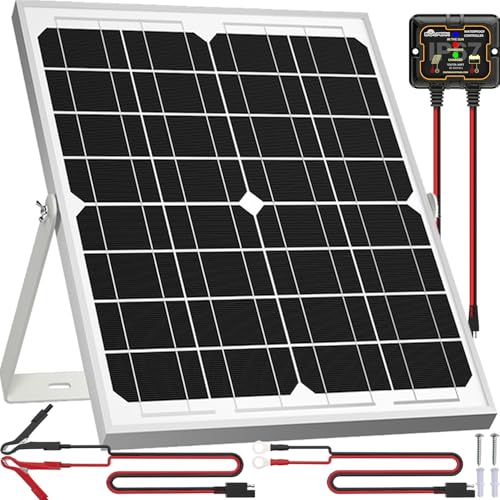
The SOLPERK 20W solar panel kit is designed to charge and maintain 12V batteries with a smart MPPT controller. It’s best for RVers, boats, and small off-grid setups where efficient charging and battery longevity are crucial. The kit emphasizes a high conversion rate and durable construction suitable for varied weather. A potential limitation is its smaller power output, which may not meet higher energy requirements on cloudy days.
Best for: compact systems, portable maintenance, and emergency power. Why selected: 20W panels paired with a smart controller provide reliable trickle charging and battery protection in a compact package.
Key considerations:
- Compact size suits limited spaces
- Smart three-stage charging helps prevent overcharge
- Use with compatible 12V batteries for best results
ZOUPW 100W Portable Solar Panel

The ZOUPW 100W panel uses 23.5% efficiency mono cells and a universal 5-in-1 connector system. It’s ideal for Jackery, EcoFlow, Bluetti, and other portable power stations, making it a strong choice for travelers and campers. Its ETFE-coated, IP67-rated durability supports outdoor use in rugged conditions. A limitation is the reliance on shade-free sun for maximum output, which may differ with location and weather.
Best for: off-grid travelers and multi-station setups. Why selected: high-efficiency cells, versatile connectors, and robust waterproofing support reliable energy on the go.
Key considerations:
- Five connectors reduce adapter clutter
- Durable build withstands outdoor use
- Capable of topping up diverse power stations
BONAI 2 Pack 9W Solar Panels

This value-packed duo is designed for outdoor cameras, small devices, and experiment projects. The 9W panels come with 10-foot USB-C cables, adapters, and mounting hardware to simplify placement. They deliver stable power in moderate sunlight, making them better for low-power needs. The main caveat is that higher-energy devices or long-duration loads may require larger panels.
Best for: small security cameras and portable charging. Why selected: combination of two panels with complete mounting and cabling options enhances flexibility and uptime for mini-loads.
Key considerations:
- Two-panel kit increases total output
- Includes mounting hardware for quick setup
- Designed for 5V–12V devices and USB-based charging
Sun-Swim SunSplasher 2×12′ Solar Panels
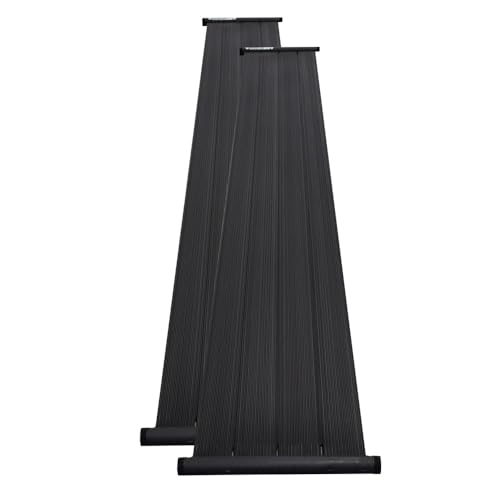
Two 2′ x 12′ solar heating panels are geared toward pool heating and outdoor comfort. Made for pool systems, they’re a good fit for households prioritizing warm water and extended outdoor use. They’re best for mid- to large-size pools where solar heating can reduce running costs. A potential limitation is that these panels are specialized for pool heating rather than general electrical power, so they won’t replace a home solar array.
Best for: pool owners seeking solar heating. Why selected: USA-made components and larger surface area maximize pool heat capture during sun exposure.
Key considerations:
- Designed for pool temperature gains
- Requires compatible pool heating equipment
- No hardware included in some bundles
Renogy ShadowFlux 120W N-Type Panel
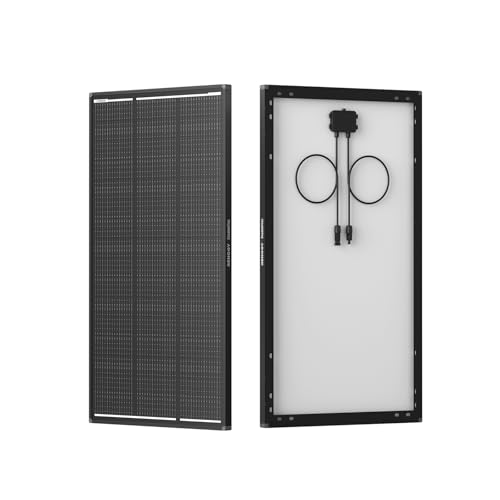
The Renogy ShadowFlux 120W panel uses N-type cells with 16BB technology to improve efficiency and reduce shading losses. It emphasizes anti-shading performance, making it well-suited for installations where partial shading is unavoidable. The panel is lighter and smaller than some PERC alternatives, which helps in space-constrained setups. A limitation is that real-world output may still vary with shading patterns and mounting orientation.
Best for: shaded-area power needs and space-limited installs. Why selected: anti-shading tech and compact footprint deliver more reliable output in real-world conditions.
Key considerations:
- ShadowFlux technology lowers hot spots
- Compact design saves space
- High efficiency supports smaller systems
Buying Guide: Practical Considerations For Choosing Solar Panels In The USA
What size panel do I need? Start with your power goals. Small devices and trickle charging demand 5–20W panels, while home or RV setups may require 100W or more. Larger systems should consider array layout, battery storage, and charge controllers.
What type of cells should I choose? Mono-crystalline cells offer higher efficiency and space efficiency, making them a common choice for portable and fixed installations. Polycrystalline cells are typically more affordable but slightly less efficient.
How important is durability? Look for weatherproofing (IP ratings), protective coatings (ETFE vs PET), and robust mounting hardware. In the USA, panels designed for outdoor exposure should handle sun, rain, wind, and temperature swings.
Do I need a charge controller? Yes for most setups with batteries. MPPT controllers are more efficient, especially in fluctuating sunlight, and can maximize energy capture in marginal conditions.
Are there compatibility considerations? Ensure connectors and cables match your power station or battery system. Some kits include universal connectors to simplify compatibility across common brands.
What about installation location? Place panels where they receive direct sunlight for most of the day. Angle and orientation affect output; use adjustable mounts to optimize exposure year-round.
Frequently Asked Questions
- What size solar panel is best for a small battery maintainer? A compact 5–20W panel with a proper charge controller is typically sufficient for small batteries and devices.
- Can solar panels work in cloudy conditions? Yes, but output is reduced. Higher-efficiency mono-crystalline panels perform better in diffuse light.
- Do I need batteries with solar panels? For most off-grid uses, yes. Batteries store energy for use when sun isn’t available.
- Are all outdoor solar panels easy to install? Many kits are designed for DIY installation, but consider mounting hardware, weatherproofing, and space when choosing.
- What is anti-shading technology? Anti-shading tech reduces power losses caused by partial shading on a panel, improving reliability in real-world setups.
- How should I evaluate panel efficiency? Look for cell type (mono vs poly), brand tech (e.g., N-Type, MPPT), and overall wattage relative to size for space-efficient setups.