Best Solar Panels for Recreational Vehicles: Top RV Panels for Off-Grid Power
For RV enthusiasts, reliable solar power expands adventures away from campgrounds and outlets. This guide highlights five high-performing solar panel kits and portable panels that suit RV, camper, and off-grid living. Each option balances efficiency, portability, and durability to help maintain batteries, run appliances, and keep devices charged during trips. Explore key features, setup notes, and what to consider when choosing the right system for your RV lifestyle.
| Product | Highlights |
|---|---|
| ECO-WORTHY 200W Kit | High-efficiency monocrystalline cells; robust frame; 30A PWM controller; weather resistance |
| Renogy 200W Portable | 25% efficiency; foldable with magnetic closure; lightweight; multiple outputs |
| Renogy 100W Flexible | Flexible 240° bend; PERC technology; curved-surface compatibility |
| SOKIOVOLA 200W Portable | Foldable with 25% efficiency; IP68 waterproof; lightweight for travel |
| Ecosonique 200W Portable | Kickstand design; USB-C PD3.0 output; versatile power outputs |
ECO-WORTHY 200W Solar Panel Kit

The ECO-WORTHY 200W kit uses high-efficiency monocrystalline cells to deliver strong performance in bright sun. The 35.2 by 23.1 by 1.37-inch panel pairs with a 30A PWM charge controller, designed for RVs, campers, and other off-grid applications. Its corrosion-resistant aluminum frame supports long-term outdoor use, with IP65 protection on the junction box for all-weather reliability. Ideal for daily outputs of substantial energy when sunlight is available, this kit supports extended off-grid stays by maintaining battery health and powering essential devices.
Renogy 200W Portable Solar Panel

Renogy’s 200W foldable solar panel targets RVs and off-grid setups with 25% efficiency thanks to 16BB N-Type cell technology. The lightweight panel weighs about 13.89 lbs and folds down to compact backpack dimensions, plus a magnetic closure for quick setup. It supports multiple outputs including USB-C PD and USB-A, and it comes with MC4 output to charge portable power stations or 12V battery systems. This design is well-suited for tight camper spaces and rapid deployment during travel.
Renogy 100W Flexible Solar Panel
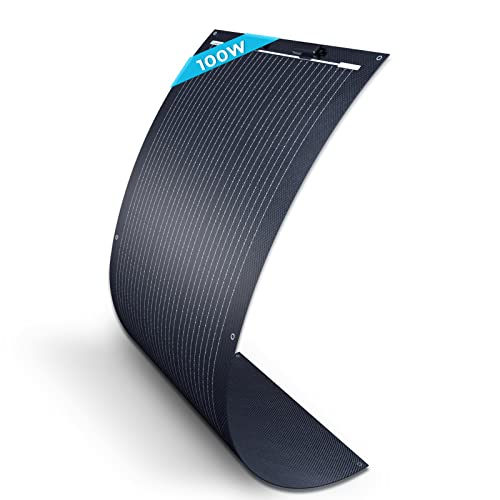
Renogy’s 100W flexible panel provides a flexible 240° bend to fit curved surfaces on RV roofs, vans, or boats. It’s lighter than rigid panels—about one-third the weight—and offers a glare-free appearance. The panel uses half-cut PERC cell technology to boost light capture and electrical output, improving overall efficiency for caravans with limited mounting area. It’s a practical choice when roof shape or aerodynamics require a low-profile solution.
SOKIOVOLA N-Type 200W Portable
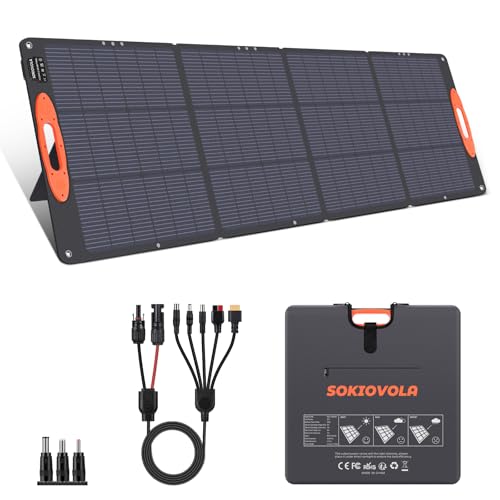
The SOKIOVOLA 200W portable panel uses N-Type cells and achieves up to 25% efficiency. It folds to a compact travel size and includes a magnetic handle with mounting holes for RV setups. Built with IP68 waterproofing and ETFE coating, it stands up to rain, dust, and outdoor use. The foldable design and robust durability make it suitable for weekend trips or full-season adventures where weight and space matter most.
Ecosonique 200W Portable Solar Panel

Ecosonique’s 200W foldable panel emphasizes portability and versatility. Weighing about 10.6 lbs with a 6-fold design, it folds to a compact 18 by 16.3 inches. It includes multiple output options, including USB-C PD3.0 and USB-A QC3.0 for direct charging of laptops and devices, plus MC4 direct output for compatibility with popular power stations. Four adjustable kickstands optimize sun exposure, making it a strong option for RVs that travel to varied sun angles.
Buying Guide: Key Purchase Considerations And Comparisons
- Power needs: Estimate daily energy usage for lights, water pump, fridge, fans, and charging devices. Larger RVs or more appliances may justify 200W panels or kits with higher output and multiple charging options.
- Panel type and efficiency: Monocrystalline panels deliver higher efficiency than polycrystalline, but weight and space on an RV roof matter. Flexible panels excel on curved surfaces, while rigid panels can be easier to install and upgrade.
- Durability and weather resistance: Look for corrosion-resistant frames, IP ratings for junction boxes, ETFE coatings, and robust mounting options. Off-grid use exposes panels to wind, rain, and summer heat, so protection matters.
- Portability and storage: If you travel light or camp in tight spaces, foldable or compact panels with magnetic closures simplify setup and stowage. Consider weight and how you’ll mount or secure panels while driving.
- Charge controller compatibility: PWM controllers work for simple setups, but MPPT controllers improve efficiency, especially in partial sun or multi-panel configurations. Ensure the controller matches your battery bank (12V, 24V, and chemistry type).
- Output options: USB-C PD and USB-A outputs enable direct charging of devices, while MC4 or DC outputs connect to power stations and RV batteries. Consider future expansions and compatibility with your power station.
- Durable mounting and flexibility: Look for panels that can be installed on varied roof shapes and that include mounting hardware or kickstands for flexible positioning in sunlight.
- Warranty and support: A solid warranty and accessible customer support help protect your investment during road-tested use and seasonal storage.