Best Solar Panels for Modular Homes and Off-Grid Setups
Modular homes blend modern design with adaptable layouts, and a dependable solar setup can extend off-grid living feasibility. This article highlights five top solar panel options that pair well with modular home installations, focusing on modularity, efficiency, and ease of integration with home energy systems. Each section outlines key features and practical considerations to help you choose panels that maximize space, performance, and reliability in a modular living environment.
| Product | Brand | Power (W) | Notable Feature |
|---|---|---|---|
| EF ECOFLOW 125W Modular Panel | EF ECOFLOW | 125 | Modular, bifacial, adjustable angle |
| ECO-WORTHY 400W (4x100W) Panels | ECO-WORTHY | 400 | Low-light performance, durable build |
| DOKIO 800W (2×400W) Panels | DOKIO | 800 | 12/24V compatibility, longer MC4 leads |
| ECO-WORTHY 1200W Complete Kit | ECO-WORTHY | 1200 | All-in-one system, hybrid inverter |
| Renogy 1180W 2×590W Panels | Renogy | 1180 | N-Type, bifacial option, high efficiency |
The following sections explore each option in detail, including installation considerations for modular homes, compatibility with off-grid and hybrid systems, and practical tips for maximizing efficiency in smaller roof footprints or porches often used with modular builds.
EF ECOFLOW 125W Modular Panel

The EF ECOFLOW 125W bifacial modular panel delivers up to 25% cell efficiency with N-Type technology. Its dual-sided design captures sunlight from both faces, increasing potential output to around 138W under favorable conditions. Ideal for modular homes where space is at a premium, this panel can be connected in parallel with multiple modules to scale capacity without sacrificing compact footprint. Its 30-60° adjustable support helps optimize sun exposure across seasons, while the modular nature supports phased installation alongside existing energy infrastructure.
Key considerations for modular homes include ensuring a stable mounting base for outdoor use and planning parallel connections that align with your battery and inverter. The compact 125W unit is particularly well-suited for secondary roofs, porches, or carport setups that are common with modular designs, where space and aesthetics matter as much as performance.
ECO-WORTHY 400W Four-Panel Set

This four-panel 400W array emphasizes reliability and low-light performance. Each 100W module uses PERC technology to boost efficiency, and the included IP65-rated junction box minimizes power loss in shaded spots. The layout is well-suited for modular homes with limited rooftop area, enabling a compact array that can still deliver substantial daily energy when paired with a robust battery and controller. The set’s rugged construction supports long-term outdoor deployment, a practical feature for seasonal modular dwellings or off-grid configurations.
Considerations include shading management and wiring simplifications for modular homes. The 400W split can be staged to align with future expansions, and the panel’s durability helps endure varying climates often encountered in modular community developments.
DOKIO 800W (2×400W) Mono Panels

The DOKIO package includes two 400W mono panels designed for easy 12/24V system integration, making it suitable for off-grid modular homes and garden sheds. Each panel features a 3-meter MC4 lead, enabling longer trunkline runs to a central controller or battery bank with fewer joint connections. Tempered glass and an aluminum frame enhance weather resistance, while the long leads help accommodate flexible roof layouts or ground-mounted arrays near modular structures.
Key considerations for modular homes include choosing parallel wiring to maintain stable voltage and current across multiple panels, and ensuring that the mounting surface can support wind and snow loads appropriate to your climate. The long MC4 leads are a practical advantage when the modules are placed on carports, verandas, or separate utility buildings typical in modular designs.
ECO-WORTHY 1200W Complete Off-Grid Kit
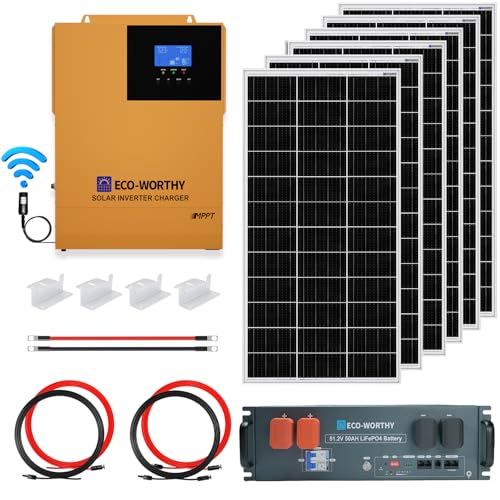
This all-in-one kit targets modular homes seeking a comprehensive energy solution. With six 195W panels totaling about 1200W, a 3500W inverter, and a 48V LiFePO4 battery, the system supports parallel expansion up to 21kW total. The built-in MPPT controller and WiFi monitoring enable remote performance checks, while the 48V to 110/120VAC conversion supports typical home appliances. The kit’s emphasis on durability and scalability makes it a compelling option for modular homes aiming for a larger, integrated energy system without piecemeal purchases.
When adopting a complete kit for modular homes, plan for space to house the inverter, battery bank, and control hardware. Also consider local codes and battery storage safety requirements, as LiFePO4 cells demand proper ventilation and mounting clearances in compact utility spaces.
Renogy 1180W N-Type Bifacial Set

Renogy’s 1180W bifacial option combines two 590W panels with N-Type cells and 16BB technology, delivering up to 25% higher efficiency and reduced hot spots. The bifacial design leverages reflected light for extra output, which can be advantageous for modular homes with reflective surroundings or high rooftop exposure. The panels are built with a corrosion-resistant frame and an IP68-rated junction box for superior outdoor durability, making them a strong choice for year-round modular installations in challenging climates.
For modular homes, the bifacial capability can maximize energy yield in areas with strong sun angles and adequate reflected light. Space planning is crucial, as higher-output panels may require careful positioning to avoid shading from nearby structures or trees. Pair these panels with a scalable inverter and battery system to optimize long-term energy independence.
Buying Guide: Key Considerations For Modular Home Solar Setups
- Space optimization: Choose modules with high space efficiency, modular designs, or bifacial capabilities to maximize output from limited roof or porch areas typical of modular homes.
- System compatibility: Ensure panels are compatible with your inverter, battery chemistry (LiFePO4 is common for modular homes), and controller (MPPT recommended) for steady, efficient performance.
- Wiring and expansion: Favor panels that support easy parallel connections and scalable arrays, allowing phased installations as needs grow.
- Durability and weather resistance: Look for IP ratings, tempered glass, corrosion-resistant frames, and robust mounting hardware to handle varying climates and wind loads.
- Monitoring and maintenance: Systems with WiFi or mobile monitoring help track performance, detect shading issues, and schedule maintenance to sustain output over time.
- Installation footprint: Assess roof orientation, tilt options, and mounting space in modular homes, prioritizing kits with adjustable angles and straightforward mounting.
- Safety and codes: Verify local electrical codes, permit requirements, and safety guidelines for off-grid or hybrid solar installations in modular housing developments.
- Cost of ownership: Consider not just the upfront panel cost but also inverter, battery storage, mounting hardware, and potential future expansion when evaluating value.
These perspectives provide a balanced view of options for modular homes, emphasizing modularity, durability, and scalable energy infrastructure. By aligning panel choice with roof geometry, local climate, and anticipated energy needs, modular homeowners can build a resilient solar setup that gracefully scales with future needs.