Best Solar Panel Tracker Kit for Efficient Off-Grid Power
The best solar panel tracker kit helps you maximize daily energy by actively following the sun. Each option below targets different buyers—from hobbyists and students to homeowners and farm operators. If you want more daily output with a straightforward install, start with a dual-axis tracker. For learning projects, a DIY kit offers hands-on programming and experimentation. The top picks here emphasize clear setup, practical use, and measurable efficiency improvements.
| Product | Best For | Key Benefit |
|---|---|---|
| ECO-WORTHY Solar Panel Dual Axis Tracking System (Increase 40% Power) | Farmers, Yard Installations | 270° tracking for maximum sun exposure |
| ECO-WORTHY Solar Panel Dual Axis Tracking System (Expanded Version) | Medium- to Large-Scale Installations | 40% efficiency gain with intelligent light sensing |
| LAFVIN Solar Tracking Starter Kit | Education and DIY | Arduino-based learning with tutorials |
| ECO-WORTHY Solar Panel Single Axis Tracking System | Smaller Off-Grid Projects | Single-axis boost up to 30% |
| BINGOX Dual-Axis Solar Tracker Controller Kit | DIY Off-Grid and RV | Auto sun tracking with wind protection |
ECO-WORTHY Solar Panel Dual Axis Tracking System (Increase 40% Power)

The dual-axis design rotates the mounted panels to face the sun for maximum exposure. Its 270° rotation, driven by two axes and a light sensor, seeks optimal angles throughout the day. This model is best for buyers who want a robust yard or field installation that can significantly increase power output compared with fixed mounts. A built-in wind detector helps reset the angle to the horizon under heavy wind, aiding stability. Use this when you need a strong all-weather tracker capable of handling larger solar arrays on open ground.
Best for: farm or large yard setups that prioritize continuous sun tracking and improved energy yield. The system is suitable for varied panel configurations and outdoor conditions.
Caution: If the installation area experiences extreme weather, ensure ground anchoring is secure and follow manual wind-angle settings to avoid over-tilting during storms.
ECO-WORTHY Solar Panel Dual Axis Tracking System (Expanded Version)

This expanded version emphasizes smart light sensing and dual-axis control to achieve about a 40% boost in power generation versus standard brackets. The system tracks sun movement over a 270° range, capturing more daylight and extending effective light time. It includes an automatic wind-leveling feature to withstand high winds, with the controller enabling manual direction adjustments for snow removal on snowy days. It’s best for operators who need higher stability and better afternoon/evening performance with larger or more numerous panels.
Best for: installations requiring reliable performance across seasons with enhanced weather handling and multi-panel configurations.
Caution: Ensure you calibrate wind protection settings to local wind patterns; incorrect wind thresholds may reduce tracking effectiveness in your area.
LAFVIN Solar Tracking Starter Kit Project DIY Smart Tracker System

The LAFVIN kit is designed for learning and experimentation. It includes a solar tracking starter kit with tutorials and a graphical programming guide, making it ideal for students, hobbyists, and educators exploring how solar energy converts to electrical energy. The project-based approach helps users understand tracking principles and controller programming, with step-by-step assembly and a detailed tutorial. This option is best for those who value hands-on education and the ability to customize or extend the setup with additional sensors or modules.
Best for: classrooms, STEM enthusiasts, and DIYers who want to learn by building and programming a solar tracker from scratch.
Caution: It’s primarily educational; it may require extra components and experimentation to scale to larger practical installations.
ECO-WORTHY Solar Panel Single Axis Tracking System

This single-axis tracker boosts efficiency by keeping panels sunward along one rotation axis. It’s described as suitable for different panel sizes and configurations, performing best when you have a smaller or mid-sized solar array and want a straightforward upgrade from fixed mounts. The kit emphasizes after-sales support and clear diagnostics by engineers, contributing to reliable ongoing performance. Choose this if you want simple, cost-effective gains with easier installation than dual-axis systems.
Best for: smaller off-grid projects, gardens, sheds, or light farm installations where a single axis provides meaningful gains without added complexity.
Caution: The 30% improvement is a typical expectation; actual gains depend on site latitude, shading, and panel layout.
BINGOX Dual-Axis Solar Tracker Controller Kit
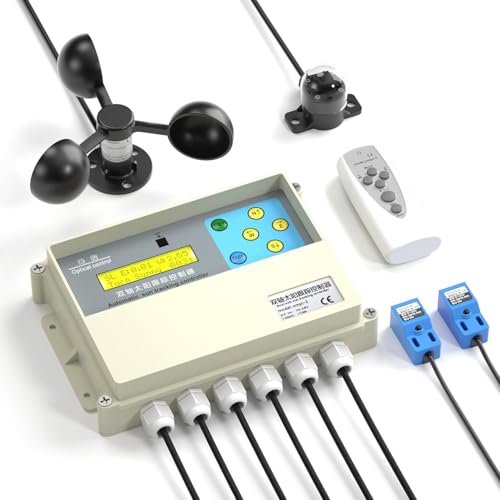
The BINGOX kit combines dual-axis sun tracking with a wind sensor and a remote-controlled interface. It uses a clear LCD menu and wiring guide for quick setup, making it suitable for DIY enthusiasts who want a feature-rich controller system. The wind protection feature helps safeguard the panels, and the dual-axis tracking aims to maximize energy capture by following the sun across both axes. Best for: off-grid, RV, or farm projects that require automatic tracking with remote management and wind-aware protection.
Best for: install-it-yourselfers seeking an integrated tracker solution with wind safeguards and easy-to-follow controls.
Caution: As a more feature-dense system, ensure you understand the wiring and sensor connections before deployment to avoid misalignment or sensor errors.
Buying Guide
What type of solar tracker should I choose?
Dual-axis trackers maximize sun exposure by following the sun on two axes, delivering higher energy gains for larger arrays. Single-axis trackers are simpler, cheaper, and still provide meaningful improvements for smaller systems. Consider your roof or ground space, wind exposure, and maintenance capacity when choosing.
How much energy gain is realistic?
Gains vary by latitude, shading, and panel layout. Dual-axis trackers commonly report substantial gains under optimal conditions, often around 40% compared with fixed mounts. Single-axis trackers typically offer around 20-30% gains, with higher efficiency in steady sun zones.
What installation considerations matter?
Stability and wind resistance are critical. Look for ground anchors or sturdy mounting bases and wind sensors that auto-adjust or lock positions. Ensure electrical connections are weatherproof and that controllers are compatible with your solar panels’ size and wattage.
Is a DIY kit suitable for educational goals?
For learning, DIY kits from LAFVIN or KEYESTUDIO provide tutorials, sensors, and programming examples. They’re ideal for classrooms, hobbies, and experiments, offering insight into solar tracking principles and microcontroller projects.
What about after-sales support?
Many ECO-WORTHY products highlight after-sales support or diagnostics by engineers. If you’re installing near remote areas, reliable support can reduce downtime and help with setup and troubleshooting.
What should I consider for weather and climate?
Wind sensors and automatic leveling features help protect trackers in high-wind areas. In snowy climates, consider models with snow-removal assistance or manual adjustment capabilities to ensure panels stay productive during winter months.
How do I compare the options?
Compare by axis count (single vs dual), maximum rotation range (degrees), sensor quality (sunlight and wind), and installation scale (yard, farm, or off-grid). Also evaluate compatibility with your panel sizes and mounting space.
Quick reference: buying checklist
- Tracker type: single vs dual axis
- Rotation range: 270° is common for robust tracking
- Weather features: wind sensors, auto leveling
- Panel compatibility: number of panels supported
- Support and documentation: tutorials, manuals, diagnostics
FAQ
- Q: Do all trackers require professional installation? A: Not necessarily; some kits are designed for DIY with guided manuals, while others may benefit from professional setup for optimal performance.
- Q: Can trackers be used indoors or on rooftops? A: Trackers are primarily designed for outdoor use with exposed sun; rooftop applications require careful structural assessment and weatherproofing.
- Q: Do trackers need maintenance? A: Basic maintenance includes checking connections, sensors, and moving parts for debris or wear; some kits mention warranty or after-sales support.
- Q: Will trackers work with any solar panel size? A: Most trackers are designed for a range of panel sizes; confirm compatibility with your panel width and mounting layout.
- Q: Do wind sensors cause trackers to reset automatically? A: Yes, several models include wind detection to adjust or lock position to protect the system during high winds.
- Q: Is the energy gain the same year-round? A: Gains vary with sun angle, weather, and season; performance is typically higher on sunny days and lower during cloudy conditions.
This article presents a concise guide to top solar panel tracker kits, focusing on dual-axis and single-axis options. Each product emphasizes a different buyer group—from serious field installations to educational DIY projects. The buying guide and FAQ sections help translate product features into practical decisions for reliable, efficient off-grid power.