Best Solar Power and Solar Panel Chargers for Outdoor Use
Solar power devices offer convenient, quiet, and renewable energy for outdoor activities, camping, off-grid living, and emergency readiness. This article highlights five top solar-powered options that balance capacity, portability, and efficiency. Each product blends solar charging with smart safety features, helping you stay connected wherever you go. Use the quick reference table below to compare key specs before diving into detailed sections for each item.
| Product | Brand | Key Feature |
|---|---|---|
| Kepswin Solar Charger Power Bank 49800mAh | Kepswin | 4 built-in cables, 3 foldable solar panels, PD22.5W |
| Jackery Solar Generator 1000 v2 | Jackery | 1070Wh LiFePO4 battery, 1500W AC output |
| Portable Solar Generator 300W (ZeroKor) | ZeroKor | 60W panel, 280Wh battery, multiple outlets |
| Anker Solar Generator SOLIX C300 | Anker | 288Wh, 140W USB-C, 300W AC |
| MARBERO 88.8Wh Solar Generator | MARBERO | 21W panel, portable power station |
Kepswin Solar Charger Power Bank 49800mAh
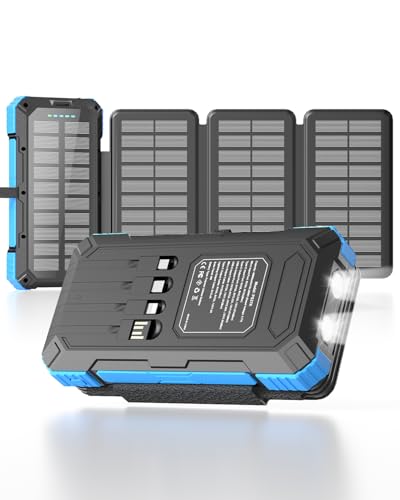
The Kepswin solar charger combines high capacity with versatile charging options. It includes four built-in data cables (iOS, Type-C, USB-A, Micro) and three charging ports (Type-C, Micro, USB-A), enabling simultaneous charging for up to five devices. With a 49,800mAh battery, it supports extended use in outdoor settings. The unit embeds a robust safety system with temperature protection, overvoltage, overcurrent, and short-circuit safeguards. Four solar panels provide improved charging efficiency for sunny days, making it a practical companion for camping, hiking, or emergencies.
Jackery Solar Generator 1000 v2

This power station offers substantial capacity and power, ideal for extended off-grid use. It features a 1,070Wh LiFePO4 battery with a 1,500W continuous AC output and a slim 23.8 lb design for portability. The Explorer 1000 v2 uses advanced safety and charging technologies, including a one-hour fast charging option via emergency charging in the Jackery app. Its longevity is highlighted by a durable battery that maintains capacity over many cycles, supporting appliances like fridges, fans, and power-hungry devices during camping or emergencies.
Portable Solar Generator 300W (ZeroKor)

This compact solar power station couples a foldable 60W solar panel with a 280Wh battery and multiple outputs, including 110V AC, DC, and USB ports. It includes an SOS flashlight for emergencies and is suitable for camping, RV travel, or off-grid adventures. While it supports direct solar recharging, its overall wattage means it’s best for essential devices rather than heavy-duty appliances. Its portability makes it a practical option for lighter outdoor power needs and quick weekend trips.
FlexSolar 100W Portable Solar Panel Charger

This foldable 100W solar panel emphasizes portability with a light 4.1 lb frame and a compact folded size. It delivers high-efficiency solar conversion (over 23%) and includes PD3.0 USB-C, QC3.0 USB-A, and DC outputs, plus a 4-in-1 charging cable. It’s designed to supplement small power banks or power stations, offering reliable charging for phones, tablets, and other devices during emergencies or outdoor trips, or to augment existing solar setups.
MARBERO 88.8Wh Solar Generator

The MARBERO system combines an 88.8Wh solar generator with a 21W solar panel for compact, portable power. It targets overnight trips and short outdoor stays, providing essential charging for phones, lights, and small devices. The paired solar panel helps replenish the battery during the day, while the power station supplies reliable energy during cloudy periods or nighttime. This setup suits light-weight hikers or travelers who prioritize portability over extended power capacity.
Buying Guide
Key considerations help identify the best solar power solutions for your needs:
- Capacity and output: Higher watt-hour (Wh) and watt (W) ratings extend run times for devices like laptops and refrigerators but add weight. Match capacity to typical device load and trip duration.
- Solar panel efficiency and portability: Panels with higher efficiency convert more sunlight into usable energy. Foldable designs reduce bulk for travel but may require more setup time.
- Charging options: Look for multiple outputs (AC, USB-C, USB-A, DC) and support for fast charging protocols to power a range of devices quickly.
- Battery chemistry and safety: Lithium iron phosphate (LiFePO4) batteries typically offer longer lifespans and broader temperature ranges, improving durability in outdoor conditions.
- Durability and weather resistance: IP ratings, rugged enclosures, and protective cases help ensure performance in rain, dust, and rough handling.
- Expandability: Some systems support adding extra batteries or integrating additional solar panels, which can be useful for increasing capacity over time.
- Portability vs. performance balance: For frequent travelers, lighter, compact options may trump peak power; for emergency preparedness, higher capacity units offer more resilience.
- Safety certifications: UL, CE, FCC, and RoHS certifications indicate compliance with safety and performance standards, reducing risk during use.
When selecting a system, consider your primary use case: emergency backup for home use, weekend camping trips, RV adventures, or off-grid living. Balance energy needs with portability, and evaluate whether you prefer integrated solar panels or modular setups that allow future expansion. By aligning features with real-world scenarios, you can optimize reliability, charge times, and overall satisfaction with a solar power solution.