Best Solar Panel Kits for Rvs: Reliable Off-Grid Power on the Road
For RV enthusiasts, a dependable solar panel kit can transform travel days into extended, worry-free adventures. The following selections are tailored for RV use, balancing portability, reliability, and power output. Each option includes a compatible controller, mounting, and durable solar panels to keep batteries charged while you roam.
Summary of chosen products:
| Product | Brand | Key Strengths | Approx. Output | Link |
|---|---|---|---|---|
| ECO-WORTHY 200W RV Starter Kit | ECO-WORTHY | All-in-one kit with 100Ah lithium battery and inverter | 200W panel, 800Wh/day | Amazon |
| OUPES Mega 2000W Solar Generator Kit | OUPES | Large capacity with UPS and app | 240W panel included; expandable | Amazon |
| Renogy 100W Starter Kit | Renogy | UL/CSA certified, solid service plan | 100W panel; 500Wh/day typical | Amazon |
| WERCHTAY 200W Kit | WERCHTAY | 2x100W panels; 30A PWM controller | 200W total; 24V/12V capable | Amazon |
| ECO-WORTHY 400W Premium Kit | ECO-WORTHY | Higher power with MPPT-like efficiency | 400W total; 4x100W panels | Amazon |
ECO-WORTHY 200W RV Starter Kit
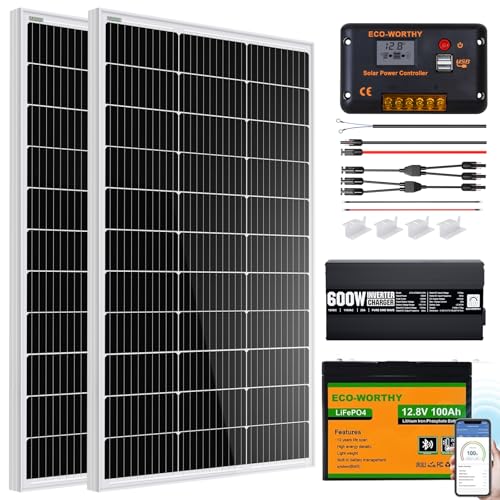
The ECO-WORTHY 200W RV Starter Kit provides a compact, all-in-one solution for off-grid RV power. It includes a 12V lithium battery and a premium inverter, enabling straightforward powering of essential appliances during trips. The system touts a 200W solar panel with corrosion-resistant framing and a weather-resistant build, designed to endure RV usage, wind, and snow loads. This kit is suitable for daily renewable energy needs in moderate sun, delivering about 800Wh per day under four peak sun hours. It is particularly appealing for RVers seeking a turnkey package with onboard energy storage and simple installation.
Key features include: high-efficiency solar cells, a robust aluminum frame, IP65-rated junction box, and a complete setup that minimizes wiring complexity. While it provides a strong base for RV living, users should consider availability of sunny days and daily energy requirements to gauge whether the included battery capacity meets long-range energy goals.
OUPES Mega 2000W Solar Generator Kit

The OUPES Mega 2000W Solar Generator Kit combines a powerful energy storage system with a 240W solar panel, designed for road trips and off-grid RV living. With a 1024Wh LiFePO4 battery and a 2000W AC output, this kit can run a refrigerator, CPAP machines, and essential electronics during extended trips or power outages. The system supports app-based monitoring and is expandable by adding a larger battery bank later, potentially reaching 5120Wh total capacity. Its all-in-one nature makes it suitable for RV users who prioritize high power availability and UPS capability for critical devices.
Considerations include: weight and portability for travel, sun exposure needed to recharge the Mega 1 efficiently, and the learning curve for battery management and maintenance. Users should ensure compatibility with their RV electrical system and verify whether the outlet types fit in their preferred appliances.
Renogy 100W Starter Kit

The Renogy 100W Starter Kit is a reliable entry point for RV solar, including a 100W monocrystalline panel and a 30A PWM charge controller. The kit is designed for straightforward installation, with included cable and mounting hardware. It typically yields around 500Wh per day under favorable sunlight, which is adequate for lighting, charging small devices, and powering fans or other low-energy appliances. It’s backed by a robust service plan and safety certification, ensuring dependable performance in varied weather conditions. The kit’s emphasis on safety and long-term service makes it a practical choice for first-time RV solar adopters.
Considerations include: PWM controllers are less efficient than MPPT units, yet reliable and cost-effective; panel efficiency at 22% helps with daily output, but system designers should plan for seasonal sun changes and battery capacity to avoid frequent recharges.
WERCHTAY 200W Kit

The WERCHTAY 200W Kit combines two 100W panels with a 30A PWM controller, designed for versatile RV and off-grid setups. Its 12V/24V compatibility allows for series or parallel configurations, enabling higher voltage or current as needed. The controller provides protective features such as reverse polarity protection, overcharge protection, and short-circuit protection, helping safeguard both the panels and the battery bank. This kit is suitable for RVs that require flexibility in wiring and a balanced power package for modest energy needs on the road.
Important considerations include: user familiarity with wiring two panels, ensuring proper mounting space, and matching with an appropriate battery bank to maximize daily use without excessive recharging downtime.
ECO-WORTHY 400W Premium Kit

The ECO-WORTHY 400W Premium Kit is a higher-output option ideal for RVs that demand more energy for longer trips or higher-consumption appliances. This kit uses four 100W panels with a MPPT-like efficiency profile, 35mm aluminum framing, and 3.2mm glass for durability. It highlights maximum efficiency with sophisticated charging control and an advanced wiring layout designed to minimize voltage drop, even in shaded conditions. The system is designed to approach 1.6KWh of daily energy under favorable sunlight, making it suitable for more power-hungry setups on the road.
Considerations include: higher upfront cost and heavier system mass. To optimize performance, ensure adequate roof space and adequate mounting hardware, plus a battery system capable of storing larger energy reserves for overnight cycles.
Buying Guide: Key Purchase Considerations For RV Solar Kits
- Power needs: Assess daily energy consumption of appliances (refrigerator, lights, charge devices) and target daily watt-hours. Choose a kit that can reliably meet or exceed that baseline under typical sun conditions.
- Panel configuration: Fixed rooftop panels work well for most RVs, but consider portability if you travel in shaded areas or with low roof clearance. Two-panel or four-panel packs offer higher daily output but require more space and mounting effort.
- Battery choice: Lithium-ion batteries offer longer life and deeper discharge than lead-acid, but at a higher upfront cost. Ensure the kit includes a compatible battery and BMS if using lithium chemistry.
- Charge controller: PWM controllers are affordable and simple, suitable for smaller systems. For larger systems, MPPT controllers improve efficiency, especially in varying temperatures and partial shade.
- Durability and weather resistance: Look for corrosion-resistant frames, IP ratings for junction boxes, and panels with robust glass (low-iron glass preferred) to withstand travel conditions and weather exposure.
- Expandability: If you anticipate higher energy needs in the future, choose a kit that scales with additional panels or batteries without requiring complete rewrites of the system.
- Portability and installation: Consider weight, mounting hardware, and ease of install. Some all-in-one kits simplify setup, while modular kits offer customization but may require more wiring.
- Warranty and service: A strong warranty and accessible customer support reduce risk, especially for first-time RV solar users. Look for long-term coverage on panels and charge controllers.
- System safety: Ensure proper protection against overcharge, short circuits, and reverse polarity. Proper cable sizing and fusing are essential for safety and longevity.
All options listed provide variations across power output, storage capacity, and complexity. When selecting, align the kit with your RV size, roof area, typical travel duration, and climate to optimize daily performance and reliability on the road.