Best Solar Panel Kit With Battery and Inverter for Shed
Shining a sustainable light on shed life, these solar panel kits pair panels, storage batteries, and inverters to keep tools, lights, and small appliances powered off the grid. This guide highlights five reliable kits that balance ease of use with long-term performance, helping you choose a complete solar solution for a shed, RV, cabin, or workshop.
| Product | Battery Type | Inverter Type | Output Format |
|---|---|---|---|
| ECO-WORTHY 200W Starter Kit (First) | LiFePO4 50Ah | 600W inverter | AC/DC |
| ECO-WORTHY 200W Starter Kit (Second) | LiFePO4 100Ah | Premium inverter | AC/DC |
| ECO-WORTHY 200W 12V Kit (Third) | LiFePO4 (Battery)” | PWM Controller | AC/DC |
| ECI Power 100W Kit | LiFePO4 20Ah | 10A PWM Controller | DC/USB |
| Renogy 100W Starter Kit | LiFePO4 20Ah (included) | PWM Controller | DC/USB |
ECO-WORTHY 200W 12V Starter Kit — First Option
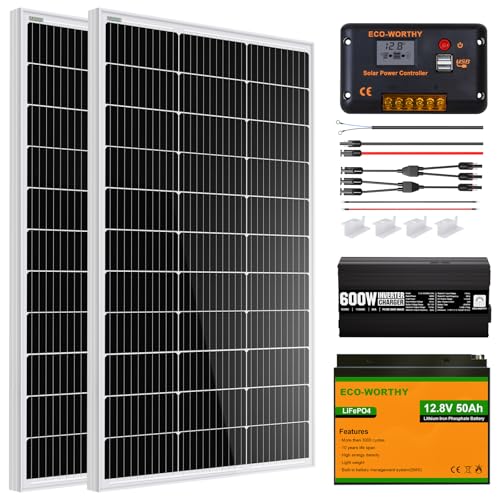
The ECO-WORTHY 200W 12V Complete Solar Panel Starter Kit combines a 200W solar panel, a 50Ah LiFePO4 battery, a 600W inverter, and a 30A charge controller for a simple, all-in-one off-grid solution. It is designed for beginners and supports powering RVs, campers, boats, cabins, or a shed with 800Wh daily output in favorable sun. The compact monocrystalline panel, with a robust aluminum frame and tempered glass, is built to endure outdoor use and withstand wind and snow loads. The LiFePO4 battery offers long cycle life and a safe, stable energy reservoir for daily use. This kit emphasizes straightforward setup and reliable power for essential shed appliances and lighting.
Key considerations: This setup is well-suited for a shed that receives decent sun daily and needs a dependable mix of AC and DC power. The 600W inverter covers small appliances, tools, and lighting, while the battery’s deep-cycle design supports regular cycling. Installation is friendlier for beginners, but plan for mounting the panel securely and ensuring proper ventilation for the inverter and battery area. Battery management is important to avoid deep discharge; many users pair with a simple monitoring routine to maximize lifespan.
ECO-WORTHY 200W Kit — Second Option
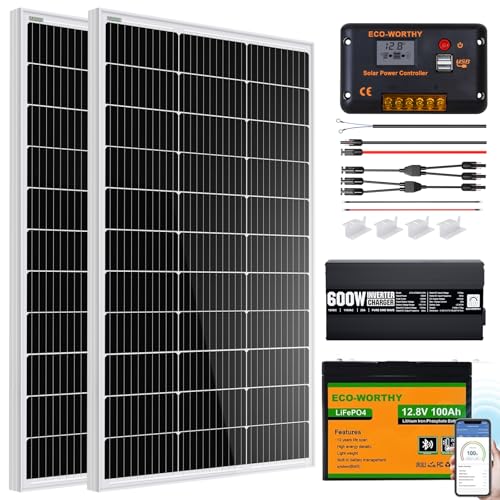
This 200W kit includes two 100W panels, a 30A charge controller, a 100Ah LiFePO4 battery, and a premium solar inverter. The higher-capacity battery expands energy storage, enabling more consistent power delivery over cloudy days or longer downtime. The panels feature corrosion-resistant aluminum framing and a high conversion efficiency that helps maximize daily output under typical shed-suitable conditions. Built-in BMS ensures battery protection, while the smart integration with the controller improves safety and longevity. It’s a reliable choice for sheds needing steady power for lighting, charging, and small tools.
Reference points: The 800Wh/day target assumes four hours of peak sun, but actual results depend on location, shading, and panel tilt. This kit emphasizes longevity via LiFePO4 chemistry and robust protection features. Ensure a level mounting surface for the panels and maintain a cooled environment around the inverter to prevent efficiency losses during extended use.
ECO-WORTHY 200W 12V With High-Efficiency Panels

This 200W configuration shows a strong emphasis on efficiency and durability. The kit uses monocrystalline cells with up to 21% efficiency and a corrosion-resistant frame designed to endure outdoor conditions, including high winds and snow loads. It supports RVs, campers, boats, and sheds, and it includes a PWM controller, which keeps the system simple and cost-effective for off-grid scenarios. This setup balances performance with straightforward operation, making it a practical option for outdoor structures that require reliable solar power without advanced monitoring.
Observations: PWM-based systems are generally easier to install and maintain but may have slightly lower efficiency than MPPT-based setups in some conditions. This kit suits those who want dependable, low-maintenance power for shed lighting and small equipment, with room to add more panels later if needed.
ECI Power 100W Kit

The ECI Power 100W Kit delivers a compact off-grid solar solution featuring a 100W mono panel, a 12V 20Ah LiFePO4 battery, and a 10A PWM controller. It includes essential cabling and mounting brackets, offering a practical entry point into solar power for sheds, RVs, or small cabins. The kit stresses economical value with a focus on safe lithium power, smooth operation, and straightforward assembly. The included battery supports a reasonable energy reserve for lighting, USB charging, and small electronics even when sunlight is limited.
Key takeaways: While it’s a smaller system, the LiFePO4 chemistry provides more cycles and safety compared to traditional lead-acid options. It’s ideal for those starting with solar or for occasional use in a shed where modest, reliable power is sufficient. For larger sheds or higher energy loads, you may want to pair this kit with additional panels and a bigger battery bank in the future.
Renogy 100W Starter Kit

The Renogy 100W Starter Kit pairs a high-efficiency 100W monocrystalline panel with a 30A LCD PWM charger controller, tray cables, and mounting hardware. The panel efficiency supports consistent daily output, typically around 500Wh under good sun. The included components are designed for RVs, campers, or off-grid sheds, with a service plan that extends coverage for materials and workmanship and a long-term performance warranty on the panel’s output. The kit emphasizes safety, durability, and support, including IP-rated connections and weather-resilient mounting options.
Why this kit matters: It provides a balanced, widely supported option for beginners who want a reliable, expandable solar setup. The Renogy ecosystem is known for compatibility with additional panels and batteries, allowing a shed to scale from a small power supply to a more robust system over time. Properly sizing cables and wiring for your shed’s electrical load is key to maximizing efficiency and safety.
Buying Guide: Key Purchase Considerations And Comparisons
- System size and load: Estimate your shed’s daily energy needs (lighting, charging, small tools). Choose a kit that provides a comfortable margin above peak usage to cover cloudy days.
- Battery chemistry and capacity: LiFePO4 batteries offer long cycle life and safety for shed installations. Higher Ah ratings increase storage for longer outages, but require more space and cost.
- Inverter type and size: An inverter converts DC to AC. PWM inverters are simple and affordable; MPPT controllers improve efficiency in less-than-ideal conditions but come at higher cost. Match inverter wattage to your expected AC load.
- Solar panel efficiency and durability: Monocrystalline panels typically deliver higher efficiency and better performance in limited space. Look for frames rated for wind and snow loads and IP-rated junction boxes for durability.
- Expandability and compatibility: If you plan to scale, choose kits with modular components, compatible with additional panels or larger batteries. A common goal is a system that can grow to 600W or more for shed needs without replacing core components.
- Installation and safety: Secure mounting, proper ventilation for batteries, and correct cable sizing are crucial. Follow local electrical codes and consider professional consultation for larger setups.
- Monitoring and maintenance: Look for kits with BMS support, app monitoring, or easy access to service and replacement parts to simplify upkeep.
- Climate and location: Shaded roofs or northern latitudes reduce output. In such cases, pursue higher panel density or larger battery banks to compensate for reduced daily sun.
Across these five kits, you’ll find options ranging from compact, beginner-friendly setups to more robust systems with higher storage and inverter capacity. Each kit emphasizes reliable LiFePO4 chemistry, practical installation, and durable components designed for shed and off-grid use. When choosing, align the system with your shed’s energy profile, installation space, and potential for future expansion to ensure sustained, off-grid power without frequent upgrades.