Best Solar Panel Inverter Battery Kits for Off‑Grid Power
Looking for reliable solar panel, inverter, and battery solutions for off-grid use? This article highlights five solid options that pair solar panels with inverters and batteries to power RVs, cabins, campsites, boats, and more. Each pick is described with who it’s best for, why it stands out, and a quick caution to consider. The buyer’s intent is to find a complete, easy-to-install kit that delivers consistent daily power and simple expansion in the future.
Summary table of selected products:
- Eco-Worthy 200W Starter Kit (50Ah LiFePO4) — Best for beginners and RV campers seeking a compact, all-in-one setup.
- Eco-Worthy 200W Complete System (100Ah Li) — Best for longer trips needing more storage and a larger inverter.
- ZeroKor Portable Solar Generator (300W) — Best for portable, on-the-go power with built-in outlets.
- SOLPERK 100W Kit with MPPT Controller — Best for vehicles and boats with waterproof protection.
- Eco-Worthy 200W Plus 2x100W Panels Kit — Best for scalable off-grid needs with app monitoring.
Eco-Worthy 200W Starter Kit With Battery And Inverter

Best for inexperienced buyers who want a complete breakthrough package. This kit includes 200W of solar panels, a 30A controller, a 50Ah LiFePO4 battery, and a 600W inverter. The daily output is about 800Wh under four hours of sun, making it suitable for RVs, campers, boats, and small cabins. The LiFePO4 battery is compact and easy to wire to common vehicle or boat accessories. A limitation is the balanced power need; extended cloudy periods reduce output.
Eco-Worthy 200W Complete System With 2x100W Panels
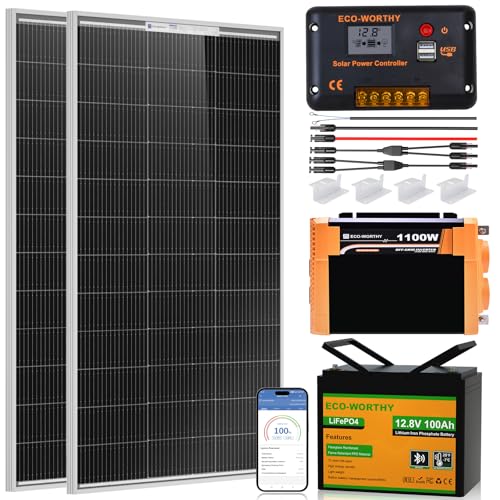
Best for RV travelers who want a turnkey installation. This 200W system uses two 100W panels, a 100Ah lithium battery, and an 1100W inverter with a 30A PWM controller. It can generate about 800Wh daily and store around 1.28kWh, enough to run multiple RV essentials. It promises novices a four-step setup. A potential drawback is the PWM controller’s lower efficiency compared with MPPT options in very bright sun.
ZeroKor 300W Portable Solar Generator

Best for portable, on-the-go power needs. This unit includes a 60W solar panel and a 300W power station with multiple outputs, including AC, DC, and USB ports. It’s well-suited for camping, RV trips, and emergency use, offering a compact form factor and multiple charging options. The main caution is that high-wattage appliances exceed the unit’s 300W peak limit, which can limit heavy-duty devices.
SOLPERK 100W Solar Battery Charger Kit With MPPT

Best for vehicles, boats, or small sheds that require robust protection and higher efficiency. The kit includes a 100W panel and a high-efficiency MPPT controller rated for IP67-like waterproof protection, ensuring performance in wet environments. It can deliver around 400Wh per day with four hours of sun. A caveat is its 100W panel size, which may be insufficient for larger power loads or storage-heavy needs.
Eco-Worthy 200W Panel Kit With Bluetooth Monitoring

Best for tech-focused buyers who want real-time monitoring. This 200W kit includes a Bluetooth and Wi-Fi module for app-based performance tracking, an MPPT controller, and an SOC display. It is designed to maximize energy harvest by up to 30% and provides 0.8kWh daily with a total storage capacity of 2.56kWh. A constraint is that the system relies on app connectivity for some troubleshooting and monitoring tasks.
Buying Guide
What should you consider when choosing a solar panel inverter battery kit?
- Power needs: Assess daily energy use in watt-hours and pick a kit that comfortably covers it, plus a safety margin for cloudy days.
- Battery chemistry: LiFePO4 cells offer longer life and better safety than some other chemistries, but cost more upfront.
- Inverter type: An MPPT controller can maximize harvest in varied sun, while PWM is simpler and often cheaper but less efficient.
- System expandability: If you plan to grow capacity, choose modular kits with easy panel and battery additions.
- Monitoring features: Bluetooth or Wi-Fi monitoring helps you optimize performance and schedule charging.
- Weather and durability: Look for waterproof or corrosion-resistant frames if you expect exposure to the elements.
Who should buy these kits?
RV owners may prefer compact, all-in-one setups with manageable weight. Cabins or boats can benefit from higher storage options and robust inverters. Portable units suit campers and hikers who need quick power on the go. Tech-forward buyers may prioritize app monitoring and smart controls.
Installation considerations
Read installation instructions thoroughly, ensure correct polarity, and use proper fusing. Some kits include step-by-step guidance, while others require basic wiring skills. Always follow manufacturer recommendations for load limits and safe operation.
Maintenance tips
Keep panels clean for optimal light absorption. Inspect connections for corrosion and secure mounts before travel. For LiFePO4 batteries, avoid deep discharges and use the recommended charging parameters to extend life.
Frequently Asked Questions
- What size solar kit do I need for an RV? Choose a kit that provides daily watt-hours close to your typical usage, with extra capacity for extensions and cloudy days.
- Is MPPT worth it over PWM? Yes for better efficiency in varied sunlight and higher overall energy harvest, especially in marginal sun conditions.
- Can I mix panels and batteries from different brands? It’s best to match voltage and capacity and ensure controller compatibility to avoid uneven charging.
- How long do LiFePO4 batteries last? They typically offer many charge-discharge cycles, often longer than traditional lead-acid, when properly managed.
- Do I need a professional to install? Small, plug-and-play kits may be DIY-friendly, while larger systems benefit from professional wiring and safety checks.
- Can these kits power a fridge or AC? Many 200W-class kits can handle small appliances; larger loads may require bigger panels and storage.