Best Solar Panel and Pump Kits for Water Wells: Off-Grid Water Solutions
Finding a reliable solar solution for water wells is essential for off-grid living, remote farms, and irrigation. The right kit combines a durable solar panel setup with a submersible well pump that can lift water efficiently under varying sun conditions. Below, five well-rated options from ECO-WORTHY and JENENSERIES are highlighted for different well depths, panel powers, and battery configurations. This guide emphasizes performance, compatibility, and ease of installation to help you compare choices at a glance.
Summary of Featured Products:
- ECO-WORTHY 12V DC Solar Well Pump Kit – 200W Solar Panel Included – Submersible Water Pump – Off-Grid Ready
- ECO-WORTHY Solar Well Pump Kit – 100W Solar Panel with 12V Deep Well Pump – Direct Panel Connection
- ECO-WORTHY 24V Solar Well Pump Kit – 4x100W Panels, 120W Submersible Pump, 50Ah LiFePO4 Battery, Controller
- ECO-WORTHY 400W Solar Deep Well Pump Kit – 140W Pump with MPPT Controller
- JENENSERIES Pump 500W DC 48V Solar Water Pump – Deep Well Submersible with MPPT Controller
ECO-WORTHY 12V DC Solar Well Pump Kit – 200W Panel Included

This kit provides a compact off-grid solution with a 12V DC submersible pump paired with a monocrystalline solar panel, delivering 12 LPM (3.2 GPM) and a maximum lift of 230 feet (70 meters). It’s designed for remote watering, garden irrigation, or filling tanks without grid power. The package emphasizes easy operation, compatibility with solar panels or a 12V battery system, and the ability to run on car or boat batteries in emergency scenarios. The high-efficiency mono panel improves performance in sunny and partially shaded conditions.
Key considerations include the kit’s flow rate and lift compatibility with moderate-well depths, simple wiring suitable for DIY setups, and its ability to pair with a battery or direct solar supply. Users should assess well depth and required daily water output, then confirm that 12 V systems will meet those needs. The included monocrystalline panel boosts efficiency, though long-term performance depends on clean panel surfaces and proper angle alignment toward the sun.
ECO-WORTHY Solar Well Pump Kit – 100W Panel With 12V Deep Well Pump

This kit targets off-grid living with a single 100W solar panel and a 12V deep well water pump. It features a max lift of 230 feet (70 meters) and a maximum flow around 1.6 GPM, with performance tied to light intensity. The design allows direct connection to the solar panel or to a matching 12V battery and controller, providing stable operation with solar input. A notable caution is the need for clean solar panels; even light shading can reduce output, so scheduling maintenance to remove debris or shading is important for consistent pumping.
Strengths include straightforward installation, flexible pairing with battery and controller, and clear guidance about solar exposure. Limitations to consider are the absence of a built-in MPPT controller in some configurations and the potential for reduced output on cloudy days. This option is well-suited for smaller wells or irrigation tasks where moderate water demand aligns with daytime sun.
ECO-WORTHY 24V Solar Well Pump Kit — 4x100W Panels, 120W Submersible Pump

This all-in-one kit targets deeper wells and higher daily water needs with a 24V system, four 100W panels, a 120W submersible pump, and two LiFePO4 50Ah batteries plus a controller. The 24V configuration delivers strong head pressure (up to 200 feet) and a solid flow rate of up to 3.2 GPM, making it suitable for farms, larger homesteads, or remote storage tanks. The upgraded LiFePO4 battery pack reduces weight and extends life, and the integrated controller enables safe startup, charging, and automatic shutoff when water is full or the well is dry.
Considerations include battery management, system expansion, and ensuring the controller is properly matched to pump voltage and panel output. The modular nature of the kit supports relocation or scale-up, which is helpful if water demand changes seasonally. While robust, it’s best suited for users comfortable with a multi-component installation and routine maintenance of solar arrays and connections.
ECO-WORTHY 400W Solar Deep Well Pump Kit With MPPT Controller

This kit packs a 400W solar well pumping system designed for deeper wells and higher flow needs. It includes four 100W solar panels, a 140W DC brushless stainless steel pump, and an MPPT controller with a liquid level sensor. The pump delivers up to 5.6 GPM, depending on head height, and has a maximum head of about 164 feet. The MPPT controller optimizes energy capture, enabling efficient operation across varying sun conditions, and the liquid level sensor adds automation that stops pumping when a tank is full or the well runs dry.
Key considerations involve managing higher upfront costs and ensuring proper mounting and weatherproofing of four panels. The 140W pump offers robust performance for mid-to-deep wells, but output declines as head increases. For users prioritizing automation, automatic stop features and MPPT efficiency make this kit a strong option for steady off-grid water supply in remote locations.
JENENSERIES Pump 500W DC 48V Solar Water Pump
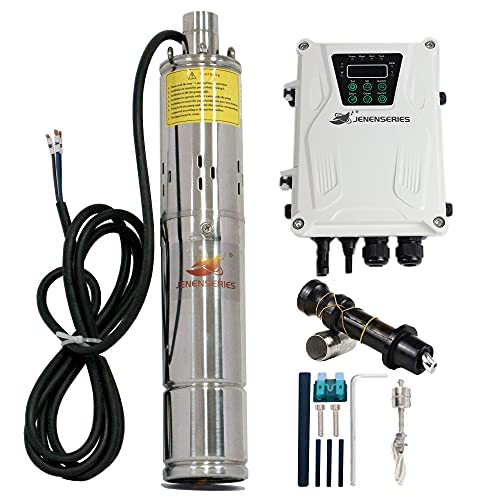
This high-capacity option uses a 48V DC solar water pump with a 3-inch deep-well design and a maximum head of 393 feet, delivering up to 7.9 GPM. It is designed for large or deep wells and can operate with MPPT controllers and float switch kits for automatic on/off. The product highlights include flexible battery compatibility and the ability to work with solar panels for off-grid pumping. The model emphasizes energy efficiency and scalability for heavy-duty irrigation, livestock, or remote water delivery to larger systems.
When evaluating this option, consider the higher voltage requirements and potential need for more robust electrical protection, wiring, and monitoring. The MPPT controller can optimize performance, but system integration should align with the well depth, required flow, and daily sun exposure. It’s best for users with substantial water needs and the ability to install and maintain a larger solar-water pump system.
Buying Guide: Key Purchase Considerations
- Well depth and required head: Deeper wells require higher lift capacity. Match maximum head (ft) to your well depth plus piping losses.
- Flow rate and demand: Estimate daily water needs. Pumps list GPM; ensure the rated flow meets peak demand without excessive head loss.
- Voltage and battery compatibility: 12V, 24V, and 48V configurations affect battery choice, cable runs, and controller compatibility. Consider whether you want a battery-backed system or direct-draw solar.
- Controller type: MPPT controllers maximize energy capture, especially in fluctuating sun. Some kits include MPPT; others may require separate controllers for optimal performance.
- Panel count and configuration: More panels increase energy capture and allow headroom on cloudy days. Ensure the array can be mounted safely and weatherproofed.
- Durability and materials: Look for corrosion-resistant pumps, sealed motors, and IP-rated enclosures for outdoor use.
- Maintenance: Clean panels regularly, check fittings for leaks, and inspect cables for wear. Shade from trees can significantly reduce output.
- Installability and expansion: Some kits are modular. Plan for future expansion if water demand grows or well depth changes.
- Cost of ownership: Consider upfront kit cost, maintenance, and potential battery replacements to estimate long-term value.
- Safety: Follow electrical codes, use appropriate fusing, and ensure safe installation near water sources to minimize shock risk.
In selecting a solar well pump kit, prioritize a balance between system complexity and reliability. Lower-wower kits are easier to install but may struggle with deep wells or high-demand days. Higher-powered, MPPT-enabled kits offer better performance under varying sunlight but require careful sizing and professional installation in some cases. An ideal choice aligns with your well depth, daily water needs, climate (sun exposure), and your ability to perform routine maintenance.