Best Solar Panel Backup Power Solutions for Home and On‑The‑Go Energy Independence
Preparing for power outages, camping, or off‑grid living starts with reliable solar panel backup power. This article reviews five top-rated portable power stations that pair well with solar panels to deliver clean, quiet, compact energy when you need it most. Each option balances capacity, charging speed, and expandability to fit homes, RVs, and emergencies. A quick comparison table helps you spot the core strengths of each model.
| Product | Brand | Key Strength |
|---|---|---|
| Jackery HomePower 3000 Portable Power Station | Jackery | High power with UPS switch and large capacity |
| Jackery Solar Generator 1000 V2 | Jackery | Balanced capacity and fast charging features |
| Anker SOLIX C1000 Gen 2 | Anker | Ultra-fast recharge and multiport versatility |
| OUPES Mega 1 | OUPES | Rapid AC recharge and modular expansion |
| EF ECOFLOW Delta 2 | EF ECOFLOW | High‑output, expandable with multiple charge options |
Jackery HomePower 3000: Robust Home Backup

The Jackery HomePower 3000 Portable Power Station delivers a strong 3600W continuous output with a 7200W surge and a 3072Wh LFP battery. This combination supports essentials such as a refrigerator, fans, Wi-Fi, lights, and other critical devices during outages. Its UPS feature offers seamless transfer within ≤20 milliseconds, minimizing interruptions for security cameras, medical refrigerators, and online meetings. The system is designed for home use, RVing, and emergencies, and it can power a household for extended periods, depending on connected loads.
Jackery Solar Generator 1000 Version 2

The Solar Generator 1000 V2 packs 1,070Wh of LiFePO4 battery into a portable unit with 1,500W continuous AC output and a 3,000W surge. Its lightweight design (about 23.8 lbs) and foldable handle make it a capable companion for outdoor adventures, off‑grid living, or emergency use. It features a fast charging option via the Jackery App, enabling quick top‑ups when grid power is scarce. The unit is built to endure, benefiting from a long lifespan and resilient battery chemistry for repeated cycles.
Anker SOLIX C1000 Gen 2: Fast Recharging Power Station

The Anker SOLIX C1000 Gen 2 delivers 2,000W of continuous output (3,000W peak) with a 1,024Wh LiFePO4 battery. It can power up to ten devices at once and recharges rapidly—HyperFlash technology enables ultra-fast recharging to full in around 49 minutes. Its compact size and improved portability suit emergency kits, work-from-anywhere setups, and small homes or RV setups that require quick energy relief during outages.
OUPES Mega 1: Fast, Expandable Power
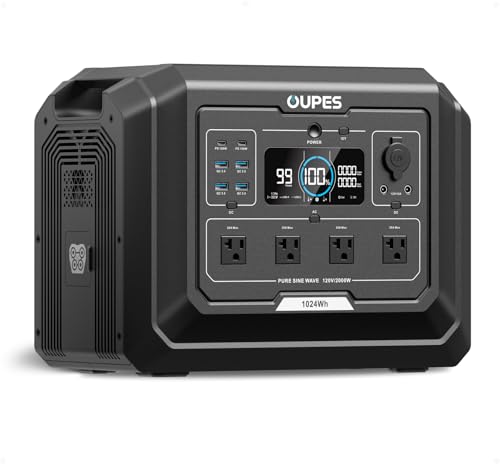
The OUPES Mega 1 provides 2000W continuous output with a robust 4500W surge and a 1024Wh LiFePO4 battery. Its standout feature is modular expansion: add up to two B2 Extra Batteries to grow capacity to 5120Wh without complex wiring. It supports rapid charging and includes UPS functionality, making it a strong choice for home backup, camping, and road trips when solar input can be used to extend runtime.
EF ECOFLOW Delta 2: High Output with Versatility

The Delta 2 features 1,024Wh of LiFePO4 capacity and an 1,800W continuous AC output with 15 outlets, making it capable of powering most home appliances. It supports solar charging (panel optional) and benefits from EcoFlow’s fast charging ecosystems, including up to 500W solar input. LFP chemistry provides extended cycle life and reliability for long-term backup power, camping, and RV use, with solid performance under varying environmental conditions.
Buying Guide: Key Considerations for Solar Backup Power
- Capacity and load match: Estimate your essential loads (refrigeration, lights, communications) and choose a unit with enough watt-hours to cover them for the desired duration.
- Output and surge: Ensure continuous watts and surge capacity align with startup demands of devices (like refrigerators or tools).
- Battery chemistry and longevity: LiFePO4 (LFP) batteries offer longer lifespans and safer chemistry, often delivering more cycles than other chemistries.
- UPS and reliability: A fast transfer switch minimizes interruptions for sensitive equipment; verify transfer time specs (e.g., ≤20 ms).
- Charging speed: Fast charging (AC, USB-C, or car charging) reduces downtime. Solar input capabilities extend runtime for off-grid use.
- Expandability: Some models allow battery expansion or external panels, enabling scalable power as needs grow.
- Port availability: A broad mix of outlets (AC, USB-C, USB-A, DC) determines how many devices you can power simultaneously.
- Portability and form factor: Weight, handle design, and overall footprint affect how easily you can deploy the system in different settings.
- Warranty and support: Look for reputable brands with comprehensive warranties and solid customer support.
When planning a solar backup strategy, consider pairing any of these Power Stations with a compatible solar panel setup to maximize independence. Evaluate whether you need rapid recharging on the go, quiet operation for home use, or expandable capacity for longer outages. By aligning capacity, charging speed, and expandability with your daily appliances, you can achieve reliable, flexible energy resilience in a compact, portable package.