Best Solar Low Voltage Disconnect Solutions for 12V Systems
When selecting a solar low voltage disconnect, your priority is protecting batteries from deep discharge while keeping system automation simple. These modules function as protective switches, not power sources, and are best for 12V–36V solar, lead-acid, and lithium setups. They suit DIY solar projects, off-grid cabins, RVs, and small solar lighting systems. Below are five compatible options with clear use cases and practical cautions to help you choose.
| Product | Brand | Best For | Why It’s Notable |
|---|---|---|---|
| ICSTATION Digital Low Voltage Protector | IS | Hybrid solar kits and small battery banks | Flexible over-discharge settings with memory on power loss |
| SELOKY 12V-36V Protection Module (2-pack) | Seloky | Dual-pack value for multiple circuits | Adjustable cutoff and data retention on power loss |
| Zuomeng 12V 30A LVD with Display | Zuomeng | Precise voltage control and extended battery life | 0.1V precision and dual protection modes |
| Pjerjzn Solar Panel Disconnect Switch | Pjerjzn | Outdoor PV installations | IP65 rated with weatherproof build and quick install |
| CZH-LABS LVD 24V / 30A | CZH-LABS | Panel-mount protection | Auto reconnect after valid voltage return |
ICSTATION Digital Low Voltage Protector

The ICSTATION unit is a voltage controller that turns output on and off via a relay, acting strictly as a switch. It’s best for hobbyist and light commercial solar systems using lead-acid or lithium batteries where over-discharge protection is desired. Best for: small solar lighting setups or off-grid shelves where battery longevity matters. Caution: There is no built-in voltage regulation; it only disconnects at preset voltages, so correct configuration is essential to prevent unintended shutoffs.
SELOKY 12V-36V Protection Module (Two-Pack)

This two-pack offers over-discharge protection with adjustable parameters to automatically disconnect at a preset voltage. The device is a voltage controller using a relay, not a battery cut-off switch, so you must still cut power after disconnection in some setups to avoid drain. Best for: multi-circuit solar applications where a compact, configurable protector is needed. Limitation: The relay does not provide a hard power cut-off; ensure proper wiring and power management to avoid energy draw after disconnect.
Zuomeng 12V 30A LVD With Display
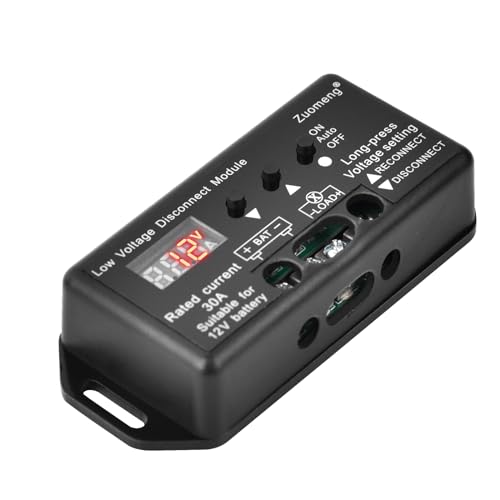
Zuomeng’s device combines dual protection with precise 0.1V adjustment, ideal for batteries that require careful voltage thresholds. It supports automatic and manual modes, disconnecting at cutoff and reconnecting after a brief delay to stabilize power. Best for: systems needing tight voltage control and extended battery life. Caution: It uses a relay to switch power and does not modify voltage itself, so ensure power margins accommodate the load during disconnect windows.
Pjerjzn Solar Panel Disconnect Switch
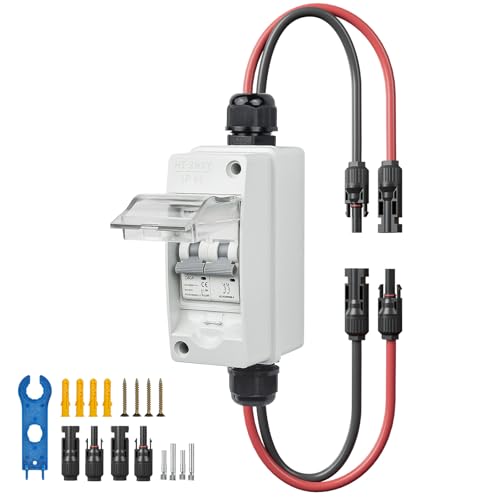
This outdoor-rated disconnect switch is designed for solar panels and PV installations, featuring IP65 protection and a wide operating range. It’s suitable between panels and inverters, turning output on or off as needed. Best for: outdoor solar arrays where weather resistance matters. Caution: The product includes weatherproof features but does not provide integrated battery protection—use in combination with a separate battery management system if needed.
CZH-LABS LVD Module (24V / 30A)
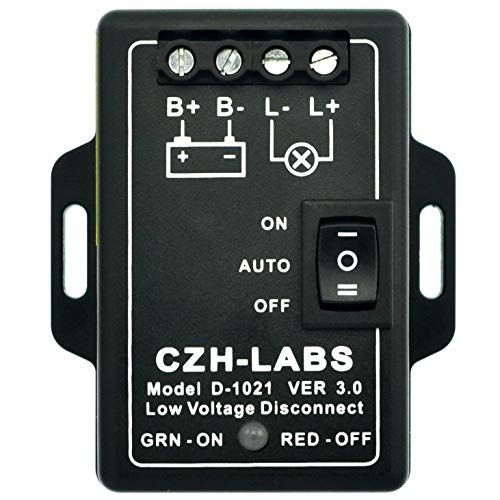
This 24V, 30A module protects electronics from damaging low voltages and prevents battery deep discharge. It automatically reconnects after voltage recovery, making it suitable for longer outages. Best for: panel-mount applications where automatic reset enhances unattended operation. Limitation: It targets 24V systems; verify voltage compatibility with your setup before use.
CZH-LABS LVD Module (12V / 30A)
This 12V, 30A LVD module automatically disconnects when voltage falls below a user-set threshold, with an AUTO reconnect option. Best for: 12V systems needing reliable deep-discharge protection. Caution: Similar to other LVDs, ensure correct auto/reconnect settings to avoid unexpected restarts during critical operations.
Buying Guide
What should you look for when choosing a solar low voltage disconnect?
- Voltage and current rating: Match with your system’s nominal voltage and expected load current. A device rated at 12V–36V and 30A covers many small solar setups but check your actual battery bank size.
- Protection mode: Decide between automatic cutoff with reconnect and manual operation. Automatic modes reduce risk of deep discharge but require proper reconnect logic for continuity.
- Voltage precision: Some models offer 0.1V precision, which helps fine-tune protection for sensitive electronics. This is especially useful for lithium systems.
- Relay vs. solid-state: Relays are common but may wear with frequent cycling; solid-state designs offer quieter, longer life but verify behavior under load.
- Wiring and mounting: Consider panel-mount vs. DIN rail or inline, plus weatherproofing for outdoor installations. IP ratings are important for exterior use.
- Memory and power loss: Modules that retain settings after power loss prevent configuration resets, reducing setup time after outages.
- Compatibility: Ensure the unit is suitable for lead-acid, lithium, or mixed chemistries and that it does not claim to alter voltage—only disconnect at set thresholds.
Practical setup tips
- Plan the disconnect location to minimize wire length and resistance in the protection path.
- Document the chosen cutoff voltage and reconnect voltage to avoid accidental re-enabling during power fluctuations.
- Pair with a proper battery management strategy to avoid unconditional reliance solely on the disconnect for protection.
FAQ
- What is a solar low voltage disconnect responsible for?
It disconnects the load when the battery voltage falls below a preset level, preventing deep discharge and extending battery life. - Can these devices change the voltage themselves?
No. They act as a switch; they do not regulate or raise voltage—only disconnect when needed. - Do I need a separate battery monitor?
A monitor helps track voltage trends, but an LVD module provides automatic protection independent of a separate monitor. - What installation considerations matter most?
Ensure correct voltage rating, weatherproofing for outdoor use, and proper wiring to avoid inadvertent disconnects. - Is a two-pack always better than a single unit?
If you have multiple circuits or panels, a second unit can simplify wiring and reduce clutter; otherwise a single unit may suffice.