Best Solar Light Batteries for Outdoor Lighting and Garden Decor
The best solar light batteries ensure longer run time, reliable charging, and fewer replacements for outdoor lights. This guide highlights top options suited for solar garden lights, pathway lamps, and decorative LEDs. We compare high-capacity NiMH AA cells, LiFePO4 options, and multi-pack values to help you choose the right fit for your devices and climate. The recommended products below are selected for longevity, compatibility with common solar fixtures, and practical recharging life in outdoor use.
| Product | Best For | Key Benefit |
|---|---|---|
| EBL Solar AA Battery Rechargeable Batteries for Outdoor Solar Lights (12-Pack) | General garden lights | 1300mAh capacity for longer illumination |
| Kruta 20-Pack Rechargeable AA Batteries (1600mAh) | High-output lights and frequent replacements | Very high capacity for extended run time |
| Brightown 12-Pack Rechargeable AA Batteries (1000mAh) | Budget-friendly, standard devices | Reliable performance, good value |
| KINREECELL AA 3.2V LiFePO4 (4-Pack) | Low self-discharge, long life | Safety and durability with LiFePO4 chemistry |
| POWJIELI 14430 LiFePO4 (8-Pack) | Non-AA solar fixtures or larger LiFePO4 needs | 3.2V LiFePO4, long cycle life |
EBL Solar AA Battery Rechargeable Batteries

Best for: Everyday outdoor solar lights and garden accents. The EBL 1300mAh NiMH AA cells are sized for standard solar fixtures as well as common electronics around the yard. The higher capacity supports longer runs between charges, reducing the need for frequent battery swaps. Best suited for weather-protected spaces where a dependable, widely compatible AA cell is required.
Why chosen: They fit a broad range of outdoor fixtures and are designed to minimize replacement frequency thanks to extended capacity. The low-self-discharge design helps retain most of the capacity after periods of non-use, which is useful for seasonal lighting arrangements.
Caution: Check device compatibility with AA NiMH chemistry; some older fixtures may require specific battery chemistries or voltage tolerances.
Brightown 12-Pack Rechargeable AA Batteries (1000mAh)
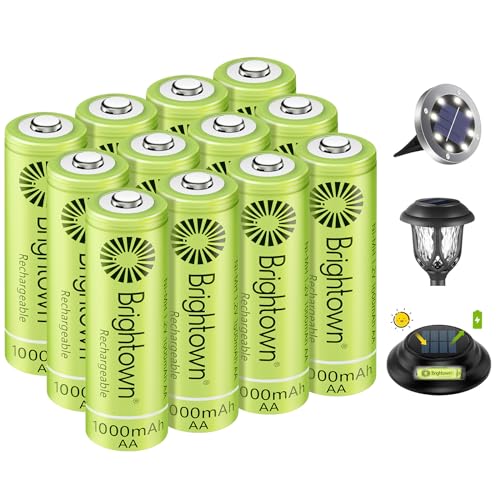
Best for: Budget-conscious shoppers needing reliable power for multiple solar lights or devices. The Brightown pack offers a solid 1000mAh capacity per cell, making it a practical choice for lighting that doesn’t require peak performance but benefits from reusable power over several seasons.
Why chosen: The 1000mAh rating provides a balance of availability and performance for common garden lights, remotes, and small devices. The 12-pack format is convenient for renewing a whole set of fixtures at once.
Caution: NiMH chemistry can lose some capacity if left fully discharged for long periods; maintain charging cycles to preserve overall lifespan.
KINREECELL AA 3.2V LiFePO4 (4-Pack)

Best for: Solar lights that require a stable, long-cycle 3.2V LiFePO4 option with low self-discharge. These are suitable for fixtures that tolerate a different voltage profile than standard 1.2V NiMH AA cells.
Why chosen: LiFePO4 chemistry offers higher cycle life (up to 1500 cycles) and improved safety, with lower self-discharge rates. This makes them ideal for year-round outdoor lighting where batteries may sit idle during off-seasons yet still deliver consistent illumination when solar charging is available.
Caution: Double-check device compatibility with 3.2V LiFePO4 chemistry; some controllers and holders expect standard AA 1.5V-equivalent arrangements.
POWJIELI 14430 LiFePO4 Batteries (8-Pack)

Best for: Solar garden lights or devices that use 14430 size LiFePO4 form factors, not standard AA cells. Great for fixtures that require a compact, high-performance LiFePO4 battery and use cases like portable lights or smaller lamps.
Why chosen: LiFePO4 chemistry yields long cycle life and safety advantages, with robust rechargeability. The 14430 size offers a compact alternative when AA replacements aren’t compatible.
Caution: Not a direct replacement for AA-powered fixtures; confirm size and voltage compatibility with your device before purchasing.
Kruta 20-Pack Rechargeable AA Batteries (1600mAh)

Best for: High-output solar lights that demand longer run times or frequently used fixtures that run through batteries quickly. The 1600mAh capacity is among the higher end for AA NiMH cells in this category.
Why chosen: The elevated capacity translates to longer lighting periods between charges and fewer replacement cycles for demanding outdoor setups. This makes Kruta a strong choice for larger landscapes and decorative lighting schemes.
Caution: Higher capacity can slightly reduce performance in extreme cold if devices are not rated for low-temperature operation; choose accordingly for winter setups.
QBLPOWER Solar Light Rechargable AA Batteries (4-Pack, 600mAh)

Best for: Basic solar garden lights and remote-operated devices needing a simple, reliable AA Ni-Cd option. The 600mAh capacity fits many standard fixtures with modest power needs.
Why chosen: A compact pack that covers common fixture needs without over-engineering. It provides a straightforward solution for light strings and small outdoor lamps that don’t demand high capacity.
Caution: Ni-Cd chemistry is older and may have lower energy density than NiMH or LiFePO4; consider upgrading if you require longer run times.
Lightalent Ni-MH AA Rechargeable Batteries (12-Pack, 600mAh)
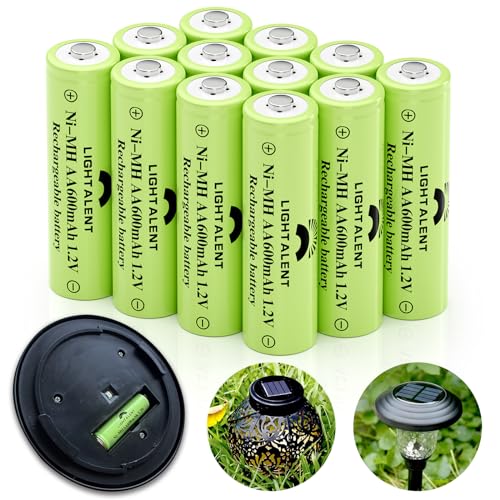
Best for: Outdoor solar lights and devices that benefit from steady, moderate capacity in NiMH chemistry. A 12-pack is convenient for multi-fixture setups and seasonal replacements.
Why chosen: Ni-MH AA cells with 600mAh capacity deliver reliable performance for typical garden lights, flood lights, and string LEDs. The 12-pack helps maintain a ready supply for typical households with several fixtures.
Caution: Like other NiMH cells, performance can decline if stored discharged for long periods; periodic checks and recharging help preserve capacity.
Buying Guide: How To Choose The Right Solar Light Battery
What battery chemistry is best for outdoor solar lights?
NiMH (1.2V) AA batteries are common, affordable, and easy to replace. LiFePO4 (3.2V) cells provide longer cycle life and enhanced safety, especially for fixtures that tolerate higher or different voltage profiles. Consider your fixture’s controller and voltage requirements before choosing.
How important is capacity (mAh) for my setup?
A higher mAh means longer runtime between charges. If your solar lights stay on all night or during long periods of dim sun, a higher-capacity option like 1600mAh or 1300mAh can improve performance. For basic lighting or shorter runtimes, 600–1000mAh works well.
Should I buy in multi-pack sets?
Multi-packs simplify replacements across several fixtures and help you refresh lights after a season. They are cost-efficient and reduce downtime when many lights share the same battery type.
Are LiFePO4 batteries safer for outdoor use?
LiFePO4 chemistry tends to have longer cycle life and stronger safety margins. They are a good choice for fixtures that sit idle for long periods but must perform reliably when charged by solar energy. Ensure compatibility with your device’s voltage and connectors.
What about size compatibility?
Most solar lights use standard AA or AAA sizes. If your fixture uses a different form factor (like 14430), verify the exact size and voltage. Do not force-fit a battery that is not designed for your device.
Maintenance and storage tips
- Recharge batteries periodically if lights are unused for months.
- Avoid exposing batteries to extreme temperatures for extended periods.
- Dispose of old batteries per local regulations; recycle where possible.
FAQ
- Q: Can I mix different brands in the same solar lighting system?
A: Mixing brands is not recommended because different chemistries and capacities can affect performance and charging behavior. - Q: Do higher capacity batteries drain faster?
A: Not inherently; capacity affects runtime. Charging efficiency and temperature can influence overall performance. - Q: Are LiFePO4 batteries compatible with standard solar lights?
A: Some fixtures are designed for 1.2V NiMH or 3.2V LiFePO4. Check voltage and connector compatibility before use. - Q: How often should I replace solar light batteries?
A: Replacement frequency depends on usage, climate, and battery chemistry. High-cycle batteries last longer, but test periodically to ensure consistent brightness. - Q: Should I pre-charge new batteries before first use?
A: Yes. Pre-charging according to the manufacturer’s instructions ensures optimal performance and longevity.