Best Solar Inverters for Homes: Top Inverters for Reliable Home Power
The following article reviews five top solar inverters for home use. Each unit combines efficient DC-AC conversion with battery charging and, in many cases, MPPT control for solar input. This guide highlights key specs, battery compatibility, and practical considerations for selecting an inverter suited to a home energy system. A quick summary table of the chosen products is provided below.
| Product | Brand | Key Feature | Output Power | Battery Compatibility |
|---|---|---|---|---|
| SUMRY Solar Inverter Charger | SRGFTS | Hybrid inverter with MPPT and built-in charger | 3600W (7200W surge) | AGM/Lithium/Lead-acid |
| Jackery HomePower 3000 | Jackery | High-capacity portable power station with UPS | 3600W (surge 7200W) | Li-ion/LFP bundled battery pack |
| SUNGOLDPOWER 10000W 48V | SGPWATT | Dual MPPT, built-in WiFi | 10000W | Multiple 48V battery options |
| LiTime 24V 3000W All-in-One | Litime | Integrated MPPT, UPS, RS485 | 3000W | 24V lead-acid or lithium |
| LANDERPOW 3000W Pure Sine Wave | LANDERPOW | Three AC outlets, USB-C/USB, remote | 3000W | 12V battery systems |
SUMRY Solar Inverter Charger Review

The SUMRY Solar Inverter Charger from SRGFTS combines a 3600W inverter with a built-in MPPT solar charge controller rated at 120A and a 100A AC battery charger. The PV input range (60V-500VDC) supports large solar arrays, with up to 4200W PV input power. It outputs a stable 110V/120VAC Pure Sine Wave suitable for most household appliances and sensitive electronics within its power range. It can operate with or without a battery, making it suitable for battery-less setups or with AGM/Li-ion/LiFePO4 configurations. When used without battery, the PV input must exceed 120V to run loads directly. This holistically designed unit is useful for home backup systems that blend solar charging with grid-like AC power.
Key considerations: ensure compatible battery chemistry, confirm continuous vs. surge requirements for your loads, and verify PV array voltage compatibility with your solar setup. The unit’s built-in MPPT simplifies wiring and reduces the need for separate charge controllers in smaller systems.
Jackery HomePower 3000: Portable Home Backup

The Jackery HomePower 3000 is a portable solar generator with a substantial 3072Wh LFP battery. It delivers up to 3600W continuous output (7200W surge) and features a UL-certified UPS that switches in ≤20ms to protect essential devices during outages. Beyond power, it opens access to a residential clean energy tax credit discussion, as some regions offer benefits tied to qualified solar electric property investments. The system is ideal for essential home backup, small offices, or RV use where mobility and rapid deployment are needed.
Considerations: portability vs. capacity balance, availability of compatible solar panels, and ensuring your essential devices (like refrigeration, routers, or medical equipment) stay powered during outages. Tax credit timing and eligibility may vary by location and program status.
ECO-WORTHY 10240Wh Home Power Station
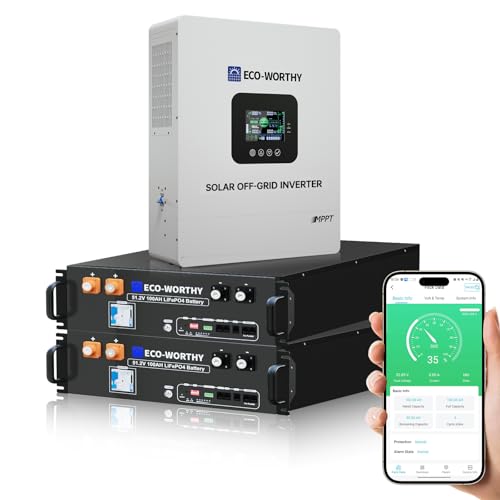
This ECO-WORTHY setup combines a 10240Wh LiFePO4 battery with an MPPT hybrid inverter and multiple charging methods. The unit supports a 5000W inverter output and scalable configurations with parallel batteries to reach significant storage capacity (up to 76.8KWh with multiple units). It includes CAN/RS485 for monitoring and Bluetooth/Wi-Fi connectivity for remote status checks. The design aims at robust home backup and solar-dominant charging, suitable for longer outages or larger loads.
Critical considerations: ensure the battery bank sizing matches your load profile, plan for proper thermal management, and assess the safety features (BMS, fusing, and enclosure ratings) for household installation. Parallel configurations may require careful balance and planning with the solar array and grid-ted consumer protections.
LiTime 24V 3000W All-in-One Inverter Charger

The LiTime 24V 3000W all-in-one unit integrates an MPPT charger, inverter, and UPS into a single system. It supports up to 9000W surge and offers flexible output modes including MPPT First, Grid First, and Inverter First. RS485 communication enables remote monitoring, and the device supports various 24V battery configurations (lead-acid or lithium). This makes it a strong choice for home energy storage and off-grid solar setups where a compact, all-in-one solution is preferred.
Buying considerations: evaluate available battery chemistries for cycle life, confirm UPS response time and load compatibility, and verify monitoring capabilities (LCD/LED indicators, app or RS485 integration) for ongoing maintenance.
LANDERPOW 3000W Pure Sine Wave Inverter

LANDERPOW’s 3000W pure sine wave inverter is designed for RVs, off-grid, and home use where clean AC power is essential. It provides 3000W continuous output with up to 6000W surge and features three AC outlets plus a 5V/3.1A USB and USB-C port, plus a remote control option. A real-time LCD screen shows input/output voltages and load status, helping users monitor performance. This unit is well-suited for compact home backup or mobile power needs, delivering reliable sine-wave power for sensitive electronics.
Considerations: ensure your battery source can deliver sustained current, account for startup surges of appliances, and plan wiring and fusing for multiple outlets and remote operation. The LCD interface is helpful for troubleshooting and status checks on-site.
Buying Guide: Key Purchase Considerations And Comparisons
- System integration: If you want an all-in-one solution (inverter, charger, MPPT, UPS), consider LiTime or SUMRY models. For portable needs or modular backup, Jackery or LANDERPOW options may be preferable.
- Power rating and surge: Homes typically demand reliable continuous power for refrigerators, AC units, and electronics. Compare continuous watts and surge watts to ensure your peak loads are supported without tripping breakers or stalling motors.
- Battery compatibility: Check compatible battery types (AGM, Gel, Lead-Acid, Li-ion, LiFePO4) and the ability to parallel or expand storage. Battery chemistry affects cycle life, charging speed, and safety features.
- MPPT charging: Solar input efficiency matters. Inverters with built-in MPPT controllers simplify setup and often improve solar energy harvest, especially in non-ideal sun conditions.
- Output waveform: Pure sine wave output is essential for sensitive electronics and appliances like TVs, computers, and medical devices. Ensure the unit delivers a stable grid-like waveform.
- Remote monitoring and control: USB, RS485, WiFi/Bluetooth monitoring capabilities help you track performance and diagnose issues remotely. This is useful for larger home systems and off-grid configurations.
- Scalability: For growing solar installations, consider models that support parallel expansion or modular configurations, enabling higher capacity as needs change.
- Tax credits and incentives: Some products or packages may align with residential clean energy credits. Check local and federal programs for eligible devices and timelines.
- Physical footprint and installation: Evaluate the space required for installation, ventilation needs, and safety considerations such as fusing, venting, and enclosure standards for indoor use.
- Cost of ownership: Factor in reliability, warranty terms, customer support quality, and anticipated maintenance when comparing higher upfront costs against long-term savings.