Best Solar EV Charging Station Options for Home and on the Go
Finding a reliable solar-powered charging setup for electric vehicles means balancing capacity, portability, and safety. This article highlights five top solar-powered systems and EV charging solutions that integrate clean energy with practical charging speeds for homes, RVs, and outdoor use. Each option leverages LiFePO4 batteries, robust solar input, and multiple outlets to power essential gear and vehicles during outages or remote trips. Explore how these systems can complement clean-energy goals while keeping your EVs ready to roll.
| Product | Brand | Type | Key Benefit |
|---|---|---|---|
| EF ECOFLOW Delta Pro | EF ECOFLOW | Portable Power Station | High capacity for home backup and multi-device charging |
| EF ECOFLOW DELTA2 | EF ECOFLOW | Solar Generator | Efficient solar input with LiFePO4 battery |
| Anker SOLIX C1000 Gen 2 | Anker | Portable Power Station | Fast recharge and multiple ports |
| OSCAL P6000 | TerraVolt | Solar Generator | High-wattage output for emergencies and RVs |
| EMPORIA Level 2 EV Charger | EMPORIA | EV Charger | High-speed home charging with smart features |
EF ECOFLOW Delta Pro Portable Power Station

A high-capacity LiFePO4 power station designed for home backup, camping, and emergencies. The Delta Pro delivers a 3600Wh battery with multiple output methods, including AC outlets, USB, and DC ports. Its expandability with extra batteries or smart generators increases capacity, while X-Boost technology raises peak output for demanding devices. This unit supports residential clean energy incentives where eligible and provides flexibility for powering an EV charging setup during outages or in off-grid scenarios.
Key features include a large 3600Wh capacity, 3600W continuous output (expandable to 4500W with X-Boost), and the ability to pair two units for up to 7200W total. It supports 15 different output methods, enabling simultaneous charging of multiple devices, including high-wattage appliances and automotive charging equipment. The combination of capacity and expandability makes Delta Pro suitable for a home EV charging station when paired with compatible solar inputs.
Important considerations: check utility eligibility for any clean energy credits, ensure proper setup for EV charging needs, and confirm compatibility with your specific solar panel configuration. The Delta Pro shines in versatility, offering robust backup power for lights, HVAC, and EV charging during outages or remote adventures.
EF ECOFLOW Solar Generator DELTA2

DELTA2 combines solar charging with a LiFePO4 battery and a compact footprint, ideal for off-grid camping, RV trips, and home backup. It includes a 220W bifacial solar panel that can capture more energy, enhancing daytime charging while maintaining a portable footprint. The system emphasizes longevity with a 3000+ cycle LiFePO4 pack, and its BMS helps auto-regulate battery health for long-term reliability. With up to 1800W output, it can power a broad range of appliances and devices essential during outages or remote uses.
Considerations for solar EV integration: ensure your EV charging needs align with the 1800W continuous output, and plan for solar input capacity to maximize daily charging. The included solar panel and the DELTA2’s efficiency make it a practical choice for households looking to add solar-powered backup for EV charging and daily energy needs.
Anker SOLIX C1000 Gen 2 Portable Power Station

The SOLIX C1000 Gen 2 offers a fast recharge profile and a flexible mix of ports to support home backup, camping, and EV charging needs. With a 1024Wh LiFePO4 battery and a peak 3000W output, it can support numerous devices simultaneously, including high-demand appliances. Anker’s HyperFlash charging enables rapid recharging from solar or AC sources, and the unit supports seamless power delivery for off-grid scenarios where EV charging or other essential devices must stay powered.
When considering EV charging, factor in the continuous wattage and the ability to deliver sustained current to an EV charger or adapter. The SOLIX C1000 Gen 2 is well-suited for portable charging setups, emergency kits, and as a backup solution for longer trips where a compact footprint matters. Its longevity and rapid recharge help maintain steady energy access when grid power is unavailable.
OSCAL 6000W Solar Generator with 1x400W Panel

This TerraVolt OSCAL P6000 system delivers dual-voltage 120V/240V outputs and a large 3600Wh LiFePO4 battery, designed for high-demand scenarios such as RV travel, home backup, and EV charging during outages. It supports fast charging at 2200W and can be expanded via multiple packs for greater capacity. With 14 ports and app connectivity for monitoring, OSCAL aims to provide robust control over power input and output, enabling easier management of EV charging alongside other devices.
Key considerations for EV charging: ensure the 6000W rated output meets the needs of simultaneous EV charging plus household loads, and confirm battery cycle life aligns with your long-term plans. The ability to monitor via app and control charging remotely adds a layer of convenience for off-grid charging setups and emergency readiness.
EMPORIA Level 2 EV Charger
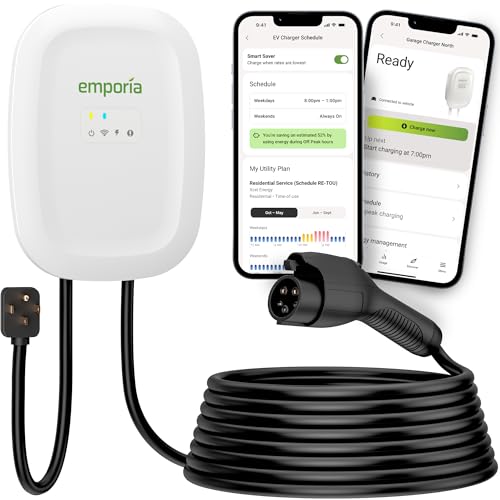
This Level 2 EV charger supports up to 48A charging with a 240V connection or can be configured for 40A in NEMA configurations. It provides faster charging compared to standard wall outlets and is preconfigured to meet modern NEC and safety standards. WiFi-enabled features and ENERGY STAR certification offer remote monitoring and energy-management capabilities, making it suitable for residential solar-powered charging setups and smart home integrations.
When integrating with solar power, consider the charger’s compatibility with your EV’s charging profile, the electrical panel capacity, and the need for professional installation to ensure proper safety and performance. EMPORIA’s charger supports efficient, scalable charging for a home solar EV charging strategy, particularly when paired with a solar storage system.
Buying Guide: Solar EV Charging Station Considerations
- Power capacity and scalability: For home use, prioritize higher capacity power stations (3600Wh and above) or modular options that can be expanded with additional batteries to meet daily EV charging needs and home backup requirements.
- Output versatility: Look for devices with a mix of AC outlets, USB ports, and DC car charging outputs. This enables simultaneous charging of an EV charger, phones, laptops, and appliances.
- Solar input efficiency: Panels with higher wattage input and bifacial technology can improve daytime charging. Consider systems that support fast solar charging to reduce reliance on the grid.
- Battery chemistry and lifecycle: LiFePO4 batteries offer long cycle life and safety for repeated charging cycles, especially important for backup power and off-grid use.
- App control and monitoring: WiFi/Bluetooth-enabled panels and power stations provide real-time status, energy input/output, and remote management, aiding maintenance and optimization of charging schedules.
- Safety certifications: UL listings, ENERGY STAR certifications, and compliance with NEC standards are important for household installations and professional installations.
- Warranty and service network: Ensure coverage for components like batteries, inverters, and panels, along with access to customer support for troubleshooting and upgrades.
- Grid interaction and credits: Check eligibility for any clean energy credits or tax incentives in your area, and verify how your solar EV charging setup fits with local regulations and utility programs.
- Installation considerations: Some units require professional installation for high-wattage outputs or 240V connections. Plan for proper electrical panel capacity and venting where applicable.
In summary, the right solar EV charging setup depends on your priorities—whether you need robust home backup, portable off-grid capability, fast solar charging, or integrated smart control. The options above cover a spectrum from portable power stations to dedicated EV charging solutions, offering multiple ways to power an EV with solar energy while maintaining reliability for home, travel, and emergencies.