Best Solar Power Banks for Portable EV-Charging on the Go
The rise of portable solar charging devices makes it easier to keep devices powered during outdoor adventures or on road trips with electric vehicles. This guide highlights five solar-powered options that blend built-in cables, multiple outputs, and rugged designs to support on-the-go charging. Each product below is selected for versatility, durability, and practical charging capacity in outdoor or emergency scenarios. Read on to compare features and find a solution that fits your gear list and travel style.
| Product | Brand | Key Highlight |
|---|---|---|
| Solar Power Bank 20000mAh Wireless Portable Charger | Luvknit | Built-in 3 cables; 15W fast charging; IP67 rugged shell |
| Durecopow Solar Charger Power Bank 20,000mAh | Durecopow | 3 built-in cables; 3 USB ports; LED flashlight |
| BLAVOR Solar Charger Power Bank 10,000mAh | BLAVOR | USB-C output; 20W fast charging; wireless charging option |
| Sudrov Solar Charger Power Bank 42,800mAh | Sudrov | Qi wireless, 4 cables; multiple ports; dual LED flashlights |
| BLAVOR 45W Solar Charger Power Bank 20,000mAh | BLAVOR | 45W fast charging; built-in cables; PD/QC support |
Solar Power Bank 20000mAh With Built-In Cables

This solar power bank combines a high-capacity 20000mAh battery with an all-in-one built-in cable set (USB-C, Lightning, Micro-USB) for simple, cable-free charging on the move. Its rugged shell is designed to withstand outdoor use; the shell material combines flame-retardant ABS+PC with IP67 protection for water, dust, and shock resistance. The dual outputs (USB-C and USB-A) enable simultaneous charging of multiple devices, including smartphones, tablets, and accessories, making it well-suited for camping trips, hiking expeditions, or emergency prep kits. The 15W solar charging capability aims to refill power quickly during daylight without requiring a separate cable setup.
Key features to note include: a built-in triple-cable system for universal compatibility, rugged construction for harsh environments, and the ability to power several devices at once. The battery type prioritizes stability and safety in outdoor use, while the solar charging feature provides a practical reusable energy source for extended trips where plug-in options are limited. Users should consider the balance between solar input efficiency and the device’s overall capacity when planning daily charging needs.
Durecopow Solar Charger Power Bank 20,000mAh

The Durecopow unit emphasizes versatility with 20,000mAh capacity and a quartet of cables built in (Type-C, Lightning, Micro USB, plus USB-A input). This arrangement supports charging up to six devices simultaneously across three ports, making it suitable for sharing power with traveling companions. Rugged features include water resistance, shock resistance, and a handy carabiner loop for camping, hiking, or expedition use. A built-in dual flashlight (emergency LED) adds practical hands-free lighting for nighttime use or signaling during outdoor activities. The device is pitched as a reliable companion for emergencies with multiple charging paths in one compact package.
Highlights include the triple-cable system that eliminates the need to carry extra cables, strong outdoor-ready construction, and multiple LED indicators to monitor battery status. If your trips involve several devices or group charging needs, this model offers a coordinated, portable charging hub with solar charging as a supplementary energy source rather than a sole power method.
BLAVOR Solar Charger Power Bank 10,000mAh
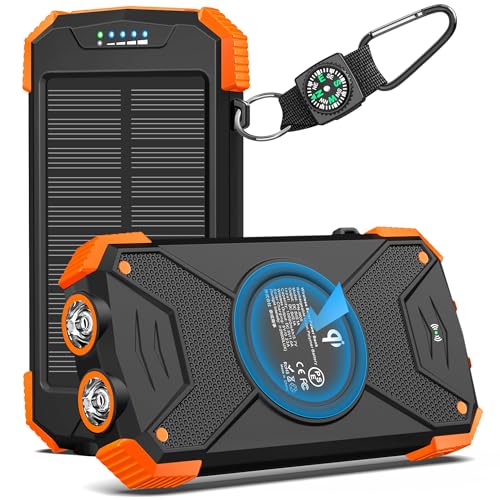
BLAVOR’s 10,000mAh solar charger emphasizes compact portability with reliable charging options. The model features a 20W USB-C output for rapid charging of modern devices, and it supports Qi wireless charging as well, enabling seamless, cable-free charging for compatible smartphones. The built-in battery and multiple input/output methods support charging of several devices simultaneously, appealing to travelers who need a lightweight, quick-access charging solution. BLAVOR emphasizes safety and durability through its battery chemistry and protective design, promising efficient charging cycles and safer outdoor use.
Key considerations include the balance between capacity and weight, the efficiency of solar charging in real-world sun conditions, and compatibility with a broad range of devices. For users prioritizing minimalism or a secondary charging option for short trips, this model delivers a compact, versatile solution with user-friendly features such as wireless charging alongside traditional cables.
BLAVOR 45W Solar Charger Power Bank 20,000mAh

This variant from BLAVOR upgrades to 45W fast charging with a maximum 45W USB-C output, delivering a significantly faster charging experience for devices that support high-power input, including newer smartphones and some laptops. The built-in cables option continues to reduce cable clutter, while PD and QC compatibility ensures efficient power transfer. The built-in wireless charging capability adds convenience for Qi-enabled devices, and the sturdy construction aims to withstand outdoor use, camping, and hiking scenarios. The charger’s ability to be recharged quickly at home or via solar input makes it a practical long-haul companion for travelers who value speed and flexibility.
Considerations for this model include the trade-off between higher output capability and overall size/weight, the reliability of solar input under daylight conditions, and the reliability of built-in cables for daily use. For road trips where fast recharging and multiple device support are priorities, this BLAVOR option offers a robust package with modern charging standards.
SOXONO Solar Charger Power Bank 40,000mAh

SOXONO’s 40,000mAh model presents a high-capacity option with four built-in cables (three outputs plus one input) and multiple ports to support concurrent charging. The device notes IP67 protection and rugged construction suitable for outdoor use, including camping or hiking. It includes USB-C and USB-A pathways, and a dedicated input/output approach to minimize cable management while on the move. Built-in dual flashlights further enhance utility for emergencies, night navigation, or signaling. The generous capacity is ideal for longer trips, ensuring devices remain powered across several days when solar input is uneven or limited.
Important considerations include how the large capacity translates to weight and portability, the efficiency of delivering 15W solar charging in daylight, and the practicality of charging multiple devices in parallel. For users planning extended outings or shared charging among a group, this model provides a robust energy reservoir and practical auxiliary lighting.
TopAutoGear Level 2 EV Charger (50A Portable)

TopAutoGear offers a Level 2 EV charger designed for 50 amps with a 25-foot cable, suited for home use and road trips where 240V outlets are available. This device is not a portable power bank, but it aligns with the portable charging theme by enabling efficient charging of electric vehicles in remote locations or vacation rentals with compatible infrastructure. It features a smart LCD display for real-time monitoring, including voltage, current, power, and cost estimates, plus a delay charging option to optimize off-peak energy savings. The extended reach and included storage bag enhance portability for travelers who need dependable EV charging beyond standard home setups.
Key considerations include the required electrical infrastructure for Level 2 charging, the weight and storage requirements of a full EV charger, and the suitability for temporary or seasonally relocated charging needs. For EV owners who frequently travel or stay in areas with limited charging options, this model presents a practical high-power solution that complements portable solar options for non-vehicle devices.
Buying Guide: Key Purchase Considerations And Comparisons
- Capacity vs. weight: Higher mAh means more stored energy but heavier devices. Choose a balance that fits how you plan to travel and how many devices you need to power at once.
- Output options: USB-C PD, USB-A, and wireless charging expand compatibility with phones, tablets, laptops, and other gadgets. Built-in cables reduce clutter but verify connector types you actually use.
- Solar charging efficiency: Real-world solar input depends on sunlight, panel area, and weather. Look for fast-charging specs and indicators that show solar input activity.
- Durability: IP ratings, rugged housings, and shock resistance matter for outdoor use. Flame-retardant materials add safety in rugged environments.
- Emergency features: Built-in flashlights and SOS modes can be valuable during outages or night operations.
- Device compatibility: Ensure the power bank supports your critical devices (iPhone, Android, tablets, laptops) and includes the right cable configurations or adapters.
- Real-world performance: Read user reviews for solar recharge efficiency in typical daylight conditions and the reliability of built-in cables for daily use.
- EV relevance: For true vehicle charging, a dedicated Level 2 EV charger (like a portable option) is separate from solar power banks. Use solar banks to back up devices or small accessories during travel, while a proper EV charger handles the vehicle itself when available.
In summary, a portable solar charging setup can dramatically extend your time off-grid, especially when pairing high-capacity banks with built-in cables and rugged design. When selecting a model, prioritize a combination of capacity, durability, and charging versatility to ensure reliable performance across camping trips, road trips, and emergency scenarios. For EV-focused trips, use a compatible Level 2 charger alongside solar banks to maintain essential devices and prepare for long drives when charging stations are scarce.