Best Solar Charging Stations for Electric Cars and Off-Grid Power
Choosing a solar charging station for an electric vehicle means balancing capacity, charging speed, portability, and safety. The following picks highlight reliable LiFePO4 battery technology, fast recharging, and versatile output options to support camping, emergencies, RV trips, and off-grid needs. Each product section includes a direct Amazon link, an image, and notes tied to real-world use. This guide helps you compare capabilities and select a model that best fits your energy goals and travel lifestyle.
| Product | Key Capacity | Max Output | Special Note |
|---|---|---|---|
| DARAN Portable Power Station 600W | 288Wh | 600W / 1200W surge | LiFePO4 battery; solar optional |
| EBL Portable Power Station 1000W | 999Wh | 1000W continuous | Broad port selection; efficient solar charging |
| Anker SOLIX C2000 Gen 2 | 2048Wh | 2400W surge | Fast recharge in 58 minutes; expandable |
| powkey Solar Powered Generator 200W | 146Wh | 200W | Includes 40W solar panel; ultra-portable |
| ABOK Portable Power Station 3840Wh | 3840Wh (expandable) | 3600W | High-capacity LiFePO4; multi-port |
DARAN Portable Power Station 600W (600W Output)

Daran’s compact power station emphasizes a sturdy 600W continuous output with a 1200W surge and a 288Wh LiFePO4 battery. With 12 safety protections and a built-in BMS, the unit is suitable for essential appliances during outages and outdoor use. It’s noted for quick recharging—up to 80% in about 2 hours via AC, with solar and AC combo options for faster on-the-go charging. The device supports a real-time status display and includes an emergency LED with SOS mode, supporting safety-minded users in storms and remote trips. Note that it does not include a car charger or solar panel in the package.
EBL Portable Power Station 1000W Solar Generator

EBL delivers a 1000W continuous output with 999Wh capacity, suitable for running multiple devices or small appliances during camping or home backup. Solar charging is supported between 12 and 26V, up to 8A, offering a green option for off-grid power. Full AC charging typically takes 7–8 hours, while car charging ranges 9–11 hours. Pass-through charging allows device use during recharge, enhancing usability in real-world scenarios where both power and devices must stay online. It provides a broad mix of ports, including USB-C, USB-A, DC outlets, and wireless charging.
Anker SOLIX C2000 Gen 2 Portable Power Station
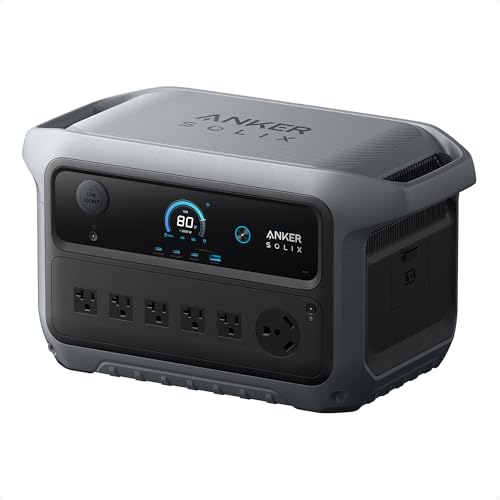
Anker’s SOLIX C2000 Gen 2 is a flagship option with 2048Wh LiFePO4 capacity and 2400W surge. It emphasizes rapid charging—full recharge in about an hour when using AC and solar in tandem. The battery’s LiFePO4 chemistry supports a long lifecycle with thousands of cycles, promoting long-term reliability for home backup, RV use, and outdoor adventures. It’s well-suited for users who require high power for heavy-duty equipment and the option to expand capacity with an additional battery for extended outages. The system is designed for versatility across charging modes and ports.
powkey Solar Powered Generator With Solar Panels

Powkey markets a compact solar generator with a 200W output and an included 40W solar panel, totaling 146Wh capacity. The setup is highly portable, ideal for backpacking, camping, and emergency kits. It supports multiple outlets, including AC and USB ports, and emphasizes user-friendly charging indicators to monitor real-time charging status. The bundled solar panel adds convenience for on-site solar recharging, while its small form factor enables easy transport and storage in vehicles or bags. The unit is suitable for mobile power needs rather than heavy-duty household loads.
ABOK Portable Power Station 3840Wh

ABOK presents a high-capacity 3840Wh LiFePO4 system expandable to 11520Wh, pairing robust energy with a sizable lifetime—over 4000 cycles and around a decade of use. With a 3600W rated output and 4500W peak, it can run most household appliances. It supports multiple charging modes (AC, PV solar input, and car charging) and offers an extensive array of ports, including high-capacity AC, USB-C PD, USB-A, and DC outputs. This model targets users seeking substantial energy for extended off-grid living, larger camping setups, or emergency resilience, where power needs are extensive and diverse.
Buying Guide: Key Purchase Considerations for Solar-Powered EV Readiness
- Battery chemistry and lifecycle: LiFePO4 cells offer long lifespans, typically thousands of cycles, and better thermal stability, which matters when charging from solar or during extended outages. Consider expected cycle life, temperature tolerance, and degradation under high load.
- Capacity vs. power output: For EV-related use, you’ll want a balance between energy capacity (Wh) and sustained power (W). Higher capacity enables running more devices or longer durations; higher continuous power handles high-wattage equipment like surge appliances, air compressors, or EV charging simulators.
- Recharging speed and methods: Look for devices supporting fast AC recharge, and solar charging compatibility with typical panels (voltage and current range). Some systems also support car charging or mixed input to accelerate recharging on the road.
- Port variety and compatibility: The best option should offer a mix of AC outlets, USB-C PD, USB-A, and 12V DC/car outlets. Multiple ports allow charging several devices simultaneously, which is essential when you’re away from traditional power sources.
- Portability and weight: If you’re traveling, camping, or moving between locations, consider weight and handleability. Some models exceed 30–40 pounds, while others stay under 10 pounds, depending on capacity and battery type.
- Safety and monitoring: Built-in BMS, protections for over-discharge, short-circuit, over-temperature, and a real-time display help manage operation safely. Consider whether the bundle includes a flood-proof housing or SOS lighting for emergencies.
- Expandable options: Some systems offer expansion batteries to increase total capacity, which can be valuable for long trips or home backup plans. Verify compatibility and the total achievable capacity when expanded.
- Panel compatibility and solar efficiency: If you plan to rely on solar, confirm solar panel input specs (voltage range, max current) and whether the unit ships with panels or requires separate purchase. Panel efficiency and weather conditions influence charging speed significantly.
- Durability and warranty: Outdoor-grade units with rugged housings and weather resistance perform better under camping and travel stresses. Check the warranty length and what it covers, especially for LiFePO4 cells.
- Use-case alignment: For road trips involving EV charging prep, prioritize units with high surge capacity for tools, cooling devices, or lifts you might need in emergencies, while ensuring the system remains manageable for daily use.
These considerations help align a solar charging station with your EV-related goals, whether you’re building a reliable off-grid home backup, preparing for extended camping, or seeking a portable solution for emergencies. The products listed above illustrate a range of capacities, output levels, and portability to suit different scenarios, from compact, lightweight kits to high-capacity systems that can support significant power demands.