Best Solar Charge Controller MPPT for Efficient Battery Charging
Choosing the right MPPT solar charge controller can maximize energy harvest, protect battery banks, and extend system life. This guide profiles five top MPPT controllers that fit a range of solar setups—from small RV rigs to larger home installations. Each entry highlights what the model does well, key features, and how it fits different battery chemistries and voltage configurations. Readers will find objective comparisons to help decide which controller best meets their comfort level with installation, monitoring options, and durability in varying climates.
| Product | Voltage Range | Max Output | Batteries |
|---|---|---|---|
| Victron Energy SmartSolar MPPT 100V 30A | 12/24V | 30A | Lead-acid, LiFePO4 |
| Victron Energy SmartSolar MPPT 75V 15A | 12/24V | 15A | Lead-acid, Li-ion |
| Renogy Rover 40A 12/24V MPPT | 12/24V | 40A | Gel, Sealed, Flooded, Lithium |
| Depvko Upgraded 30A MPPT | 12/24V | 30A | Lead-acid, Li-ion |
| Renogy Rover Lite 60A MPPT | 12/24/36/48V | 60A | Lithium, AGM, Gel |
Note: All models support MPPT technology to optimize charging efficiency, especially under partial shading or variable solar input. Battery compatibility generally includes common lead-acid variants and lithium chemistries, though specific supported chemistries may vary by model. When selecting a controller, consider panel voltage, system voltage (12V, 24V, or higher), expected array size, and whether you need features such as Bluetooth monitoring or synchronization across multiple controllers.
Victron Energy SmartSolar MPPT 100V 30A

The Victron SmartSolar MPPT 100V 30A model is designed for midsize to larger solar arrays with a 100V input ceiling. It features synchronized charging, which allows multiple controllers to operate in unison to optimize battery health and energy usage across the system. This unit emphasizes fast maximum power point tracking and intelligent charge algorithms to maximize harvest, even as shading or temperature changes impact panel output. Bluetooth capability enables remote monitoring via compatible devices, helping users keep an eye on voltage, current, and charging stages without physical access to the controller.
Victron Energy SmartSolar MPPT 75V 15A

This 75V/15A Victron model offers compact power for modest solar arrays while preserving the same core benefits: high-efficiency MPPT operation, robust battery protection, and synchronized charging when used with multiple units. The 75V input range makes it suitable for panels wired in higher-voltage configurations, reducing current in the conductors and easing wiring challenges in longer runs. Users benefit from Victron’s well-regarded charge algorithms that adapt to various battery chemistries and temperatures, helping extend battery life and improve overall system reliability.
Renogy Rover 40A MPPT Charge Controller

The Renogy Rover 40A controller is designed to serve RV, off-grid, and marine applications with a 12/24V configuration. It supports multiple battery types including gel, sealed, flooded, and lithium, and it includes smart protection against overcurrent, short circuits, reverse polarity, and overload. The device handles four-stage charging and features auto-detection of 12V/24V systems, making it a practical choice for mixed installation environments where panel arrays may experience variable shading. The built-in protections help guard against weather-induced surges and other environmental risks common in outdoor installations.
Depvko Upgraded 30A MPPT Solar Controller
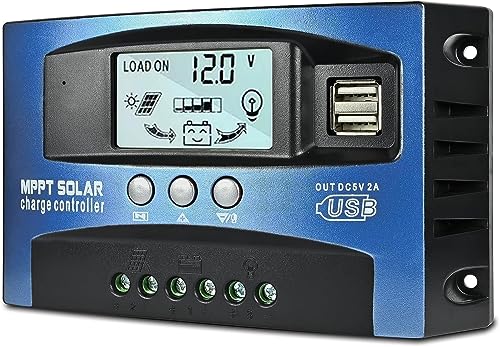
This 30A MPPT regulator emphasizes automatic panel-battery management with wide compatibility for 12V/24V systems. It highlights enhanced tracking efficiency and built-in protections against overcurrent, short circuits, inverse connections, low voltage, and overheating. The controller includes dual USB outputs for charging mobile devices and a user-friendly LCD to monitor status and performance. It’s positioned for smaller to mid-sized systems where a reliable, simple-to-install MPPT unit is advantageous for beginners and hobbyists alike.
Renogy Rover Lite 60A MPPT

The Renogy Rover Lite 60A MPPT offers a higher current rating and a broad input range to accommodate larger arrays and higher-voltage configurations. It supports multiple battery chemistries and voltages, with protection against common fault conditions and a focus on reliability in extreme temperatures. This model is a practical option for semi-permanent installations, such as off-grid cabins or larger RV setups, where higher charging capacity and robust performance under demanding environmental conditions are required.
Buying Guide: Key Purchase Considerations
- System voltage and battery type: Ensure the controller supports your battery bank (12V, 24V, or higher) and chemistry (lead-acid, lithium, etc.). Some units are more versatile across chemistries than others.
- Maximum input and output: Match the controller’s MPPT input voltage and amperage to your solar array’s total voltage and current. Oversizing can yield better efficiency in shaded conditions, while undersizing reduces charging speed.
- Bluetooth and monitoring: Models with Bluetooth or internal monitoring dashboards help track real-time performance, charging stages, and fault alerts without opening enclosures.
- Synchronization capabilities: If planning a multi-controller setup, verify whether the controllers can synchronize to optimize system-wide charging stages and battery longevity.
- Protection features: Look for protections against overcurrent, short circuits, reverse polarity, overcharge, deep discharge, and overheating. Weather resistance matters for outdoor installations.
- Installation and wiring: Consider panel configuration (series vs. parallel), cable run lengths, and mounting requirements. Some models offer auto-detection of system voltage to simplify setup.
- Extendability: If you anticipate expanding your solar array, choose a controller that supports higher input when you scale up, or plan for a modular, multi-controller approach.
- Price vs. features: While price is a factor, prioritize features that align with your use case—remote monitoring, compatibility with lithium packs, and robustness in harsh environments often justify higher cost.
The models listed provide a mix of compact, mid-range, and higher-capacity MPPT controllers, suitable for users ranging from casual RV enthusiasts to home solar hobbyists. Each option emphasizes efficient MPPT operation, reliable protections, and compatibility with common battery types. When selecting, align the choice with your system’s voltage, expected solar input, and whether you need advanced monitoring or multi-controller synchronization to maximize returns on your solar investment.