Best Solar Cell Charge Controllers for Efficient, Safe Battery Charging
Whether you’re powering an RV, boat, off-grid cabin, or a tiny home, choosing the right solar cell charge controller is essential to protect batteries and maximize energy harvest. This guide highlights five solid options across PWM and MPPT technologies, tailored for different battery types and system sizes. Learn who each product is best for, what to watch out for, and how to compare features like voltage handling, load control, and protection. A quick buying table follows to help you compare at a glance.
Buyer’s quick-start table (selected products):
| Product | System Type | Best For | Key Benefit |
|---|---|---|---|
| Renogy Wanderer 10A | PWM, 12/24V | Small RV or marine setups | 4-stage charging, compact, negative-ground |
| Rolokit 30A PWM | PWM, 12/24V | Home or small off-grid systems | LCD readout, multiple load modes |
| ELUSH 100A MPPT | MPPT, 12/24/36/48V | Medium to large off-grid or mobile setups | High tracking efficiency, versatile modes |
| AeternaSol 20A PWM | PWM, 12V | Starter systems with USB needs | PD/QC USB output, zero idle drain |
| Victron SmartSolar MPPT 50A | MPPT, 12/24V | Larger or expandable systems | Bluetooth, synchronized charging |
Renogy Wanderer 10A PWM Charge Controller
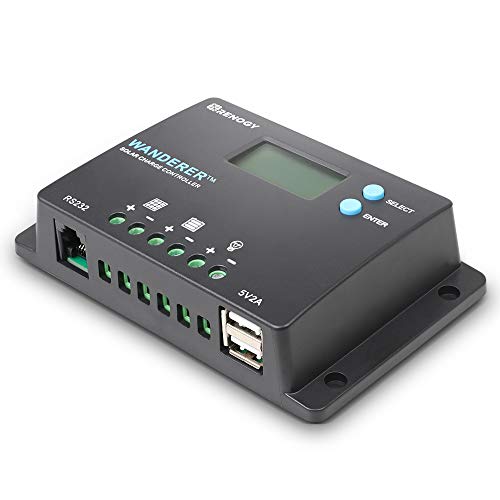
Best for small RV or marine setups needing reliable, compact PWM control. The Wanderer 10A supports 12V/24V systems with negative grounding and 4-stage charging (Bulk/Boost/Float/Equalization), optimizing battery lifespan for AGM, Gel, Flooded, and Lithium batteries. It emphasizes safety with overcharge and temperature protections and offers a compact footprint (about 5.2 by 3.1 inches) that fits in tight control panels. Use this if your system is modest in size and you want straightforward, proven PWM performance.
Who it’s best for: casual RVers, boaters, or off-grid users with smaller solar arrays. Why chosen: balance of simplicity, proven PWM efficiency, and negative-ground design for safer installations. Limitation: not ideal for large or Lithium-only systems where MPPT could harvest more energy.
Rolokit 30A PWM Solar Charge Controller

Best for home, small industrial, or commercial off-grid applications needing reliable PWM control with adjustable load management. This controller supports 12V/24V systems, open, AGM, and GEL lead-acid batteries. It features an LCD readout for status and configuration, plus protection against over-discharge and reverse polarity. Note: not suitable for Lithium batteries, so choose this when your bank remains lead-acid or hybrids that include lead-acid components. The controller’s memory feature preserves user settings after power interruptions, reducing maintenance time.
ELUSH Upgraded 100A MPPT Solar Controller

Best for larger off-grid or mobile power systems needing high efficiency and multi-volt operation. This MPPT controller recognizes 12V/24V/36V/48V configurations and claims a tracking efficiency of at least 99.5%, maximizing energy capture. It includes a versatile LCD with backlight and clock, with seven operating modes including time-based and universal control. It provides comprehensive voltage protection and real-time solar panel voltage display for troubleshooting. Choose this when you need robust MPPT performance and broad voltage support for expanding solar arrays. Caution: ensure correct wiring as the product notes no polarity converter included.
AeternaSol PWM Solar Charge Controller 20A
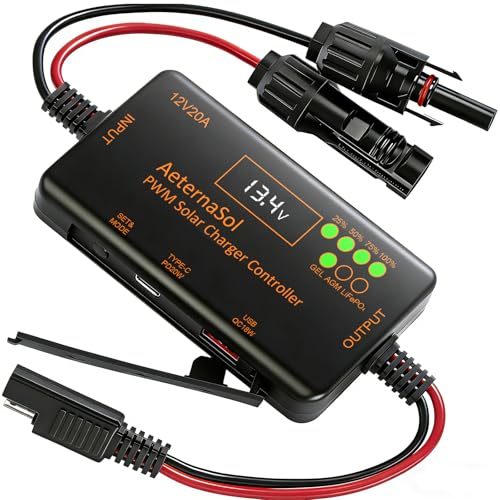
Best for users needing faster charging and USB-enabled monitoring in a compact PWM package. This controller is designed for 12V systems and under 300W panels, offering 20A PWM charging and dual USB outputs (including USB Type-C). It supports lead-acid and lithium-compatible charging modes with a clear LCD display and indicators. It provides anti-idle power savings and reverse-current protection. Use this when you want integrated USB charging options and straightforward setup for small off-grid or shed setups. Limitation: not compatible with Lithium for some configurations without proper mode support.
Victron Energy SmartSolar MPPT Charge Controller

Best for expanding, higher-performance solar installations seeking synchronized, efficient charging. The Victron SmartSolar MPPT controller features advanced MPPT tracking, enabling maximum power output even with shading. It supports multiple SmartSolar units to synchronize charging across a system, optimizing longevity and energy use. Bluetooth connectivity enables remote monitoring and configuration. This option is ideal for larger systems or when future expansion is planned. Caution: advanced features may require additional setup and integration with compatible Victron equipment.
Buying Guide
How to choose between PWM and MPPT
- System size and battery type: PWM is often sufficient for smaller systems or lead-acid batteries; MPPT shines with larger arrays and mixed chemistries, including lithium.
- Voltage compatibility: ensure the controller supports your battery bank voltage (12V, 24V, 36V, 48V) and solar panel configuration.
- Protection features: look for overcharge, deep discharge, short-circuit, reverse polarity, and temperature compensation protections to safeguard batteries.
- Load control and timing: some controllers include load control with timers or dusk-to-dawn modes—useful for fans or pumps without separate controllers.
- Monitoring and connectivity: LCD displays help on-site troubleshooting; Bluetooth or app support enables remote monitoring for larger systems.
- Physical considerations: size, mounting options, and IP ratings matter for outdoor or rugged environments.
Frequently Asked Questions
- What is the main difference between PWM and MPPT controllers?
– PWM controllers are simpler and cheaper, suitable for small or lead-acid-only systems. MPPT controllers maximize energy harvest, especially with higher panel voltages or larger arrays, and are more efficient overall. - Can I use a PWM controller with lithium batteries?
– Some PWM controllers support lithium, but many are optimized for lead-acid. Check the device specifications to confirm compatibility with your lithium chemistry. - Should I buy a controller with Bluetooth or app support?
– For larger or expandable systems, remote monitoring helps optimize charging schedules and detect issues early. - Is voltage compatibility important for 12V vs 24V systems?
– Yes. Use a controller that matches your system voltage to ensure proper charging and protection. - What does “7 operating modes” or “time control” imply?
– These modes adjust charging behavior and when loads operate, adding flexibility for complex off-grid setups.