Best Solar Battery Load Tester Guide for 12V Systems
Answer: A solar battery load tester is best for diagnosing the health of 12V lead-acid batteries in cars, trucks, motorcycles, and boats by applying a controlled load and measuring voltage response. The top options below are suitable for different needs, from heavy-use workshop testers to portable home setups. This guide highlights five models to help buyers pick the right tool for their application.
Summary table of selected products
| Product | Best For | Key Capability | Notes |
|---|---|---|---|
| Clore Automotive Solar 1876 | High-amp testing in workshops | 1000 Amps, 2000 CCA, Starter/Alternator tests | Wide load range; rugged build |
| Clore Automotive Solar 1874 | Mid-range battery testing | 500 Amps, 1000 CCA, Starter/Alternator tests | Compact and portable |
| Clore Automotive SOLAR Digital 12V Tester | System-level diagnostics | 12V testing, 40-1200 CCA, 7-15V | Good for both battery and system checks |
| Solar 1852 100 Amp Tester | Budget 6/12V testing | 100 Amp load, 6/12V, tests to 1000 CCA | Simple, focused on 100A loads |
| TOPDON BT100 | Versatile mobile testing | 100-2000 CCA, 12V, multiple vehicle types | Digital analysis with broad compatibility |
Clore Automotive Solar 1876 1000 Amp Carbon Pile Battery Load Tester
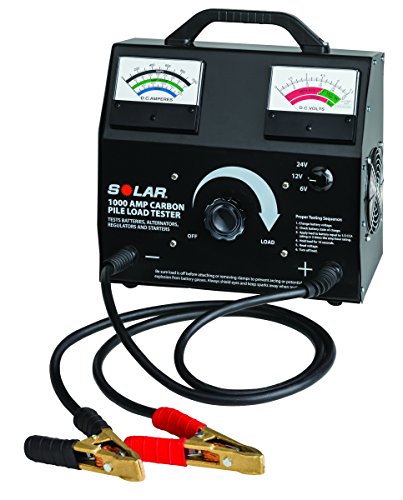
Features: Variable load capability to 1000 Amps, tests batteries to 2000 CCA, enables Starter and Alternator assessment.
Best for: Workshop environments that require robust high-amp testing and comprehensive starter/alternator evaluation. This model handles heavy loads, making it suitable for fleets or frequent diagnostic use.
Caution: High current output requires strict adherence to safety procedures and proper wiring to prevent shorts or arc flashes. Do not exceed battery or tester specifications.
Clore Automotive Solar 1874 500 Amp Carbon Pile Battery Load Tester

Features: Variable load capability to 500 amps, tests batteries to 1000 CCA, enables starter and alternator assessment.
Best for: Small repair shops or DIY enthusiasts who regularly test standard 6- to 12-volt batteries without high-amp demands.
Caution: May be insufficient for heavy-duty commercial batteries or very large cold-cranking amps. Plan higher-amp capability if needed.
Clore Automotive SOLAR Digital 12V Battery and System Tester
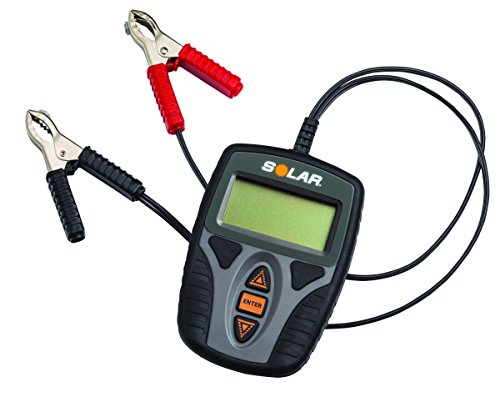
Features: 12 Volt battery and system testing, 40-1200 CCA testing capacity, 7-15V operating range.
Best for: Users looking for integrated battery-and-system diagnostics in a compact digital unit. Useful for quick checks on a variety of 12V vehicles and systems.
Caution: Digital readings require interpretation; ensure you understand CCA ranges for your battery type to avoid misreading health status.
Solar 1852 100 Amp Battery Load Tester

Features: For 6 and 12 Volt batteries, 100 Amp load, tests batteries to 1000 Cold Cranking Amps.
Best for: Budget-conscious users who mainly test standard 6/12V batteries with modest load requirements.
Caution: Lower load capacity may limit accuracy for high-CCA or heavy-duty batteries. Consider higher-amp testers for larger CCA ratings.
TOPDON BT100 Car Battery Tester

Features: 12V load testing, 100-2000 CCA, supports multiple vehicle types; provides health data, SOC, and SOH estimates.
Best for: Users who need a versatile handheld tester capable of analyzing a wide range of vehicles, including cars, motorcycles, and light trucks.
Caution: Some users may prefer a dedicated 12V-only tool if portability is critical; ensure 100-2000 CCA coverage matches your battery types.
Buying Guide: How to Choose the Right Solar Battery Load Tester
- What load range do I need? Determine the maximum CCA your batteries reach and choose a tester with a comfortable safety margin above that value.
- Is system testing important? If you also want to assess starting motors and alternators, prefer models that include system and charging diagnostics.
- Portability versus throughput: Do you need a rugged bench unit for a shop or a compact handheld for home use? Higher-amp models tend to be bulkier but more capable.
- Battery types supported: Verify compatibility with the battery chemistries you maintain (Conventional, AGM, Gel, Spiral, Deep Cycle).
- Digital versus analog: Digital readouts provide precise data; analog gauges offer quick, at-a-glance interpretation in bright environments.
- Ease of use and safety: Look for clear instruction, safe testing approaches, and robust clamps with secure grips to minimize mishaps.
- Maintenance and durability: Consider model construction, surge protection, and the availability of replacement parts or accessories.
Frequently Asked Questions
- What is a solar battery load tester used for? It applies a controlled load to a battery to evaluate its health and ability to deliver power under demand.
- Do I need a tester with high amperage? Higher amperage is useful for large batteries and fleet vehicles; for typical cars, 500–1000 A models are common.
- Can these testers test 12V systems only? Most models test 12V batteries and some include 6V options or broader system testing capabilities.
- Is it safe to use automotive testers at home? Yes, when following safety instructions, using proper clamps, and keeping away from flammable materials.
- Which tester is best for a fleet? A high-amp, durable unit like the 1000 A Solar 1876 or a versatile TOPDON BT100 is suitable for frequent use and varied vehicle types.
- Do testers provide exact battery replacements recommendations? They indicate battery health status (GOOD/WEAK/BAD) to guide replacement decisions, not replacement parts.