Best Solar Battery Generator System for Home Backup and Off-Grid Power
Discover powerful, portable solar battery generator systems designed to keep essential devices running during outages, while offering flexibility for camping, RV trips, and off-grid adventures. This guide highlights five top options, comparing capacity, output, expandability, and charging options to help you choose a model that fits your home and travel needs.
Summary of Selected Products
| Product | Brand | Battery Capacity | Continuous Output | Expandability |
|---|---|---|---|---|
| HomePower 3000 | Jackery | 3072Wh | 3600W | Yes (up to 2x panels, UPS included) |
| Mega 1 | OUPES | 1024Wh | 2000W | Yes (up to 5120Wh with batteries) |
| 300W Portable with 60W Panel | ZeroKor | 280Wh | 300W | Limited (panel included) |
| Solar Generator 300 | Jackery | 293Wh | 300W | Single panel compatibility |
| OUPES Mega 1 Kit | OUPES | 1024Wh | 2000W | Yes (B2 expansion) |
The table above highlights representative capabilities. When choosing, consider daily power needs, surge handling, charging speed, and whether you plan to expand with additional batteries or panels in the future.
Jackery HomePower 3000 With Solar Panels

The Jackery HomePower 3000 combines a robust 3072Wh LiFePO4 battery with a high 3600W continuous output and a 7200W surge capacity. It includes two 200W solar panels designed to deliver steady recharging in sunny conditions, supporting longer outages or off-grid stays. This model features a UL-certified UPS that switches within ≤20 milliseconds, ensuring uninterrupted operation for critical devices such as security cameras, medical refrigeration, and Wi-Fi routers. In addition to essential home backup, its portability makes it suitable for RV use and emergencies. The system is eligible for tax incentives, with a 30% residential clean energy credit potentially available for qualified items.
Key considerations: capacity adequacy for your fridge and lighting, surge handling for compressors or pumps, UPS speed, and eligibility for tax credits. The HomePower 3000 is well-suited to households seeking reliable, fast-responding backup power without frequent recharges during outages.
OUPES Mega 1 Portable Power Station
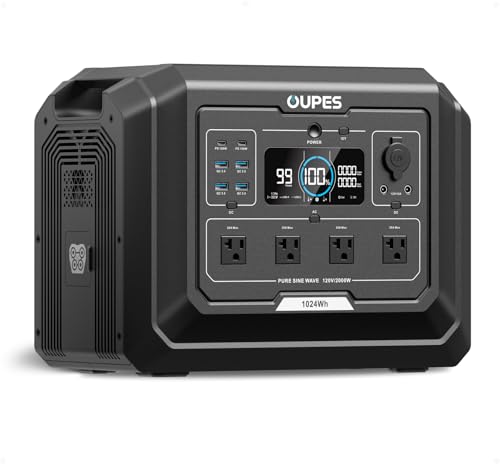
The OUPES Mega 1 delivers strong performance with 2000W continuous output (4500W surge) from a 1024Wh LiFePO4 battery, paired with fast recharge from AC plus solar. Notably, its modular design supports expansion by adding two B2 extra batteries, scaling capacity up to 5120Wh without extra inverters or complex wiring. This makes it a flexible choice for users planning longer outages, larger load profiles, or expanding solar arrays over time. The system also emphasizes reliable power delivery with pure sine wave output appropriate for sensitive electronics and professional devices.
Practical use: home backup for essential devices, off-grid camping, or road trips where modularity and future growth matter. Consider your daily energy footprint and whether you’ll expand later to justify the initial investment in a scalable platform.
ZeroKor 300W Portable Solar Generator

The ZeroKor portable power station provides a compact 280Wh battery with a 300W continuous output and a foldable 60W solar panel for on-demand recharging. It includes multiple outlets: two AC outlets, a DC port, several USB ports, and a quick-charge USB port, complemented by an SOS flashlight. Its portability makes it a practical option for campers, hikers, or campers who need a lightweight, all-in-one charging solution. Users should factor in the 300W limit, which means high-wattage appliances like hair dryers or coffee makers may not operate efficiently.
Ideal for: short trips, charging small devices on the go, and as a backup for essential devices in a compact form factor. Its integrated solar panel and multiple charging options provide a versatile off-grid charging solution in a small footprint.
Jackery Solar Generator 300

The Jackery Solar Generator 300 combines a 293Wh battery with a 100W solar panel in a compact package. It provides two Pure Sine Wave outlets, a PD USB-C port, USB-A, and a DC car port, enabling the simultaneous charging of multiple devices. Weighing roughly seven pounds, its portability is ideal for RV travel, camping, and travel emergencies. The integrated solar option supports quick top-ups on sunny days, and its size makes it easy to stow in a vehicle or small living space. Users should assess whether the 293Wh capacity meets their daily needs, especially if high-wattage appliances are in frequent use.
Best suited for: light to moderate power needs, rapid recharges, and a compact solution for on-the-go power. It is a convenient entry point into solar-generated backup without large batteries or heavy equipment.
OUPES Mega 1 Solar Generator Kit

This kit comprises a 1024Wh LiFePO4 battery and a 2000W AC output, with the option to add a 240W panel. The kit emphasizes an all-in-one experience, offering a robust power backbone for road trips, off-grid living, or home backup. The expandable system supports adding B2 batteries to reach higher total capacities, making it attractive for users who anticipate growing energy needs. Features include UPS capabilities and a simple expansion path, aiding in future-proofing a solar power setup.
Considerations: check compatibility with existing solar arrays, the footprint of expansion, and how the battery chemistry (LiFePO4) supports longevity and safety in daily use. The Mega 1 kit balances solid power with future growth potential.
Buying Guide: Key Considerations For Solar Generator Systems
- Power needs: List essential appliances (refrigerator, lights, router, medical devices) and estimate total watt-hours per day. Match capacity to cover multiple days of outages if needed.
- Output requirements: Check continuous and surge watts. For devices with motors or compressors, ensure your unit’s surge rating exceeds peak loads.
- Battery chemistry and cycle life: LiFePO4 offers long life and stability; assess cycle counts and warranty terms when comparing models.
- Expandability: If future growth is important, choose systems designed to add batteries or additional panels without reconfiguring wiring or inverters.
- Charging speed: Consider AC charging speed, solar input capacity, and whether mixed charging (AC + solar) is supported for faster replenishment.
- Portability vs. capacity: Balance portability against storage location. Heavier units offer higher capacity but require more space and effort to move.
- Tax incentives and eligibility: Some systems qualify for residential clean energy credits. Confirm eligibility with the utility and review documentation needs.
- Safety and certifications: Look for UL certification, BMS protections, and safe handling of LiFePO4 chemistry to protect devices and users.
- Reliability and warranty: Compare manufacturer support, warranty duration, and replacement policies, especially for kits and expandable systems.
- Use case and environment: For home backup, emphasis on reliability and UPS speed; for camping or RV, emphasis on portability and panel compatibility.
Overall, the best solar generator system for you aligns with your daily power profile, future expansion plans, and the environments where you’ll use it. For homes prone to outages, choose models with high capacity, fast UPS switching, and reliable inverters. For travel and off-grid adventures, prioritize portability, integrated solar, and modular expandability to grow with your needs.